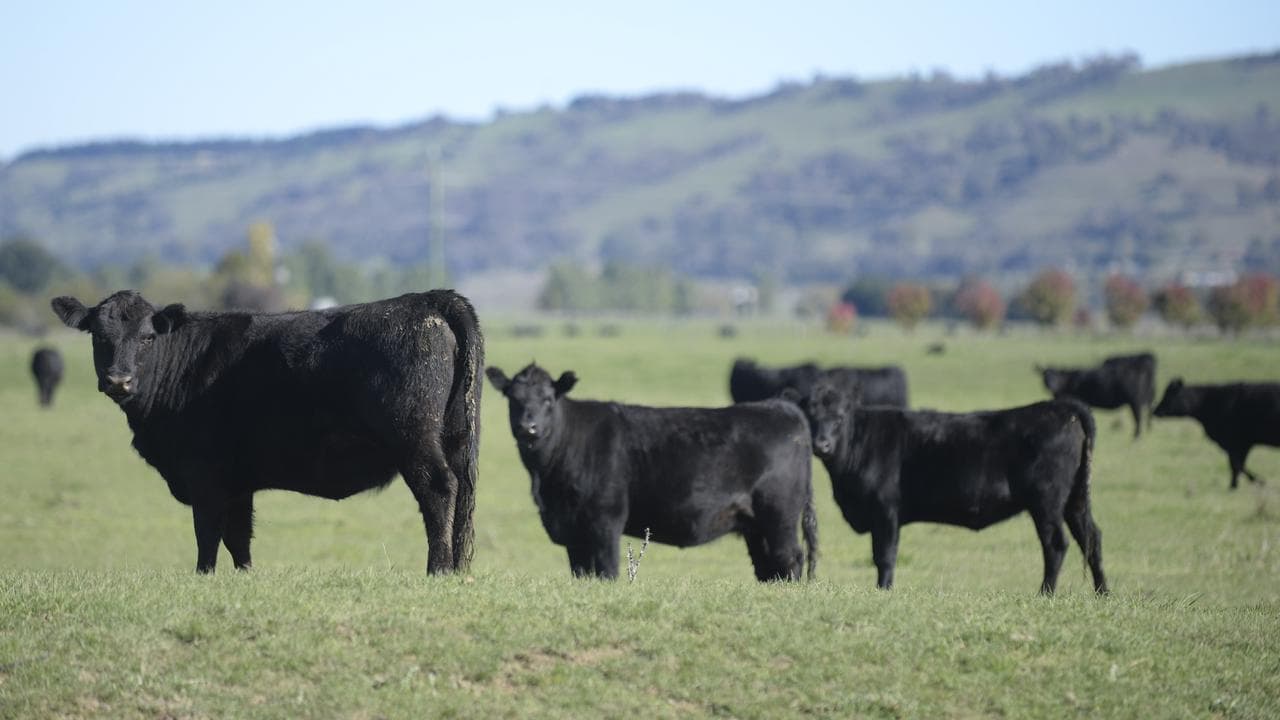
Strong demand for Australian beef in the US, Asia and at home has helped the nation's largest cattle and beef producer to record earnings, despite herd losses because of flooding.
Australian Agriculture Co turned a $71.6 million operating profit, up 23 per cent, in fiscal 2026, marking its best annual result since the metric was introduced in 2016.
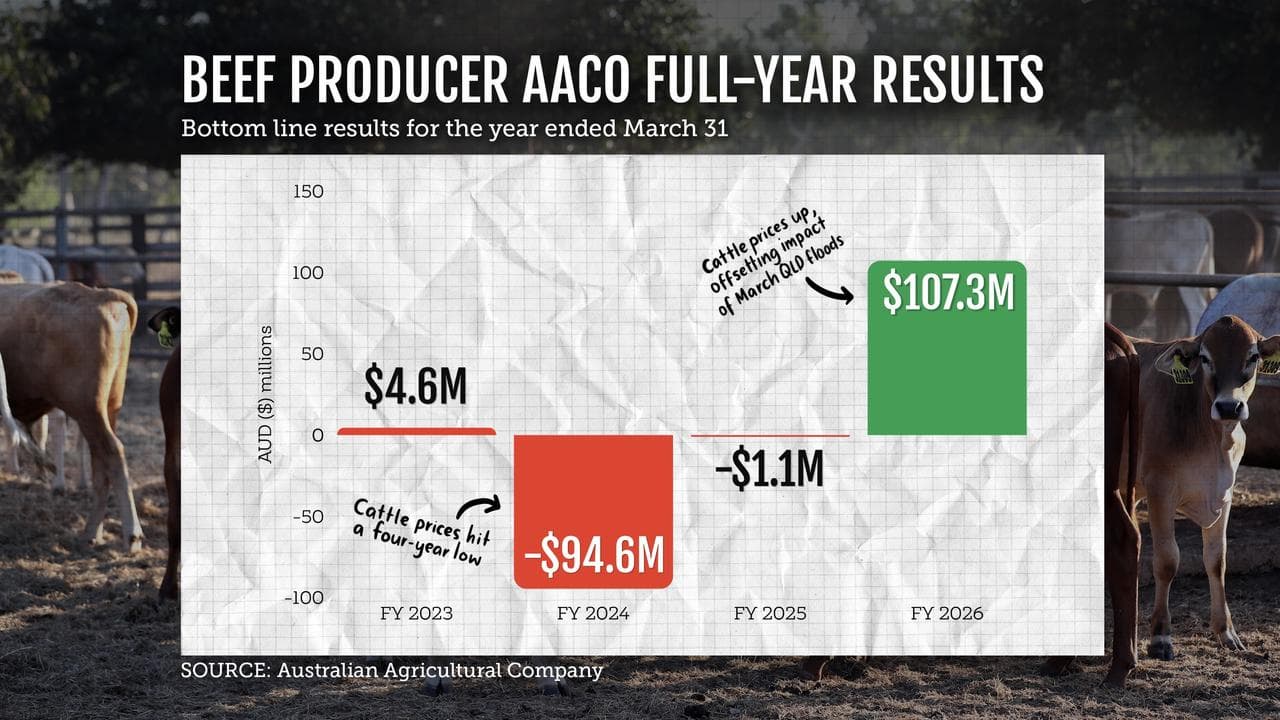
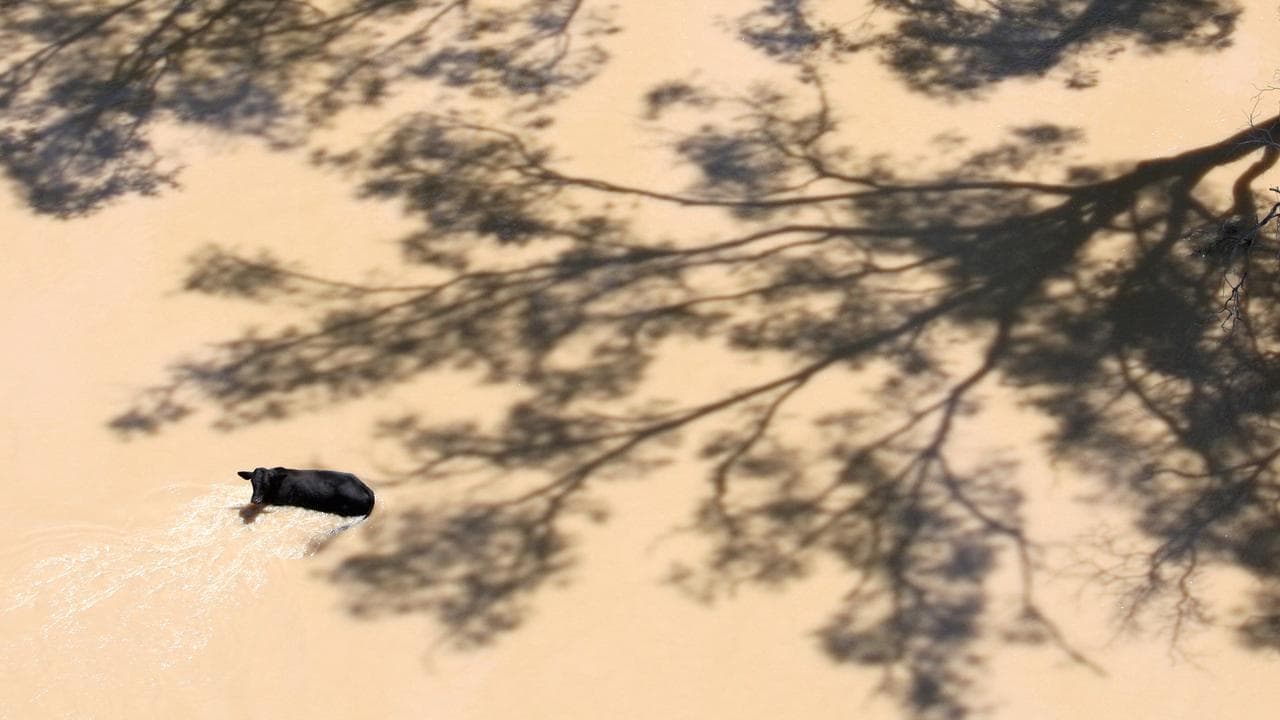
AACo's bottom-line result came in at $107.3 million, a sharp turnaround from a $1.1 million loss in 2025, as its herd value rose despite the loss of 7000 cattle during the north Queensland floods of late 2025 and early 2026.
Revenue grew nine per cent to $422.1 million, as beef sales rose seven per cent to $314.4 million and cattle sales jumped 15 per cent to $107.7 million.
Flooding in the Gulf of Carpentaria in late December and early January severely affected three of AACo's cattle properties, costing the company $9 million.
Cattle worth about $13 million perished, but investments in flood refuge banks, infrastructure improvements and flood management plans helped mitigate losses.
"Our animals, land and infrastructure came through in much better condition than they did after the 2019 flooding," chief executive David Harris said.
Seven years ago, a monsoon trough in Queensland killed 43,000 cattle.
AACo's Westholme wagyu beef brand was building global momentum, Mr Harris said, with North American distribution up 20 per cent, supported by a recent expansion into Mexico City and Hawaii.
AACo's other two wagyu brands - Darling Downs and 1824 - were also performing well.
During the year, the company expanded its reach in Hong Kong and Thailand and entered the Indonesian market to extend its footprint in high-growth Asian markets.
AACo has been realising a beef sales price of $19.34 per kilogram, against a cost of production of $3.09/kg.
The company is working on improving the quality of its beef, including through a breeding program to optimise herd genetics.
"That obviously takes a little while to play out, but it's been there for quite some time," Mr Harris said.
"You add good land conditions, and managing that land appropriately, to keep good cattle conditions and good conception rates.
"I think we're on a good trajectory."
AACo has invested in Sydney-based startup Sorensis, which is developing a non-surgical long-term contraceptive implant for use in female cattle.
According to Sorensis, unwanted pregnancy in cattle is a longstanding issue for the global beef industry.
"The technology is expected to improve animal welfare, productivity and operational efficiency, whilst lowering costs," Mr Harris said.
"We're looking forward to collaborating with Sorensis further on this."
AACo owns and operates 22 cattle stations, two feedlots and farms covering about 6.4 million hectares across Queensland and the Northern Territory.
Billionaire and Fortescue executive chairman Andrew Forrest, and his estranged wife Nicola, own a 22 per cent stake in the company via their Tattarang investment vehicle, according to AACo's annual report.
In afternoon trading, AACo shares were up 1.5 per cent to to $1.32.