Australia is failing to progress the eradication of one of its most destructive invasive species.
Rabbit numbers are on the rise in several states along with their impact on native wildlife and agriculture, according to national research.
The government-compiled Vertebrate Pest Management Report Card reveals overall rabbit numbers, distribution and impacts remain largely unchanged over the past five years.
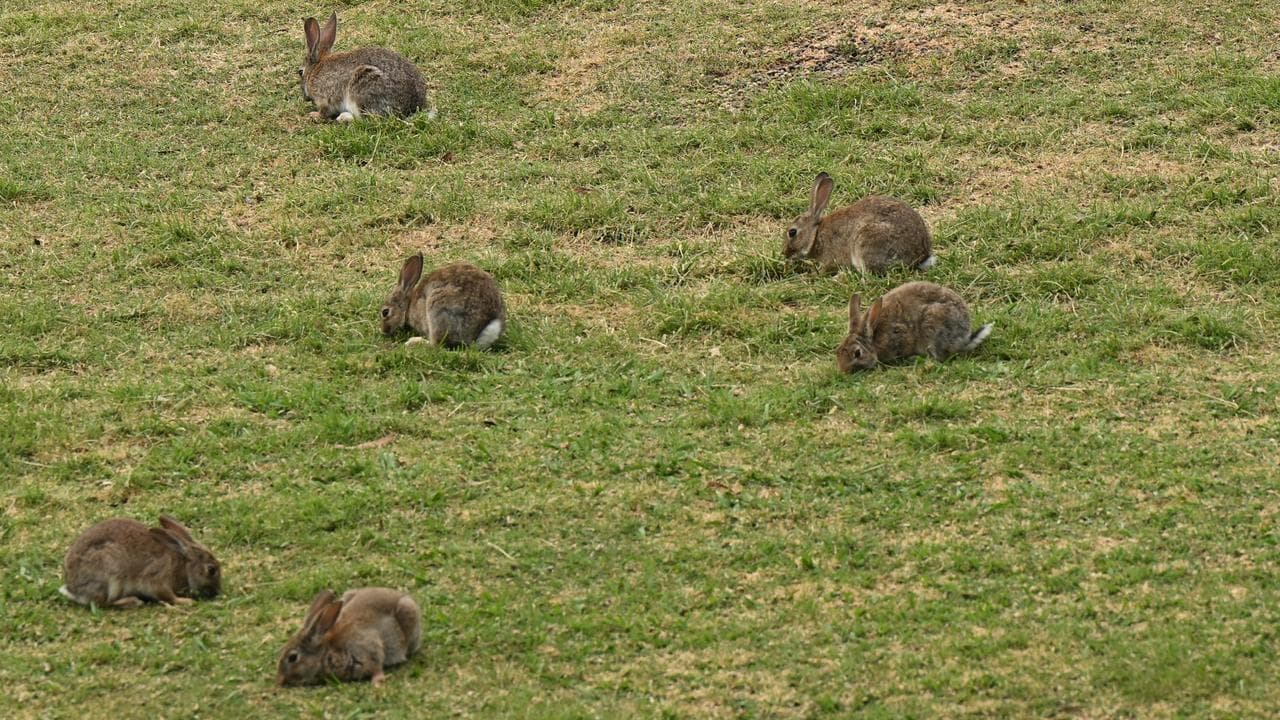
Yet populations have increased in Victoria, Tasmania and the ACT, while environmental damage is growing worse in NSW and Tasmania.
Experts estimate there are 200 million rabbits across the country.
They threaten 322 nationally listed species, destroy native vegetation and wildlife habitat and cause more than $200 million in agricultural losses annually.
The future of the federal government's flagship Established Pest Animals and Weeds program meanwhile hangs in the balance.
Its ongoing funding was not included in the last federal budget with a decision on its continuation expected next year.
"Rabbits have been devastating Australian landscapes for more than 150 years, yet this report shows we're still failing to get their numbers down," Invasive Species Council Advocacy Director Reece Pianta said.
"We know rabbit control works when governments, landholders and communities have the tools and resources to act together.
"What doesn't work is allowing funding to disappear while rabbit populations continue to breed and spread."
Mr Pianta said the report raised concerns about the effectiveness of existing management programs.
"Rabbit biocontrol has been one of Australia’s greatest environmental success stories," he said.
"But rabbits are gradually developing resistance to existing viruses."
The federal government tipped $2.6 million into the initial phase of new rabbit biocontrol research earlier this year.
However, more funds are needed to complete the program and deliver the next generation of biocontrol tools.
Australia's current rabbit haemorrhagic disease virus was released almost a decade ago and rabbits have gradually become resistant to it.
Settler Thomas Austin released 24 wild European rabbits in Victoria for recreational hunting in 1859.
With no natural predators, mild winters and abundant grass, they spread across two-thirds of the continent within 50 years.


