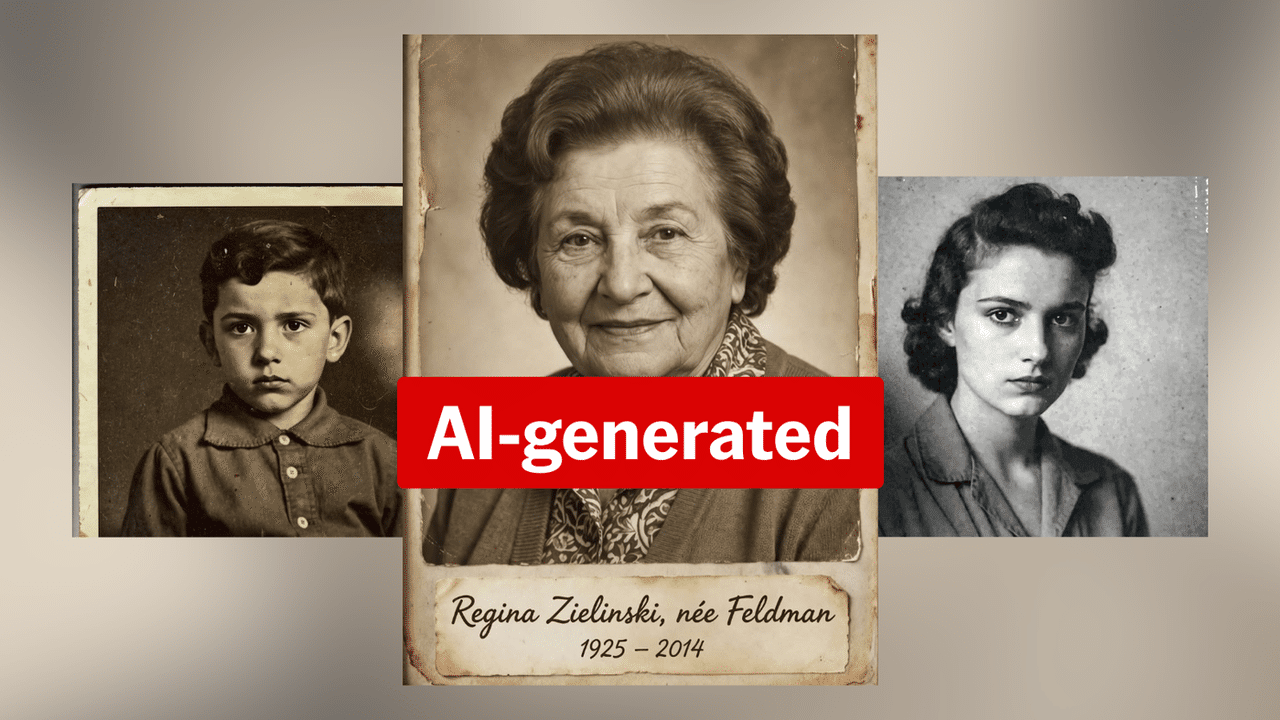
What was claimed
Facebook posts include genuine photos of people sent to concentration camps during the Holocaust.
Our verdict
False. The images are AI-generated.
AAP FACTCHECK - Spammers are rewriting history by posting fake photos of people sent to Nazi concentration camps, including Australian survivors.
The images purport to be authentic historical photos of the survivors but are created using artificial intelligence (AI) and often bear little resemblance to those represented.
One post features Australian Peter Kraus, a retired obstetrician who escaped the Nazi death camps as a child and now lives in Queensland.
The post includes a vintage-looking photo that purports to show Dr Kraus aged eight.
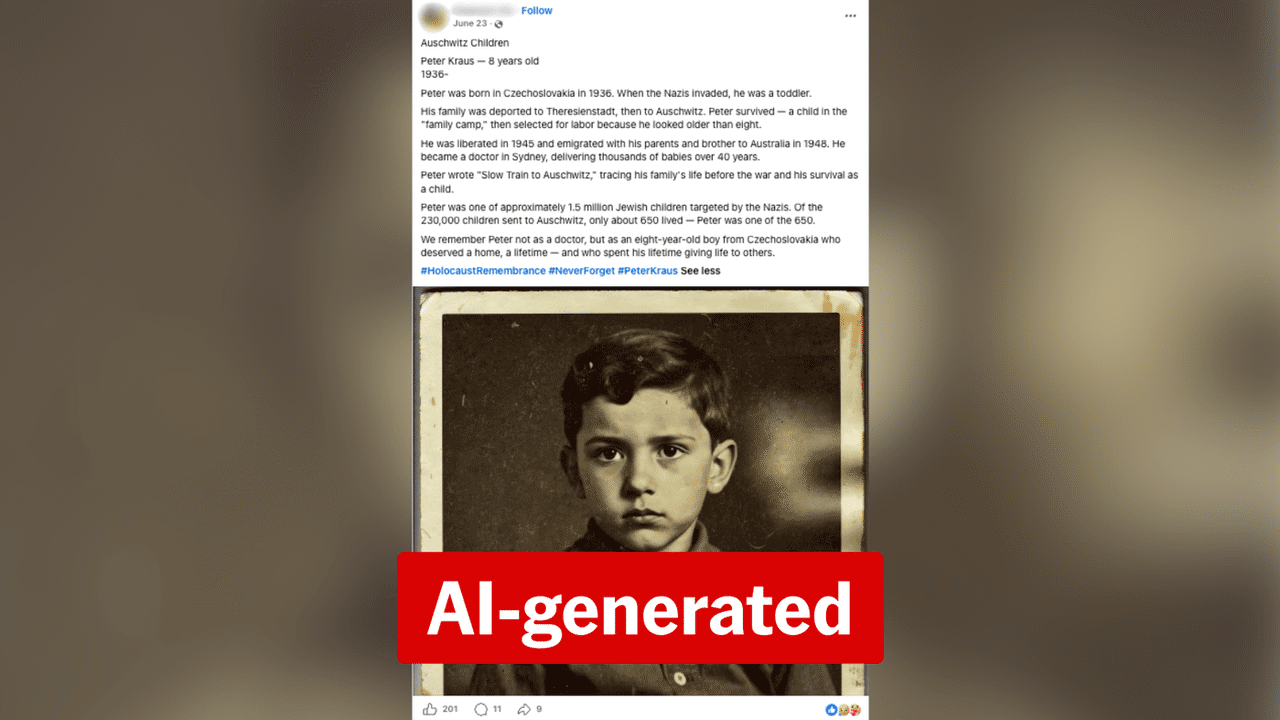
However, Dr Kraus told AAP FactCheck the image did not look like him as a child and did not include the glasses he wore as an eight-year-old.
“The photograph is not of me,” Dr Kraus.
Meta’s AI verification tool confirmed the Facebook image was created using AI.

The post also purports to retell Dr Kraus’s experience of surviving the Nazis, but contains multiple errors.
“Peter was born in Czechoslovakia in 1936. When the Nazis invaded, he was a toddler. His family was deported to Theresienstadt, then to Auschwitz,” the spam post reads.
“He was liberated in 1945 and emigrated with his parents and brother to Australia in 1948. He became a doctor in Sydney, delivering thousands of babies over 40 years.”
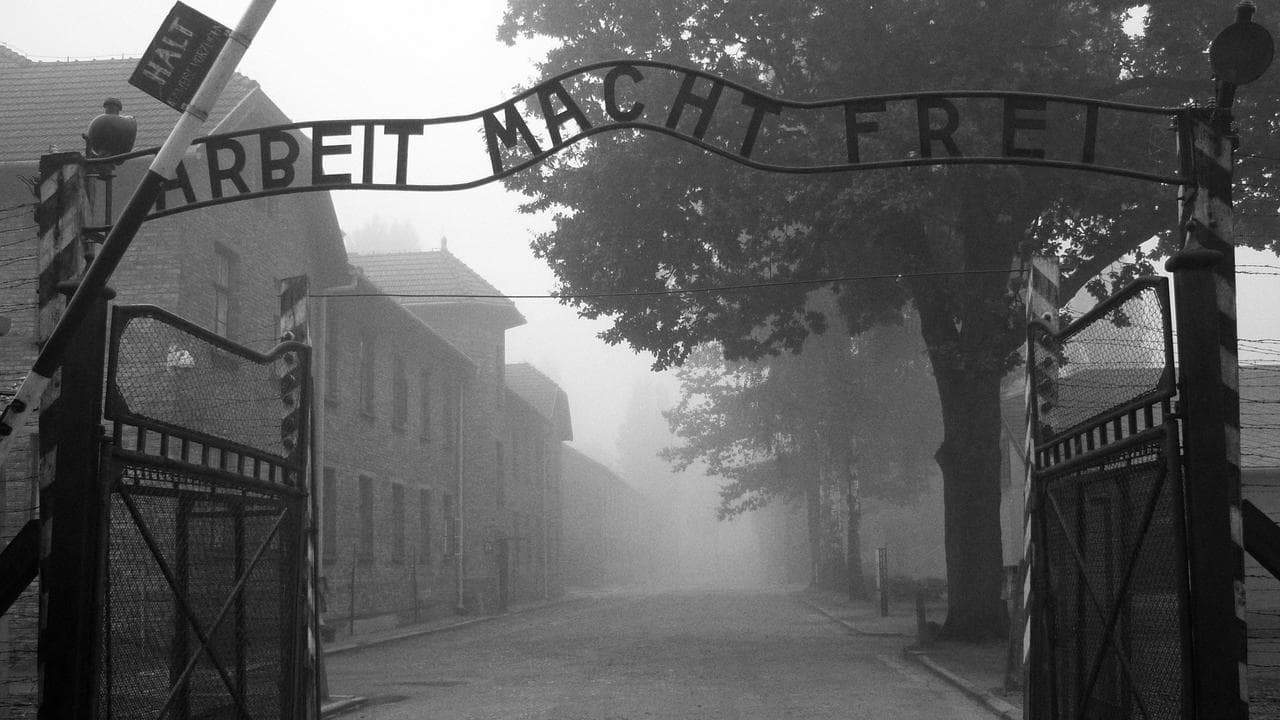
However, Dr Kraus, who wrote about his experiences in a 2020 memoir called Slow Train to Auschwitz, said the post had almost every element of his story wrong.
“I was not born in 1936… I wasn’t born in Czechoslovakia… I did not go to Auschwitz,” Dr Kraus told AAP FactCheck.
“It all sounds like a legitimate story, but it isn’t. It is made up, but not totally.”
Other Facebook posts purport to retell the story of Olga Horak OAM, a Slovak-born Australian who died in 2024.
Ms Horak survived five concentration camps as a teenager before moving to Australia in 1949 and settling in Sydney.
She later became an artist and was awarded the Medal of the Order of Australia in 2014.
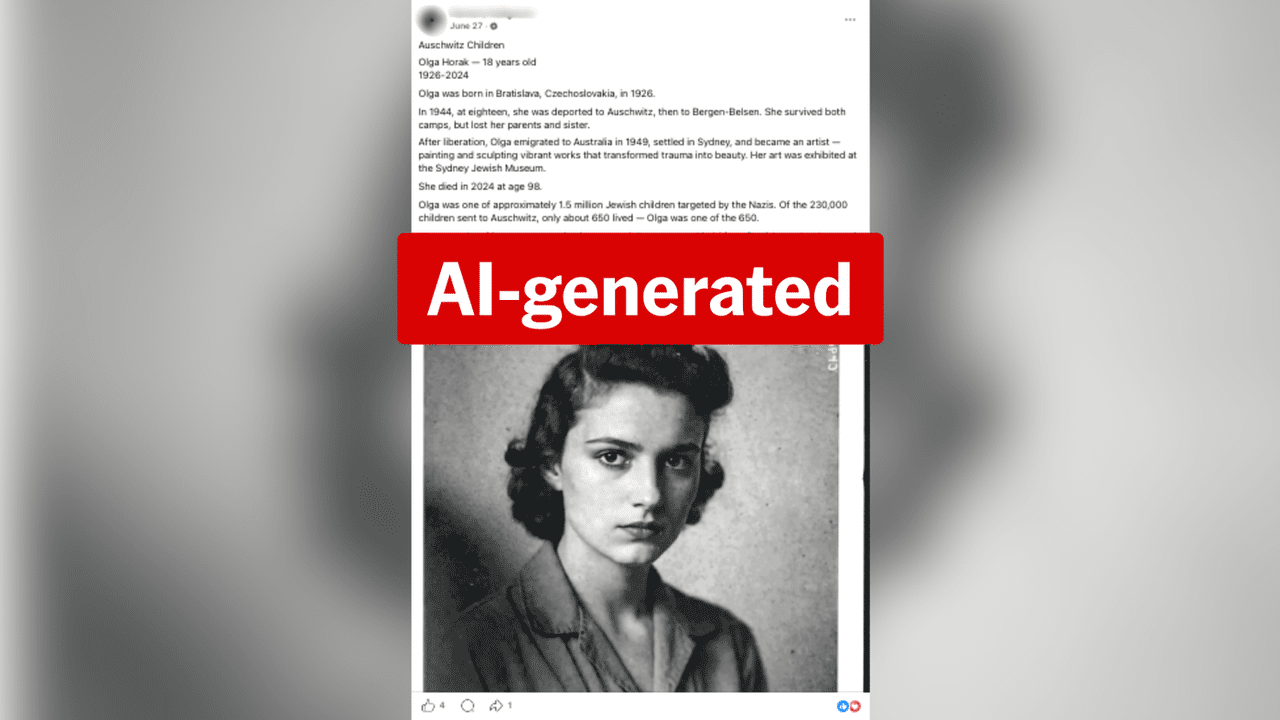
Facebook posts about Ms Horak include a black-and-white headshot purportedly showing her aged 18.
However, Ms Horak’s grandson, human rights lawyer Anthony Levin, said the image was fake and appeared to be AI-generated.
“That is absolutely not my grandmother,” Mr Levin told AAP FactCheck.
Another Facebook post claims to show a photo of Polish-born Australian Regina Zielinski, a Jewish woman who was sent to Sobibor death camp in 1942 at the age of 17.
Ms Zielinski emigrated to Australia in 1949, where she died in 2014 at the age of 89.
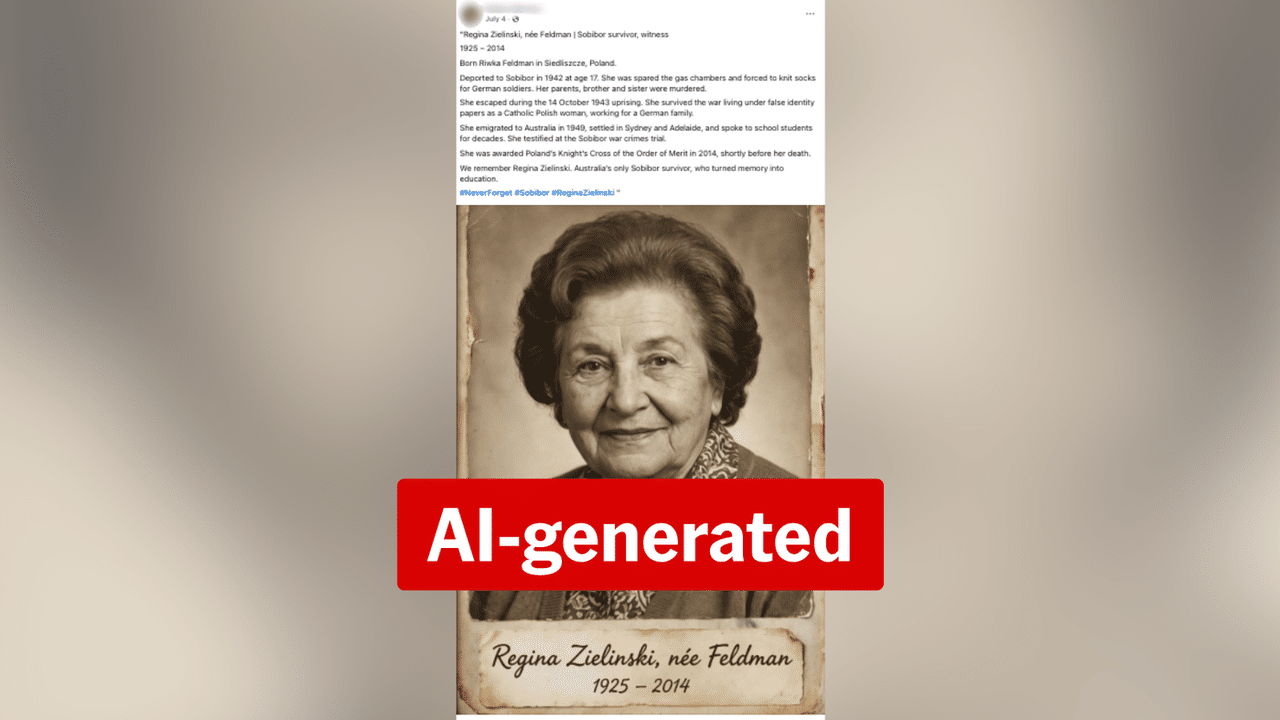
However, the image in the post is not Ms Zielinski and Gemini, Google’s AI tool, confirms it was AI-generated.
Other Australian survivors also feature in the AI-generated posts, including well-known Holocaust educator Eddie Jaku OAM, who told his story in a 2020 memoir called The Happiest Man on Earth.
Mr Jaku's son, Michael Jaku, confirmed AI-generated images of a boy claimed to be Mr Jaku "look nothing like Dad".
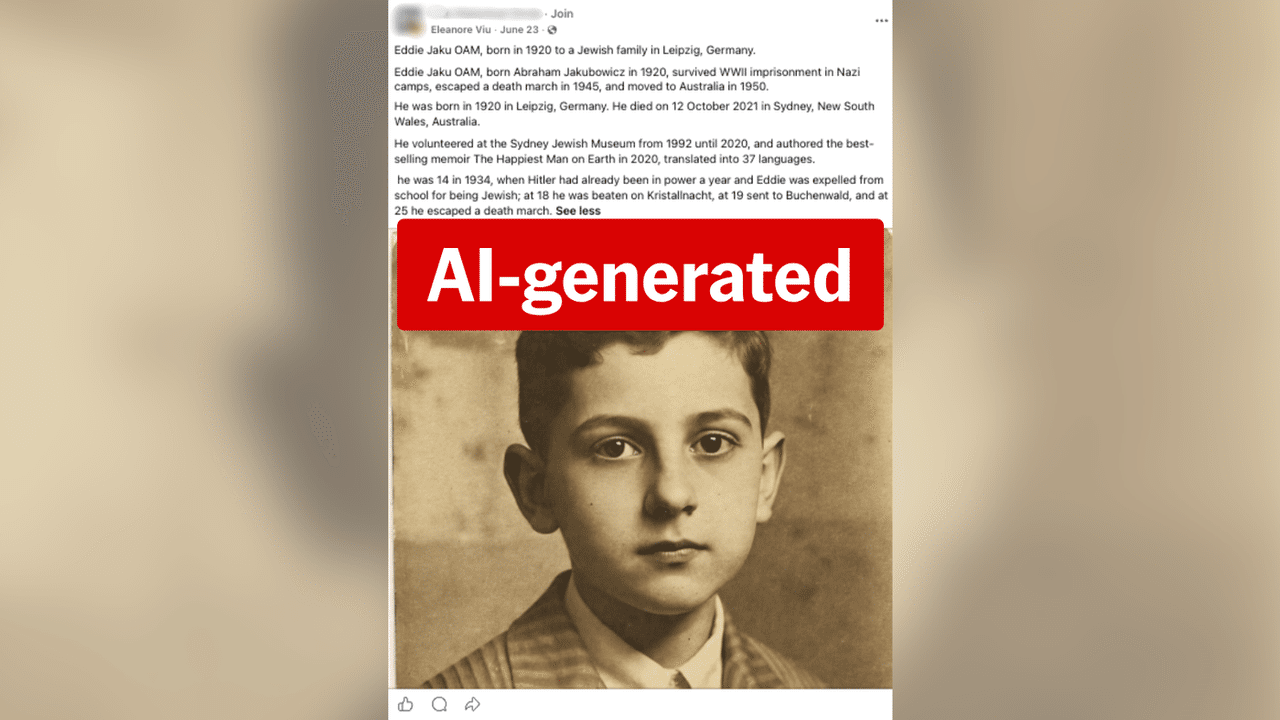
The Facebook accounts also post AI-generated images purporting to be historical photos of children who died in Nazi concentration camps.
Some of the fake photos are labelled as “AI content”, though many are not.
Most of the accounts are run from Pakistan, according to Meta’s page transparency details.
The images are part of a growing online trend for retelling historical stories using fake vintage-style photos instead of genuine documents.
The official Auschwitz Museum X account has called for posts of Holocaust stories illustrated with AI-generated images to be restricted on social media, saying they “replace authentic historical evidence with fiction”.
“This undermines public understanding of the history of Auschwitz, disrespects the memory of the victims, and contributes to the erosion of historical truth,” the X account posted on August 9, 2026.
AAP FactCheck is an accredited member of the International Fact-Checking Network. To keep up with our latest fact checks, follow us on Facebook, Instagram, Threads, X, BlueSky, TikTok and YouTube.


