
Australian authorities are investigating whether any citizens are caught up in Wednesday's high-speed rail crash in Spain in which 68 people have been killed and dozens more injured.
The Department of Foreign Affairs and Trade is not aware of any Australians impacted, government frontbencher Jason Clare said, but authorities have warned the casualty count is likely to grow.
“As you’d expect, we’ve got consular officials in Spain who stand ready to help any Australians or any Australian families if they are affected,” Mr Clare told ABC TV on Thursday.
“The whole country is in shock at the moment, seeing these images on our screens. It's just horrific.”
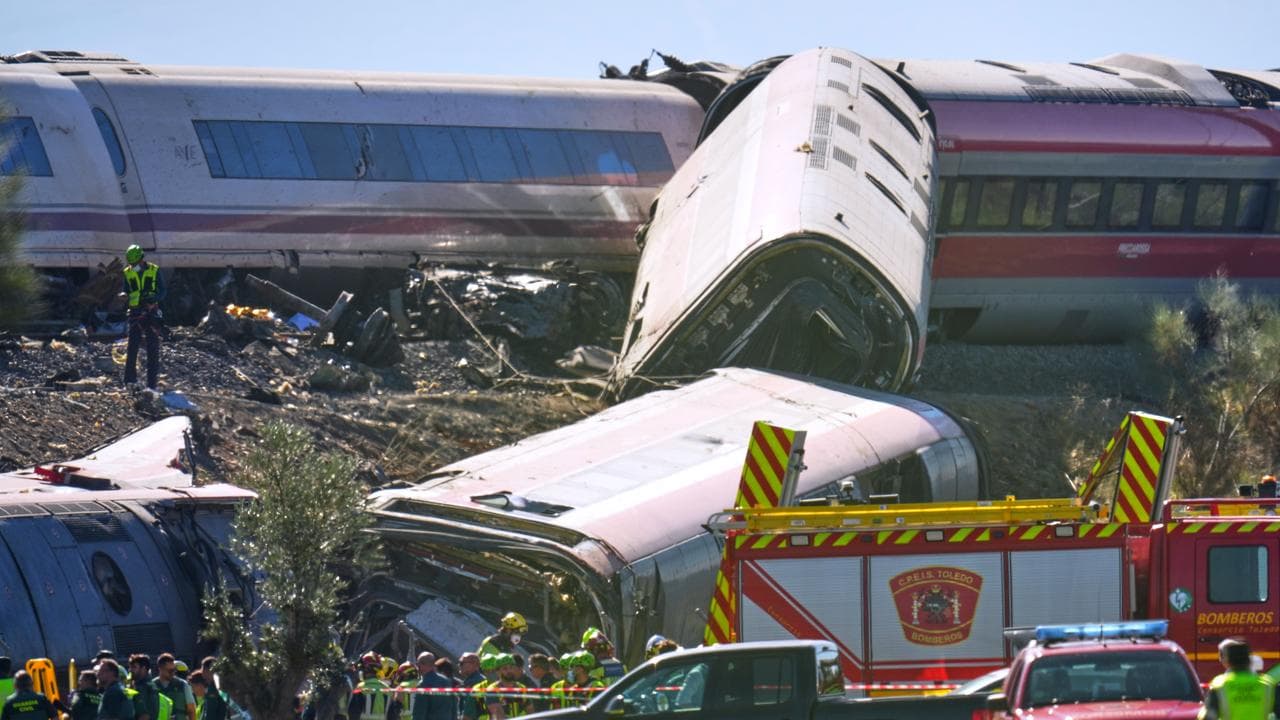
Australian officials have been encouraged to contact Spanish authorities if they are concerned about citizens who could be impacted.
"Our heartfelt condolences are with the families and loved ones of those killed, and with those injured and all affected by the train collision in Spain," a spokesperson for the Foreign Affairs Department told AAP.
Another crash along the same high-speed track in January killed 46 people.
The two trains, carrying 544 people, were travelling in the same direction from the Spanish capital of Madrid to Seville in the southwest of the country.
It is believed one of the trains was travelling at up to 200 kilometres an hour.
Three days of mourning have been declared by Spanish Prime Minister Pedro Sanchez, who told domestic media his government was working quickly to clarify what had happened.
Transport authorities have so far suggested the trains were ordered to continue down the line despite a signalling failure.

Mr Clare said the crash reminded him of Sydney's Granville train disaster, in which 83 people died and 213 were injured.
The January 1977 incident occurred when a peak-hour commuter train, travelling from the Blue Mountains, derailed. A road bridge collapsed onto two of the carriages.
"Every year we get back together at the same site, and I meet people who were in that awful disaster, whose lives were changed and transformed," he said.
"This is something people never, ever recover from."


