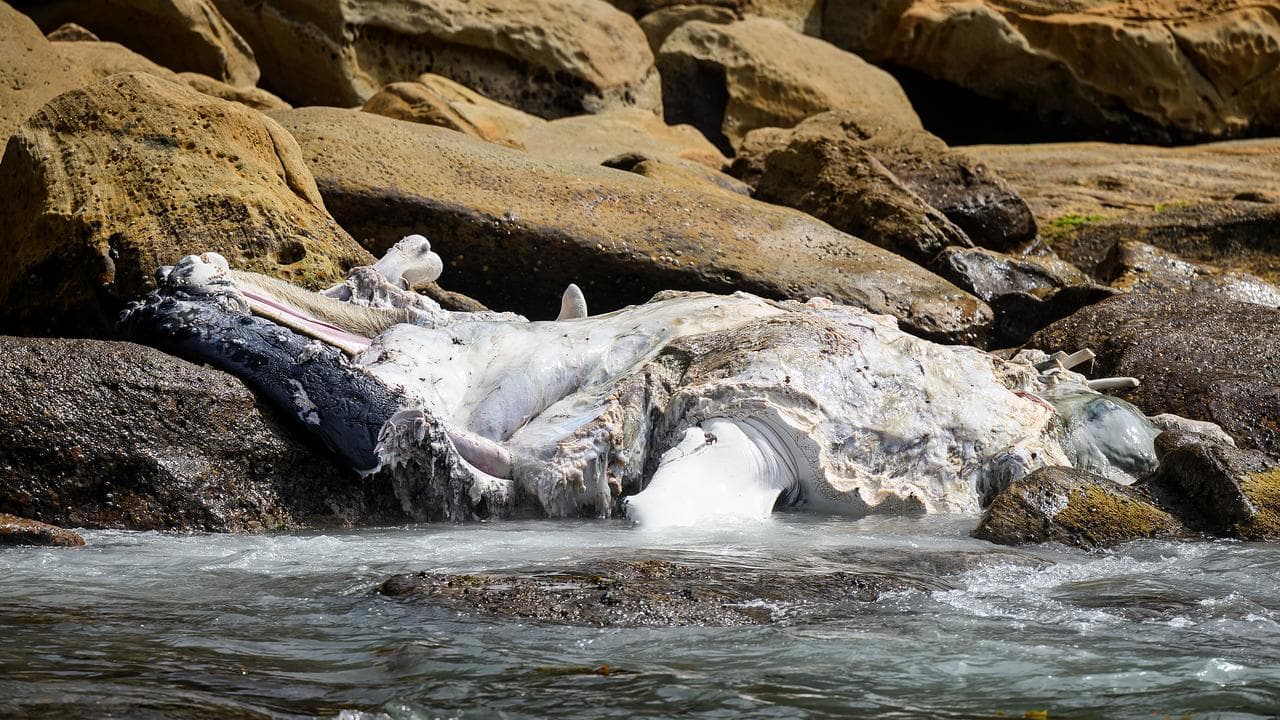
Two popular beaches are closed after a whale carcass washed up on nearby rocks.
The carcass was found between Coogee and Maroubra beaches in Sydney's east, with both closed on Thursday morning as a safety precaution.
Randwick City Council said it was not moving the animal, as it waited to see if it would be washed back into the sea with the tide.
Mayor Clare Willington said council was working with local Indigenous rangers to deal with the situation sensitively, as the whale had special cultural significance for the Gamay people.
“It has been dead for some time and has washed up here at Lurline Bay, which is a really sad sight,” Dr Willington told reporters on Thursday.
“We have cordoned off the area to leave this creature in peace and safe from the attention of people.”
The animal is difficult to access because of its location, the council said, and is surrounded by cliffs and rock ledges.
Robert Cooley from the Gamay Rangers said the situation was logistically, emotionally and spiritually challenging.
While it was difficult to tell because of its state of decomposition, Mr Cooley said it appeared to be a young humpback whale, known in language as a burriburri.
“It’s an animal that is very important to us through a spiritual lens, being an overarching spirit ancestor, or totem, as it’s more commonly known,” he said.
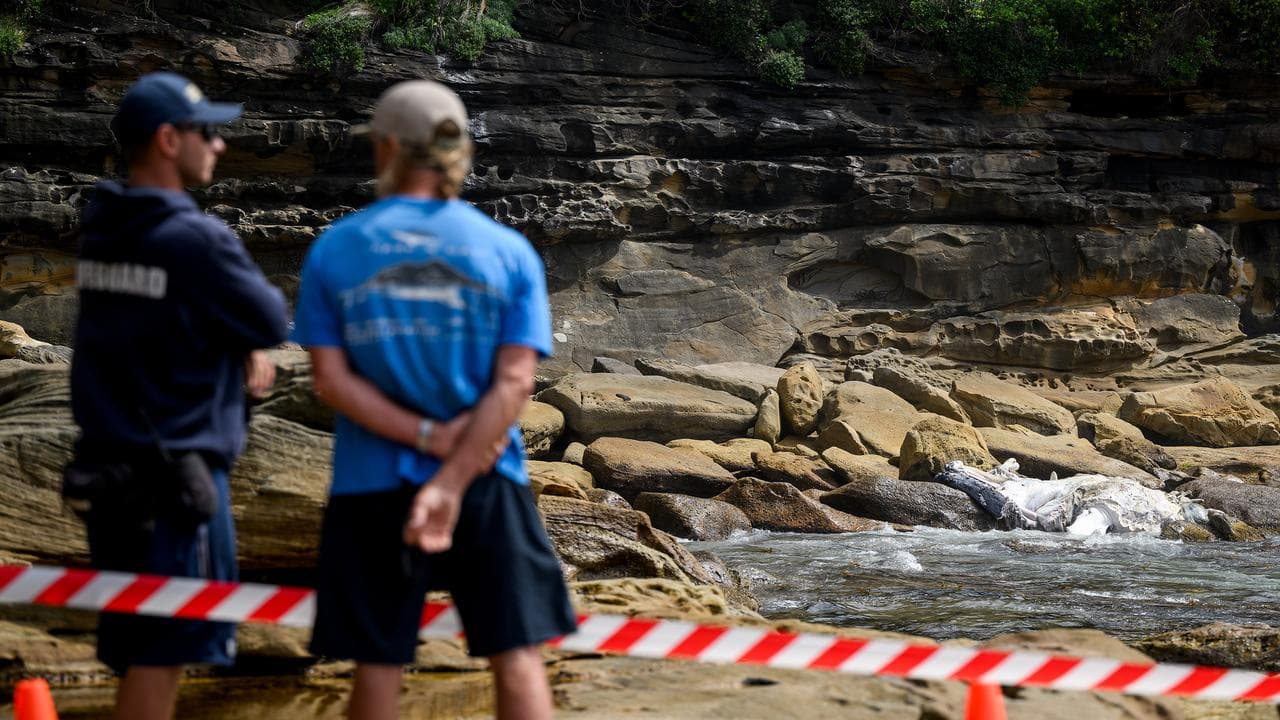
He said the rangers’ preference was to let nature take its course.
“But if that's not possible, and we may have to intervene, then we'll … discuss any kind of cultural protocols we might want to conduct during that operation,” Mr Cooley said.
He said the carcass posed safety risks to beachgoers because it could attract sharks to the area and was also a biohazard.
The animal was first spotted off Sydney’s northern beaches on Wednesday, Mr Cooley said, and there was evidence someone had tried to tow it out to sea.
Authorities said there was also a very small chance the creature could be infected by bird flu, which can impact marine animals.
“That's a reason to proceed with caution, because that is a consideration in whether we're going to intervene,” Mr Cooley said.


