
A bird flu outbreak in Australia's commercial poultry flocks could cost billions of dollars and send prices for a roast chook and a carton of eggs soaring, analysts warn.
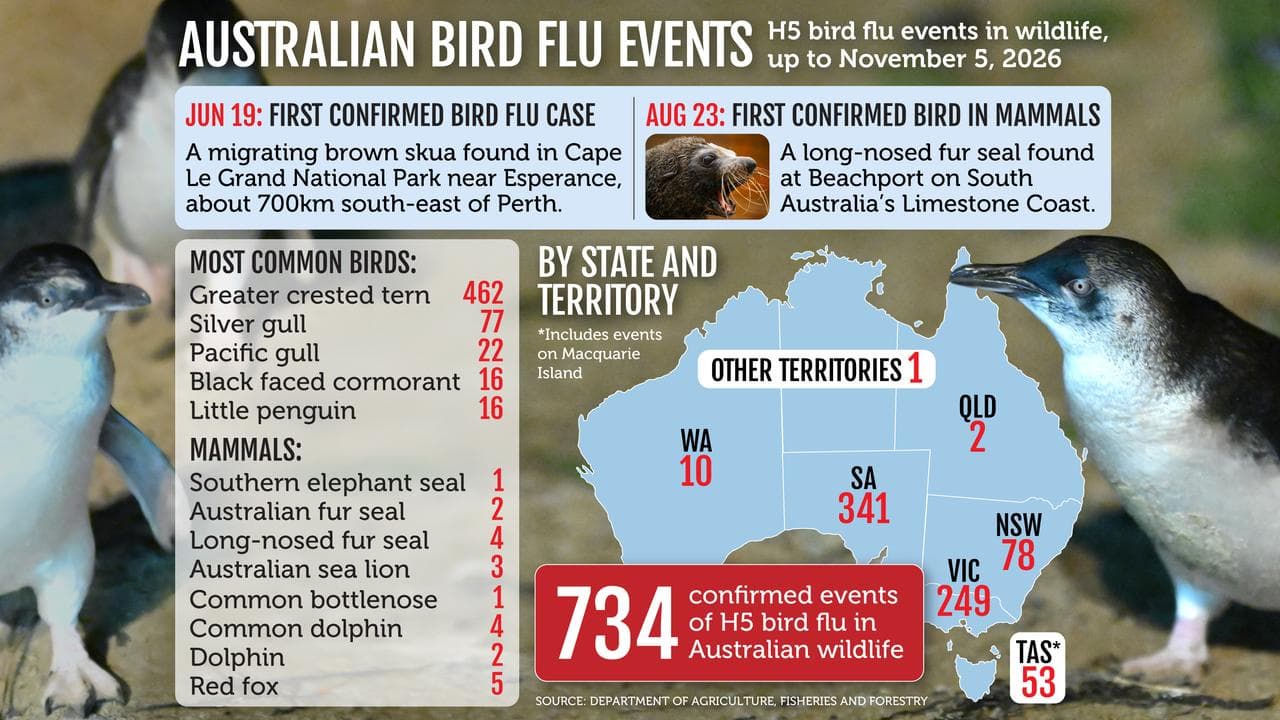
The H5N1 strain was first confirmed on home soil on June 19 after a migrating brown skua washed up on a remote beach near Esperance in Western Australia.
As of November 12, there have been more than 730 confirmed flu events in wildlife, according to federal agriculture department data.
But there have been no detections reported in commercial poultry or agricultural livestock.
If the highly virulent strain of avian influenza were to bypass biosecurity measures and breach commercial poultry farms, it could put a hefty dent in the national economy.
EY-Parthenon analysis found real GDP could be between $0.7 billion and $6.2 billion lower than would otherwise be expected over 2026–2028.
An outbreak could also reduce employment by between 495 and 5629 full-time-equivalent jobs, and push up the price of everyday food staples.
Most Australians would notice the impact at the supermarket checkout rather than through headline economic indicators, though.
A $6.40 carton of eggs could rise to approximately $11.20.
A kilogram of chicken breast could increase from $11.00 to $19.25, and a rotisserie chicken could rise from $13.00 to $22.75.
"It is important that businesses across the food system understand the potential implications and prepare appropriately," EY economist Patrick Huynh said on Monday.
Modelling found that even a contained outbreak impacting several poultry sites, but leaving shared supply-chain capacity intact, would have severe economic consequences.

Real GDP would be down about $0.7 billion over 2026–2028, with job losses of around 495, pushing peak egg and poultry prices up about 10 per cent.
If disruption reached shared infrastructure such as breeders, hatcheries, processors and freight networks, the GDP impact could rise to around $3.0 billion.
Employment would be down by an average of around 2,060 jobs a year and peak egg and poultry prices may rise by around 35 per cent.
Under the most severe interrupted recovery scenario, where further outbreaks occur before the industry has fully recovered, real GDP could be hit by $6.2 billion.
More than 5600 FTE jobs could be lost per year and peak egg and poultry prices may rise by approximately 76 per cent.
Job losses would extend beyond poultry farms to businesses involved in processing, food manufacturing, freight, retail and hospitality, Mr Huynh said.


