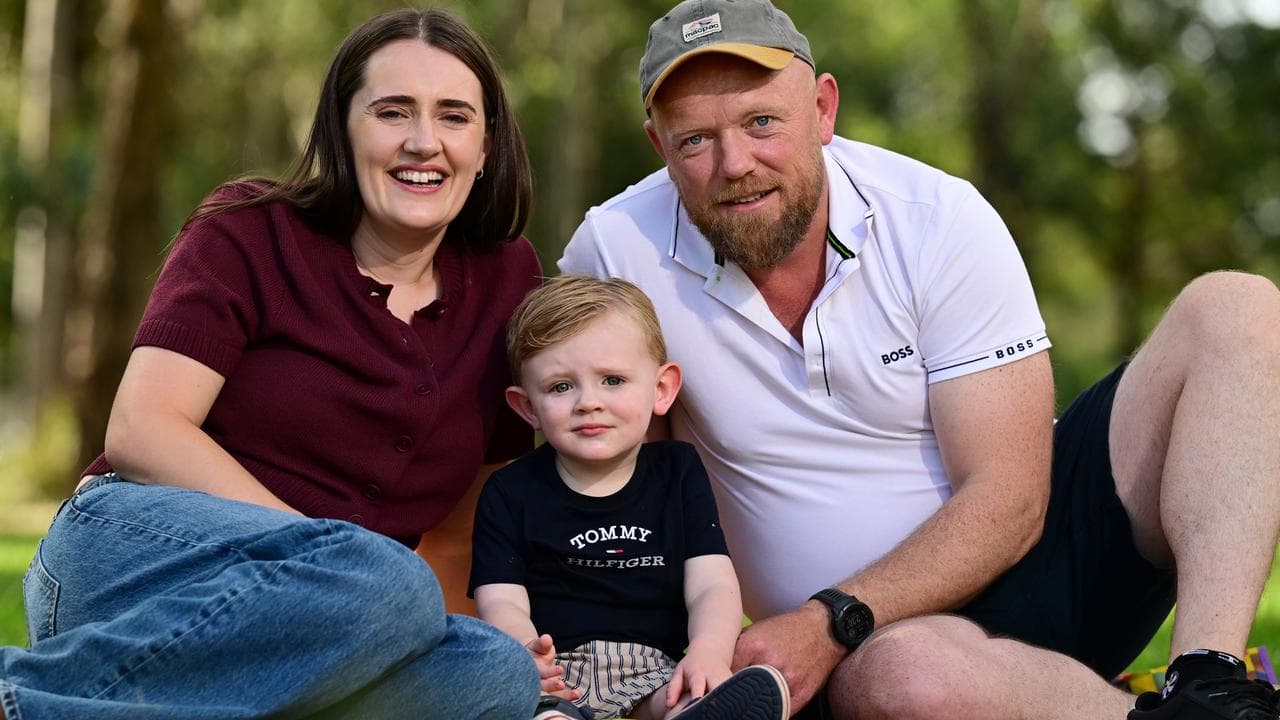
Marina Forde and Tom Christy would love to take their 22-month-old son Flynn with them for a long walk this Sunday but the energetic toddler is unlikely to co-operate.
“It’s Flynn’s world and we live in it,” Ms Forde tells AAP.
“He’s into anything that’s high, anything that’s fast … and he never stops talking.”
Ms Forde laughs as she describes her son’s boundless energy but there is relief behind it because things could have been very different.
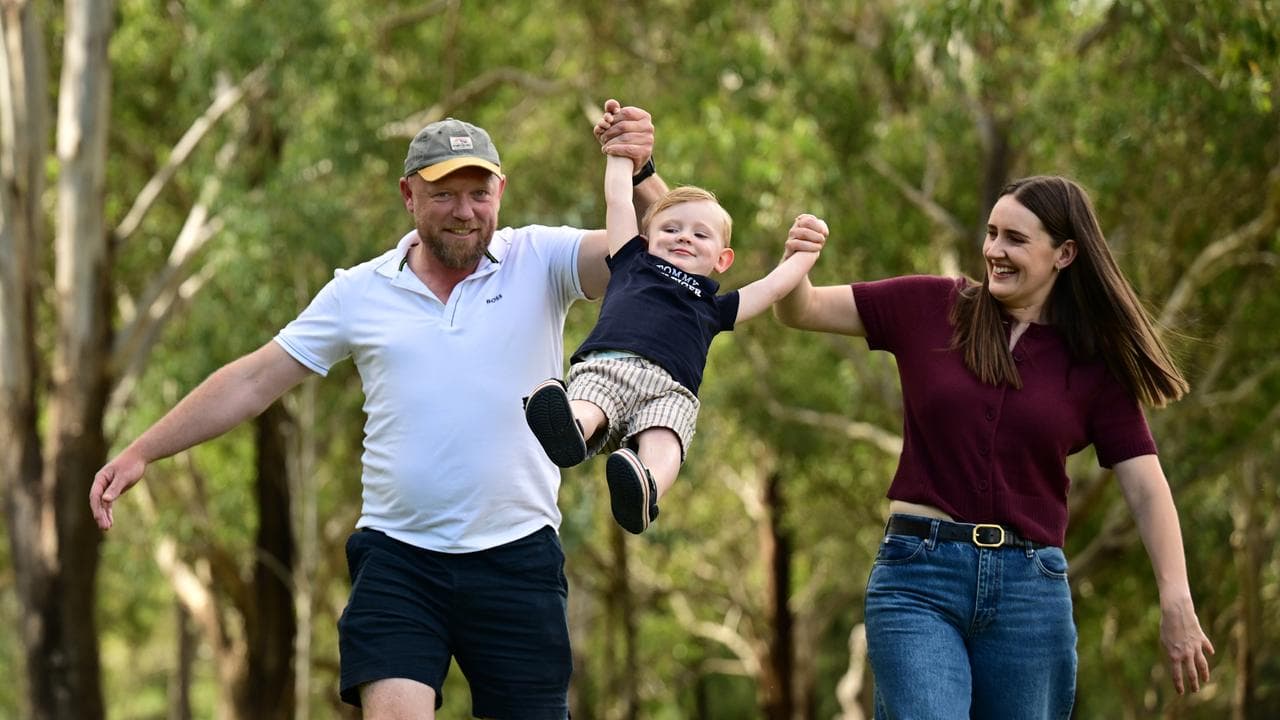
When Flynn was just three months old, he was diagnosed with a tumour the size of a tennis ball.
This weekend, his parents will join the Walk for Kids with Cancer to help raise funds for research and clinical trials, the same advances that helped save their son’s life.
“I can’t adequately put into words how unbelievable the care was,” Ms Forde says.
“Without clinical trials … Flynn wouldn’t have had the easier path that he had.”
Because keeping him in a pram for the duration of the Walk for Kids with Cancer would be a challenge, the couple are hoping he will instead be waiting for them at the finish line.
The annual walk, now in its 18th year, has raised more than $3 million to date and is aiming to bring in more than $500,000 this year to support lifesaving treatment and research across Sydney’s children’s hospitals.
It raises money for childhood cancer research, helping fund treatments and precision therapies that are improving survival rates and reducing the long-term impacts of treatment on young patients.
Childhood cancer remains the leading cause of disease-related death among children in Australia, with nearly 1000 diagnosed each year.
About 20 per cent will not survive, while three children die every week and 70 per cent of survivors face long-term side effects.
“Childhood cancer is heartbreaking. It robs kids of the carefree joy they deserve and places an unimaginable burden on their siblings and parents,” says Sydney Children’s Hospitals Foundation chief philanthropy officer Colin Allen.
“No child deserves to go through cancer but those who do deserve our all in fighting this disease, in every way that we can.”
For Flynn's family, those advances proved life-changing.
“One night I was feeding him … and I noticed his tummy was really hard,” Ms Forde recalls of the night her world was put on hold.
“This crying was like he knew he was in pain. He was so distressed.”
Although he settled on the way to hospital, his parents trusted their instincts and had him checked.
Initial assessments suggested something minor.
“The doctor was like, 'yeah, probably it is wind',” Ms Forde says.
But an ultrasound told a different story.
“Straight away she said, ‘This is very abnormal’… and you just know straight away, there’s something majorly wrong here,” she says.
By the next morning, doctors suspected cancer.
“Never in your wildest dreams do you think cancer,” Ms Forde says, adding other than being difficult to settle, Flynn had seemed mostly himself in the lead up to the hospital visit.
The days that followed were filled with tests, procedures and agonising uncertainty.
“That whole week you’re just living in fear,” she says.
“You’re living on fumes because you’re so exhausted … so full of anxiety.”
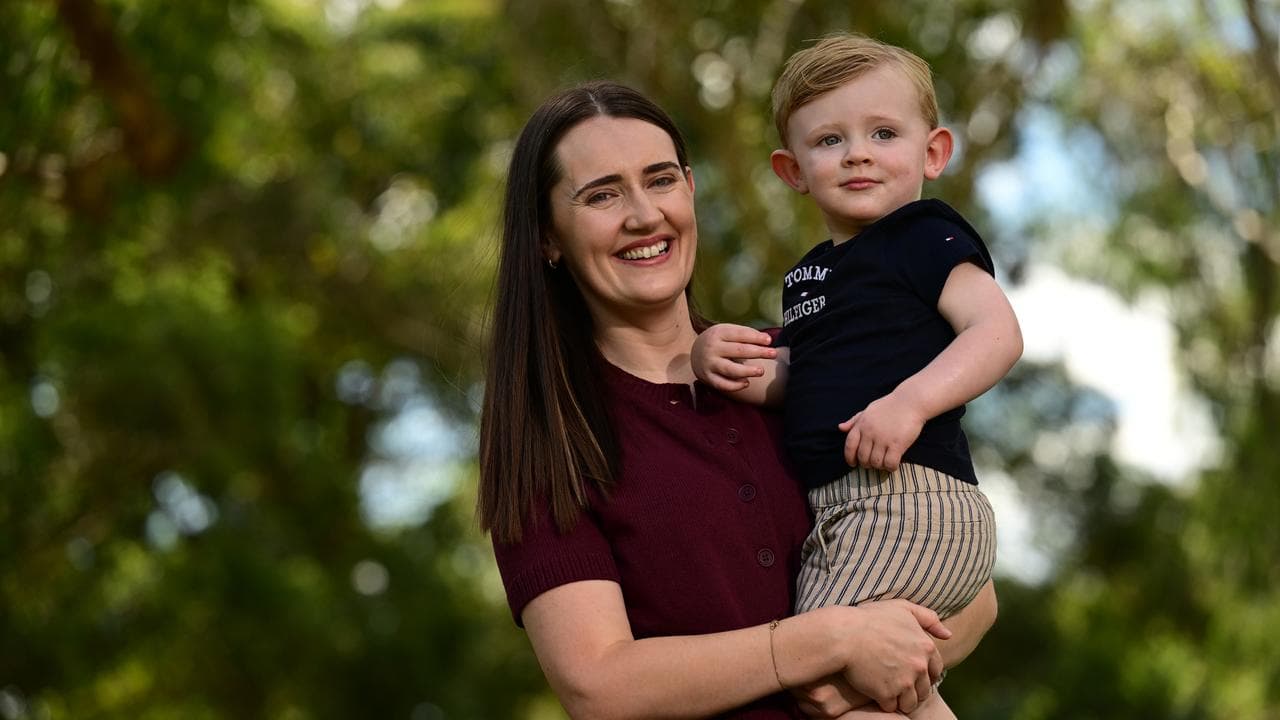
When the diagnosis of infantile fibrosarcoma was confirmed, it brought a surprising sense of relief.
“It actually came with some kind of relief because we knew it was treatable,” Ms Forde says.
Doctors initially warned Flynn might need surgery and chemotherapy but further testing revealed he was eligible for a targeted therapy - a precision medicine designed to attack the tumour with minimal side effects.
“That was just a game changer,” she says.
“It was just like you’ve honestly won the lotto.”
The treatment, taken as a daily oral medication over 12 months, worked rapidly.
“Within six weeks … the tumour had shrunk by 90 per cent,” Ms Forde says.
Their doctor was scratching his head, delighted with the unexpectedly fast turnaround.
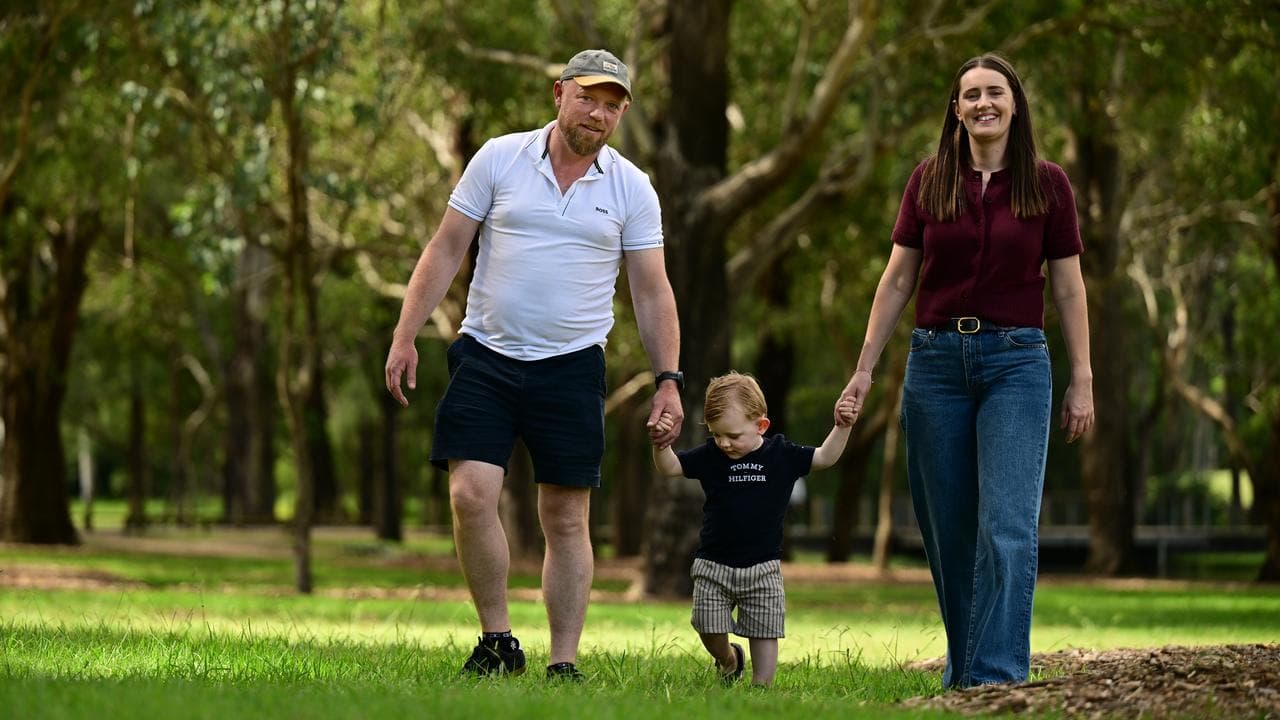
Now off treatment, Flynn is thriving - a healthy, active toddler with no memory of his early illness.
“The doctors used to always say … the people that are going to be traumatised are you and your partner,” Ms Forde says.
While Flynn continues to have regular scans every three months, his parents are focused on the present - and on giving back.
“You want to give everyone that opportunity,” Ms Forde says.
“As much money pumped into research … so that everyone could have the route Flynn had.”


