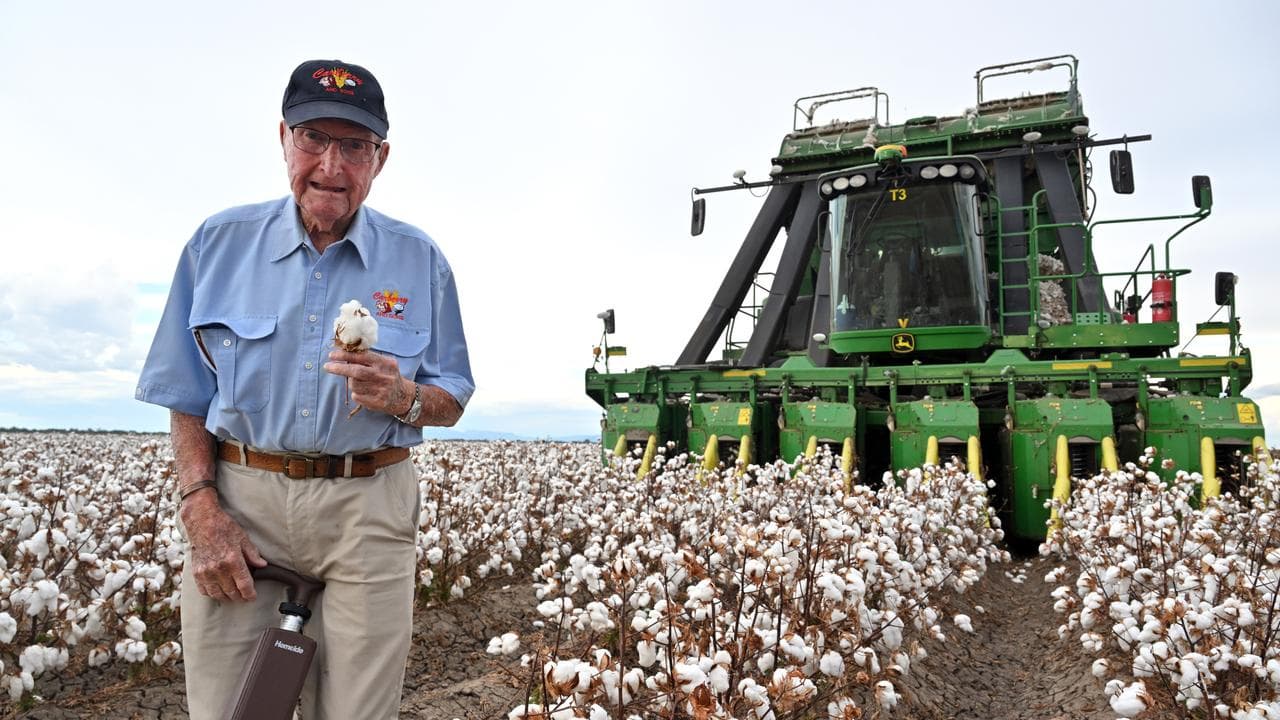
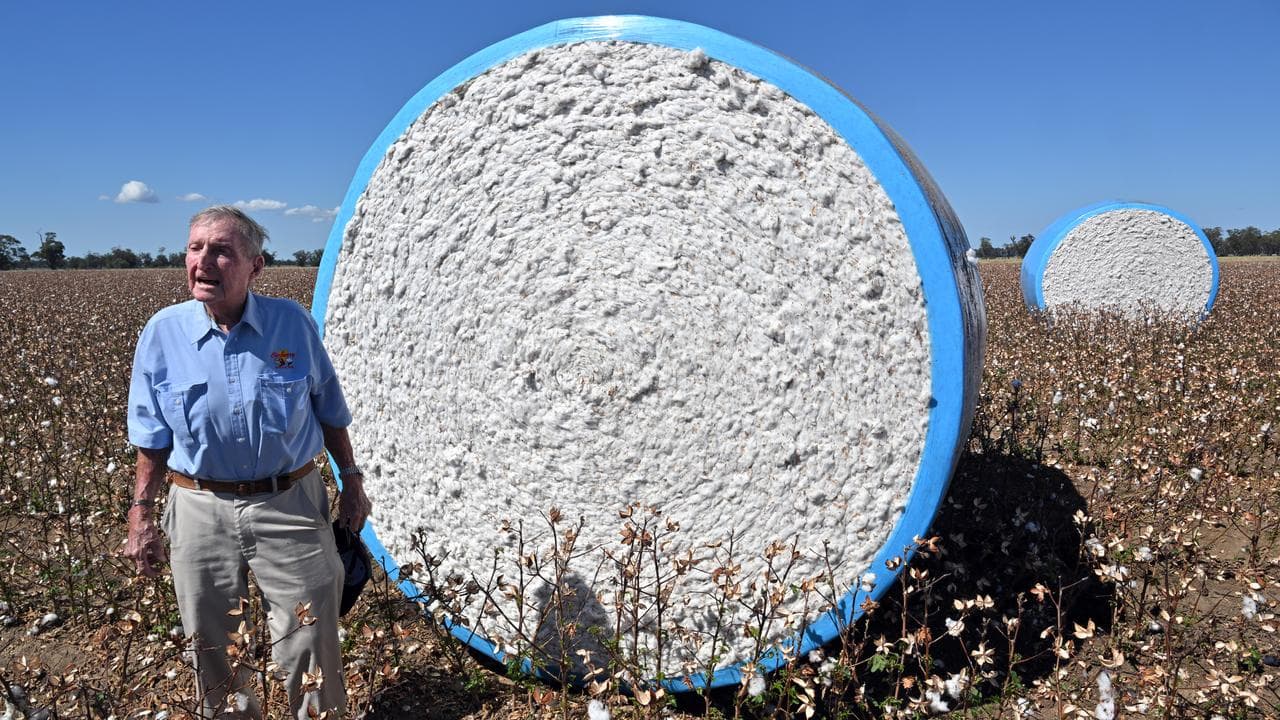
When Pat Carberry finally climbs down from the cabin of his harvester this season there will be mixed emotions.
He's farmed cotton at his Cardale property, near Narrabri in NSW's northwest, for 59 of his 97 years.
But 2026 will be the last time he and his family hit the fields.
The ending of a century-old family partnership, the rising cost of machinery and fertiliser, and water licensing issues have all contributed to a decision to sell up and pursue other endeavours.
Cardale and its operation look vastly different since Pat's father, Stan, bought the land upon returning from Gallipoli and the battlegrounds of the Middle East in 1917.
Even so, modern cotton farming is not a simple task for the uninitiated.
"You might think we've got to the stage of it being idiot-proof but it's not quite that," Pat tells AAP.
"Over the years, we've increased our yields by six or 700 per cent but so has all our expenses."
Pat's father Stan was wounded more than a dozen times during his World War I service but it didn't stop him setting up a farm on land obtained on a soldier settlement scheme.
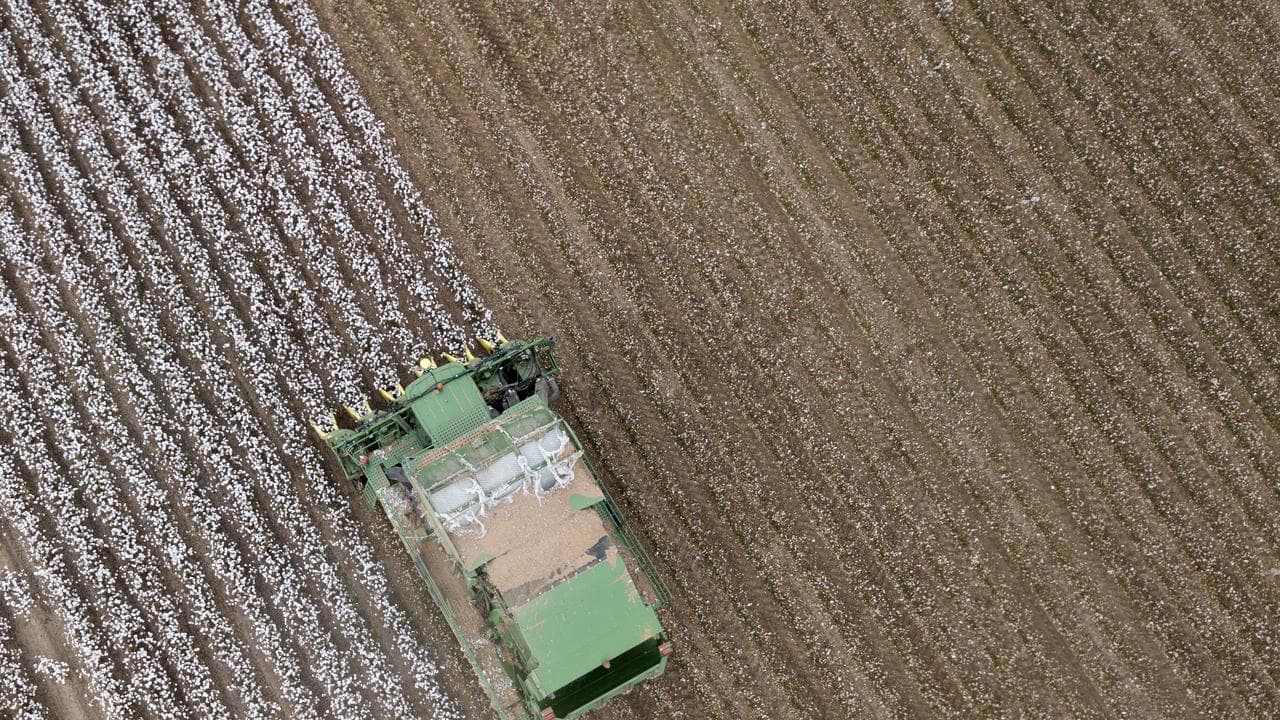
After three-and-a-half decades of wheat and sheep farming, Stan and his children jumped on the back of a 1960s wave of cotton-growing started by a pair of Americans looking for fresh overseas ground.
Since the middle of that decade, Pat and his family have been at the forefront of Australia's cotton industry, one of the most highly regarded cotton crops in the world.
"We've been through insects and that was partly solved by genetically modified cotton," Pat says.
"I used to have 100 cotton chippers out there, and that's been partly solved by genetically modifying protein ... so we could spray Roundup over the top and kill weeds and not the cotton."
Four generations of Carberrys have lived and worked at Cardale with Pat's son Mike and grandson Samuel taking over most of the day-to-day in recent years.
But Pat can't keep himself away from the action, especially during the harvest.
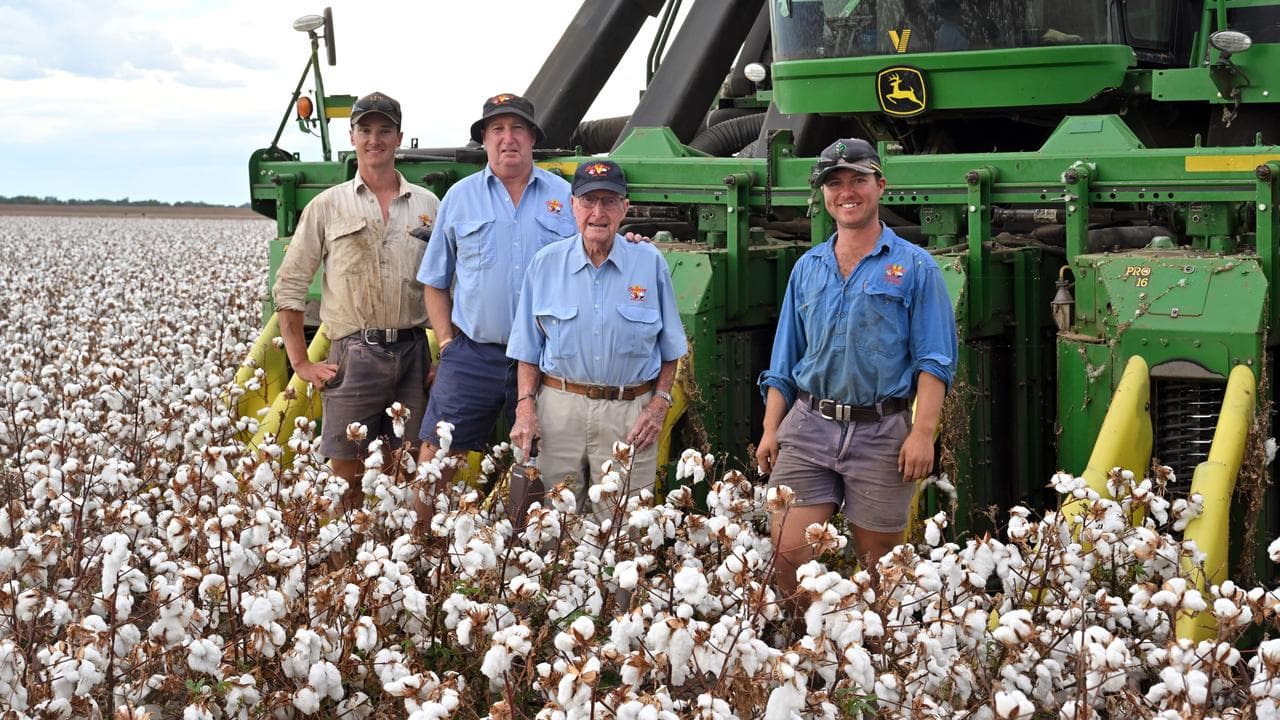
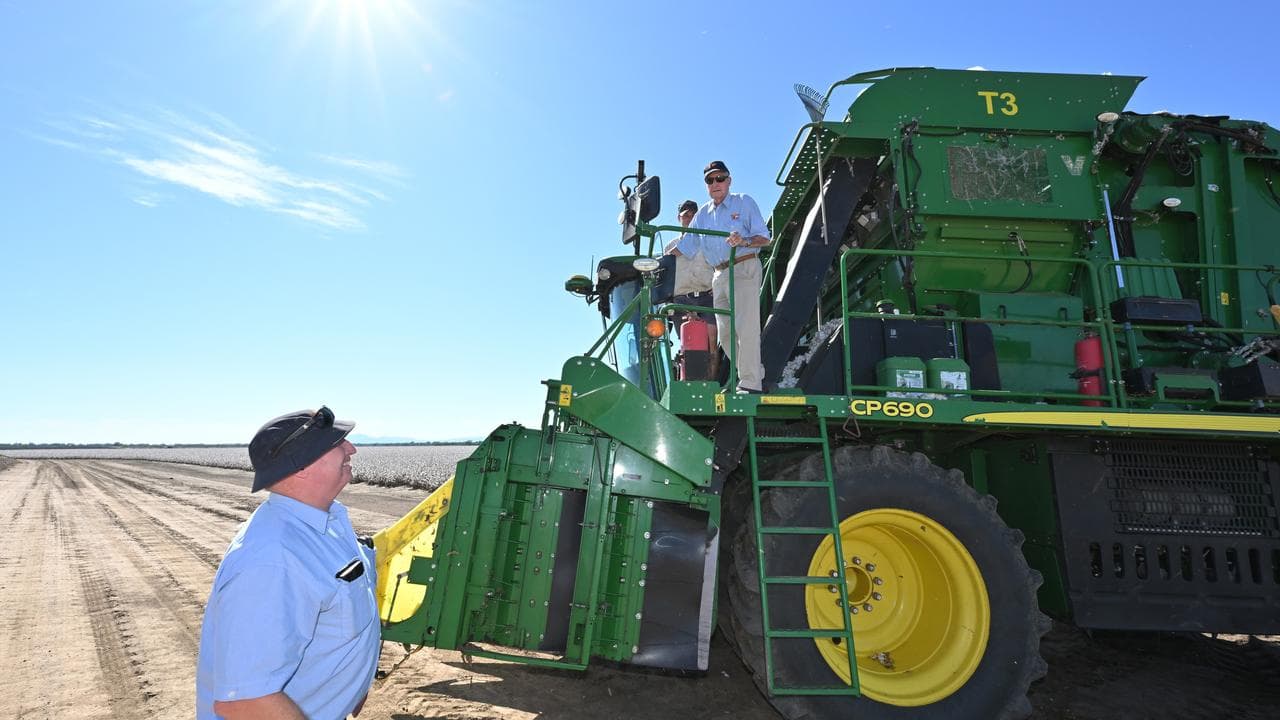
He's not afraid to get behind the wheel of one of the farm's modern cotton pickers that have slashed the amount of manpower needed during harvest.
"He comes out every day for smoko and we do a drive around the farm," Mike says.
"He says he's been to work and I do say to him that he uses that word loosely."
Despite the gentle ribbing, Mike wouldn't have it any other way.
"We love having him out around the farm; what's in Dad's head is so valuable to us and I've never lost sight of that," he adds.
For most of its history in Australia, cotton has been littered with family farming stories like Pat's.
But with cost pressures on essentials like diesel and fertilisers and the rising influence of corporate conglomerates, small operators are battling.
"The family farm is struggling to take the highs and the lows, particularly the lows," Mike says.
"Our expenses have just got out of control and we're price-takers.
"The fuel situation at the moment or the fertiliser situation, we can't pass that on."
A key driver of increasing yield has been Australian scientists and breeders making the industry more efficient.
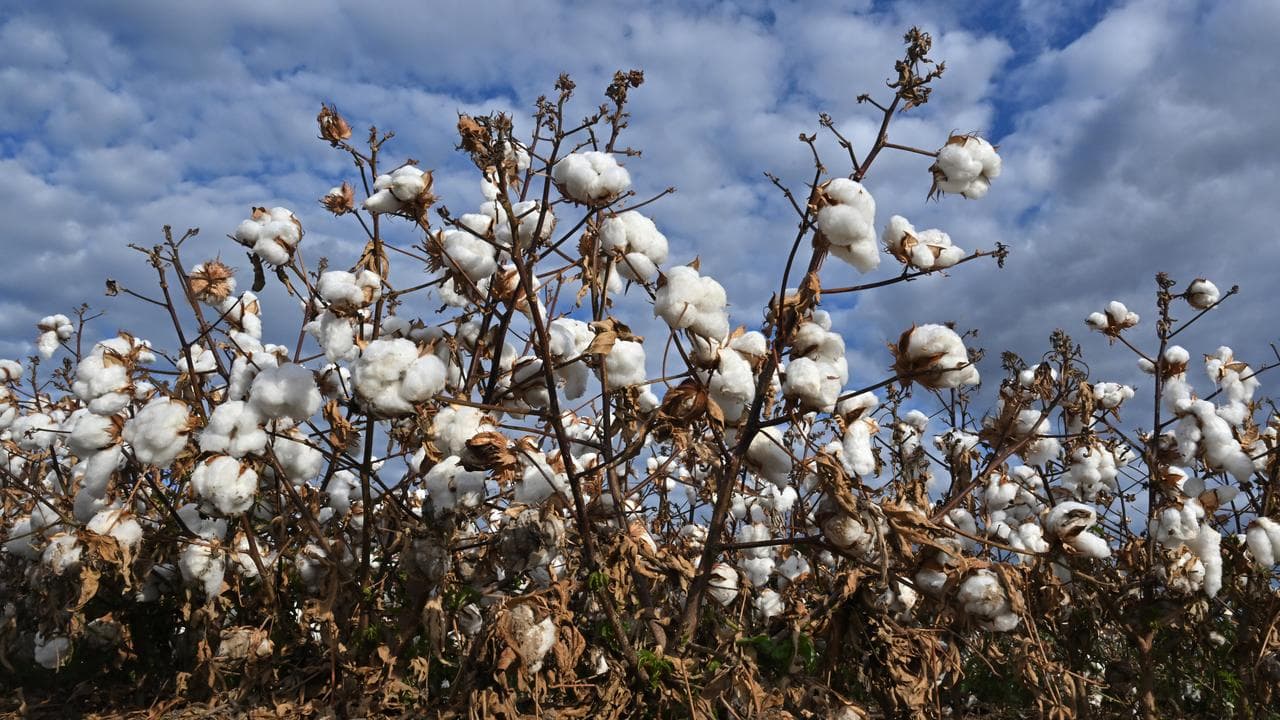
Excessive water and pesticide use are environmental criticisms often levelled at cotton farming, particularly during drought.
But the chief executive of Cotton Australia says the industry has relied on science and technology to make giant leaps to address those concerns.
"Swarm bots spray the cops, they've got cameras on there that only spray when there's a weed underneath ... that's reducing herbicide use by up to 80 per cent," Adam Kay tells AAP.
"We've doubled our water use efficiency, we're producing twice as much cotton from a litre of water as we did 20 years ago."
As a natural fibre, cotton also has significant environmental advantages over its main competitors, Mr Kay says.
"Your polyesters and lycras ... they don't break down and they're made from oil," he says.
Almost all of the cotton grown in Australia is shipped overseas due to the lack of local spinning infrastructure and cheaper wages abroad.
Bonds underwear was one of the final major textile manufacturers to operate a factory using local cotton but their last facility near Wollongong shut its doors in 2010.
Mike's pedigree and intimate knowledge of the industry has meant he's long been at the forefront of Australia's mission to improve standards for growers.
The MyBMP initiative is a set of industry standards for local producers to ensure workplace health and safety and provide buyers certainty about environmental protections.
Mike was involved from its conception and says standardising the processes across the industry will keep Australian cotton desirable for years to come.
"We're trying to get people wanting to use 100 per cent Australian cotton in their products," he says.
Back home at Cardale, the only focus for now is securing a good return for its 59th and last harvest under the Carberry ownership.
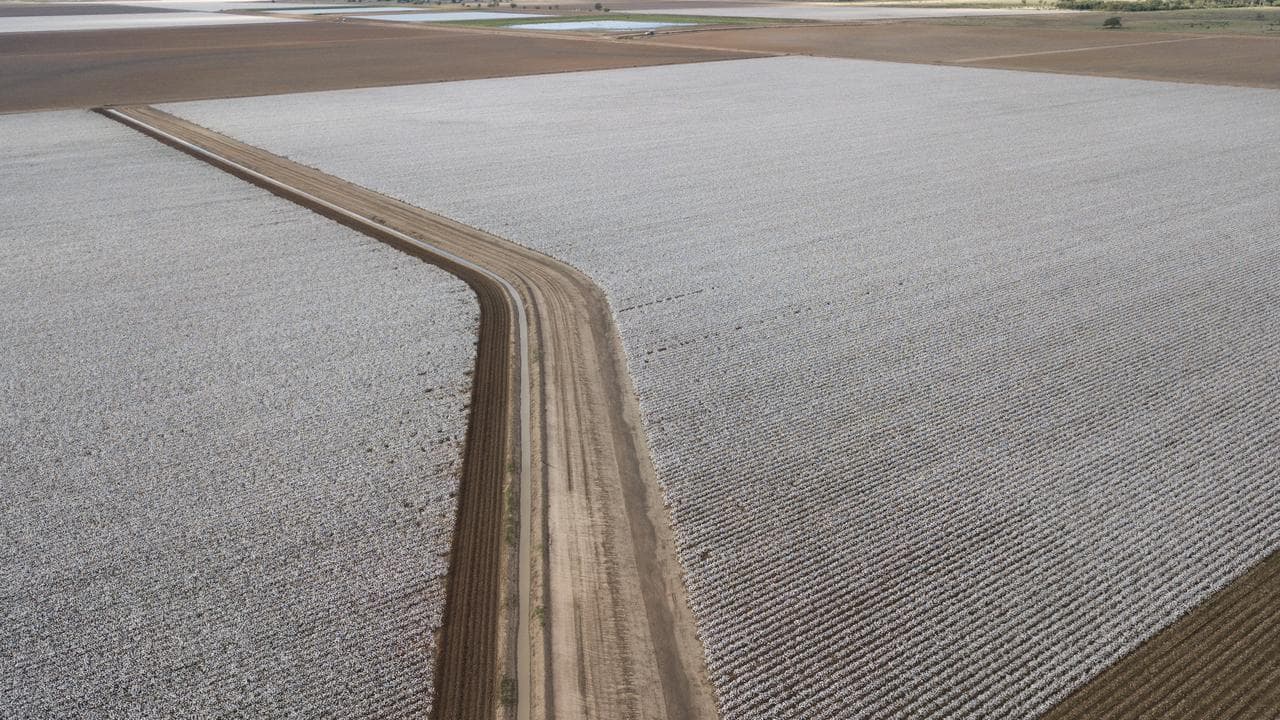
While Pat and his clan won't be there, the farm's immediate future is secure with the Carberrys selling to a neighbouring seed company after the family partnership that ran the farm for 107 years broke up.
But Pat isn't quite sure just what he's going to do now there won't be a farm with his family working the fields.
"We're not too sure where we're going to go from here," he concedes.
"We're going to pick up our football and go home."


