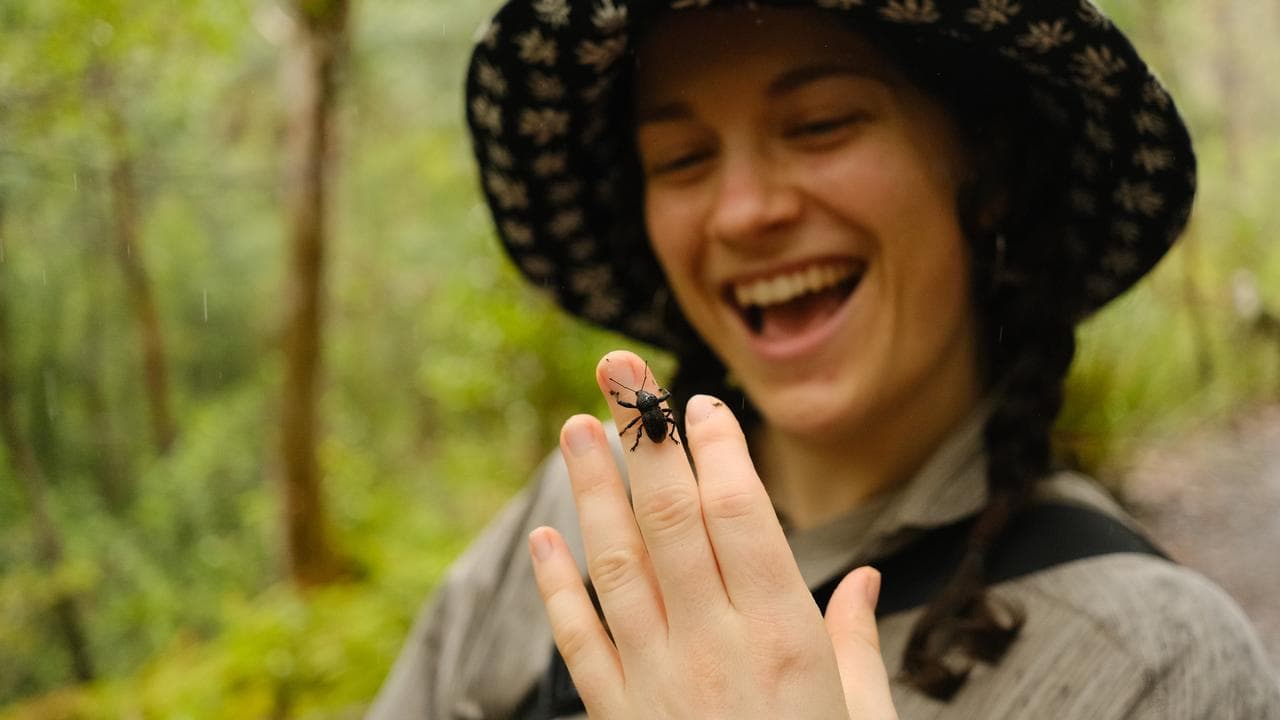
For decades, a cryptic message lured teams of biologists into the outback in search of Australia's most elusive ant.
But in the end the aptly named dinosaur ant was stumbled upon by chance, kicking off a trail of rediscoveries for citizen scientists.
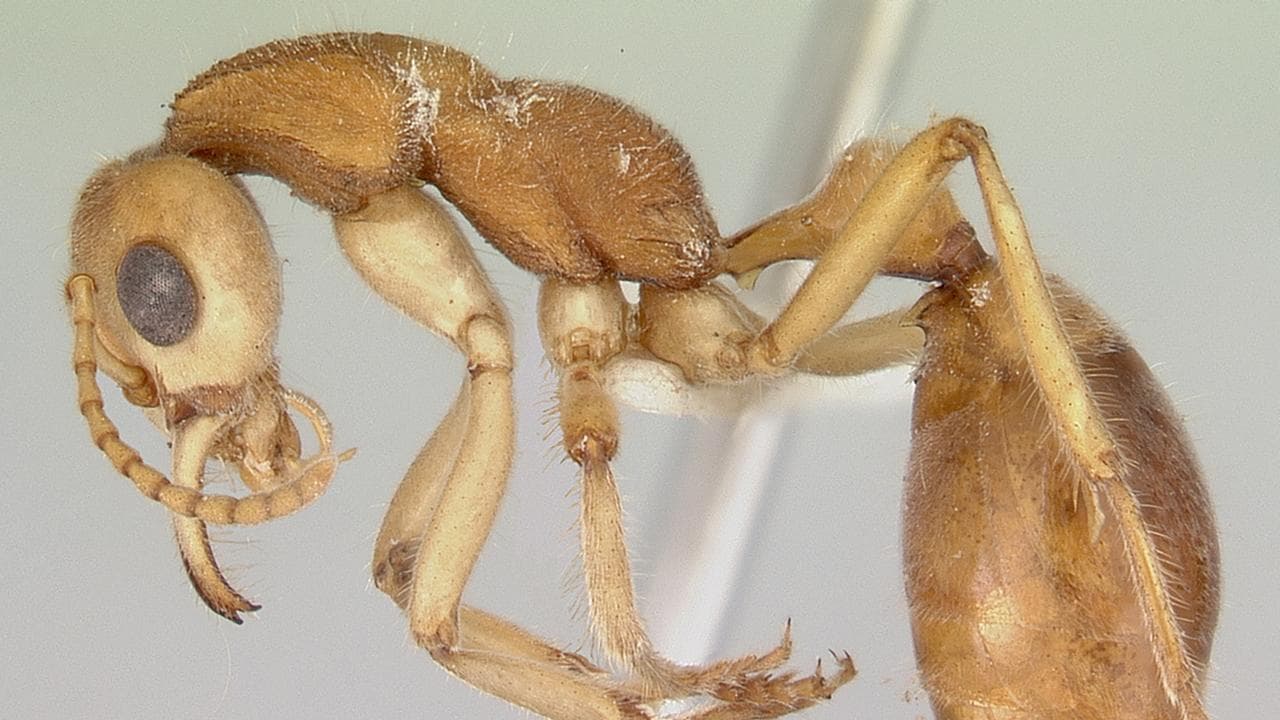
Measuring no bigger than a centimetre, the species located on South Australia's Eyre Peninsula was thought to provide clues to the ant's ancestral origins.
"It has ecology similar to what we would suspect the early ants have had," evolutionary biologist Professor Alexander Mikheyev told AAP.
"It exists only in this one region of Australia where its ancestors lived for tens of millions of years when the dinosaurs ruled the earth."
The dinosaur ant (Nothomyrmecia macrops) was first discovered in 1931 by an amateur naturalist who failed to note the location. Accompanying notes simply read "E.P Russell Range".
Assuming it referred to a jagged mountain range in Western Australia, biologists from across the world spent more than 40 years trying to locate its colonies without success.
However in 1977, Robert Taylor stumbled on the ant "by pure chance" during an overnight stop outside Poochera on Eyre Peninsula - 1400km from its presumed home.
"That revealed the cryptic origins of the label E.P. It was Eyre Peninsula, not some place in Western Australia," Dr Mikheyev said.
The Poochera site where it was first located has been bulldozed for the installation of an underground telephone line.
However ants have since been located across 18 sites along Eyre Peninsula.
Some of the more recent sightings have been through an annual citizen science program called Bugs in My Backyard week which kicks off again on Monday.
More than 5000 people took part in the initiative last year with more than 40,000 observations submitted to the iNaturlaist app for further research by the CSIRO.
Invasive Species Council Citizen Science Coordinator Jess Ward-Jones said the program filled a niche for researchers.
"It is really hard to systematically survey for things that are so tiny and have quite difficult ecology," she said.
"A lot of the time, they only come out during some parts of the year and they're hiding and they move quickly.
"This opportunity that we saw to involve people in biosecurity and biodiversity monitoring to learn more about our environment is really, really working."


