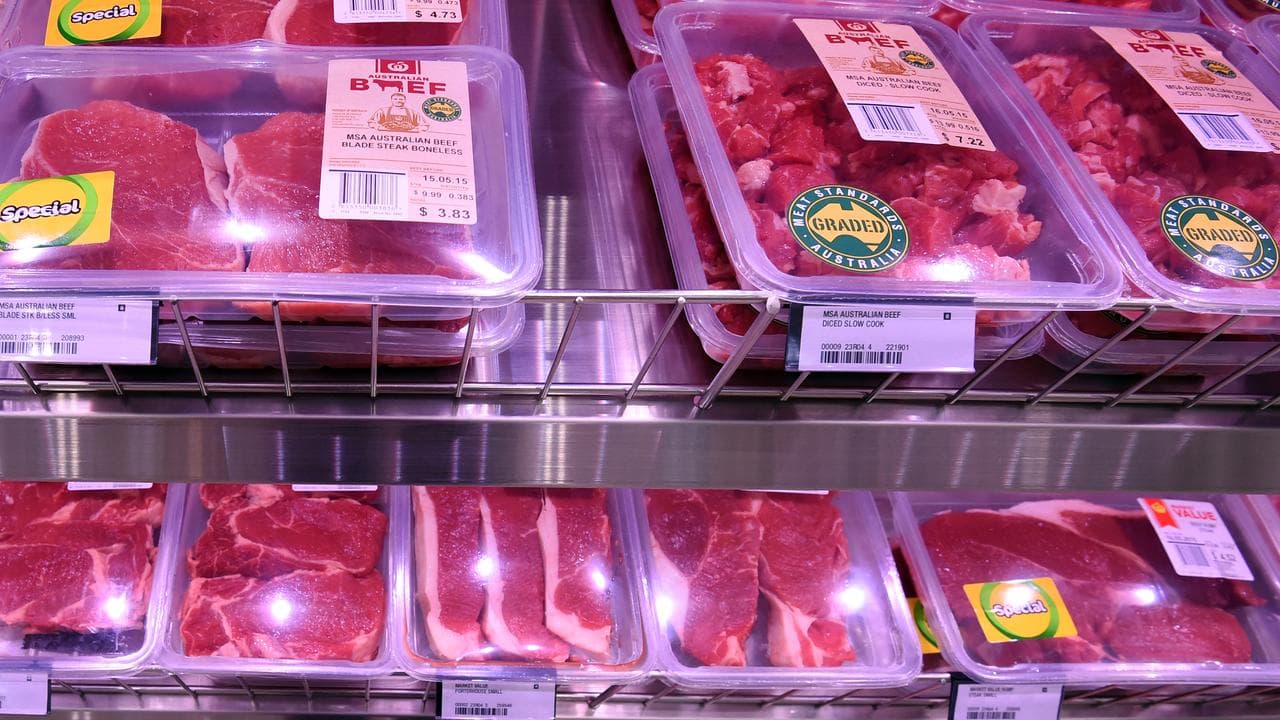
China has been urged to respect its free trade relationship with Australia after dishing up import tariffs that could cost the domestic beef sector $1 billion a year.
Beef exporters have been floored after China unveiled 55 per cent tariffs on beef imports for nations including Australia when shipments exceed certain quotas.
The measures are designed to protect China's local farmers and producers, with Australia allocated 205,000 tonnes of the nation's total 2.7 million tonnes quota for 2026.
While other nations are subject to quotas, lobby groups and the opposition suggest the move contravenes the free trade agreement Australia and China struck in 2015.
Trade Minister Don Farrell indicated Australian officials had communicated the decision was unwarranted to Chinese counterparts.
"We have made it clear to China that Australian beef is not a risk to their beef sector, and that we expect our status as a valued free trade agreement partner to be respected," he said.
"Australia is a trading nation, with a network of trade agreements spanning almost 80 per cent of the globe."
Agriculture Minister Julie Collins said Prime Minister Anthony Albanese's government had "serious concerns" and was working closely with industry to determine the full implications.
"We will always stand up for our farmers and producers, and for our proud beef industry," she said.
Both Cattle Australia and the Australian Meat Industry Council estimate the restriction could reduce the nation's beef exports to China by about a third compared to 2025.
That would equate to a loss of more than $1 billion in trade.
Casino Food Company chief executive officer Simon Stahl said the Chinese market accounted for about a quarter of his business, or about $100 million a year.
He doesn't expect Chinese importers to wear the cost impost once the quota is met, and will have to turn to other markets such as the US with a lower asking price.
"That's not going to be good for anyone," Mr Stahl told ABC TV.
The businessman called for the federal government to offer a helping hand to local producers by cutting the cost of industry-funded inspection services.
"Whilst the tariffs may be a little bit out of their control (and) I would argue the free trade (agreement) should take care of that ... there are other things that are in government's control," he said.
Opposition Leader Sussan Ley encouraged Mr Albanese to leverage his "very good relationship" with President Xi Jinping to broker an exemption.


