
What was claimed
The government announced that classic cars will be subject to capital gains tax from July 2027.
Our verdict
False. All cars are exempt from capital gains tax.
AAP FACTCHECK - Classic cars will remain exempt from capital gains tax, despite claims online.
The Australian Taxation Office (ATO) and the government have confirmed that vehicles are not subject to CGT.
The claim is in a Facebook post about the government's 2026 budget announcement of changes to CGT settings.
"The Australian Government has confirmed that, from July 2027, classic motor vehicles will become subject to Capital Gains Tax (CGT)," the post reads.
"This measure has been announced by Prime Minister Anthony Albanese and Treasurer Jim Chalmers."
It also claims eligible vehicle owners will be required to get their cars valued at an average cost of "approximately $500 per vehicle".
"The Government estimates that the measure will generate approximately $6.0 billion in additional revenue over the forward estimates," the post states.
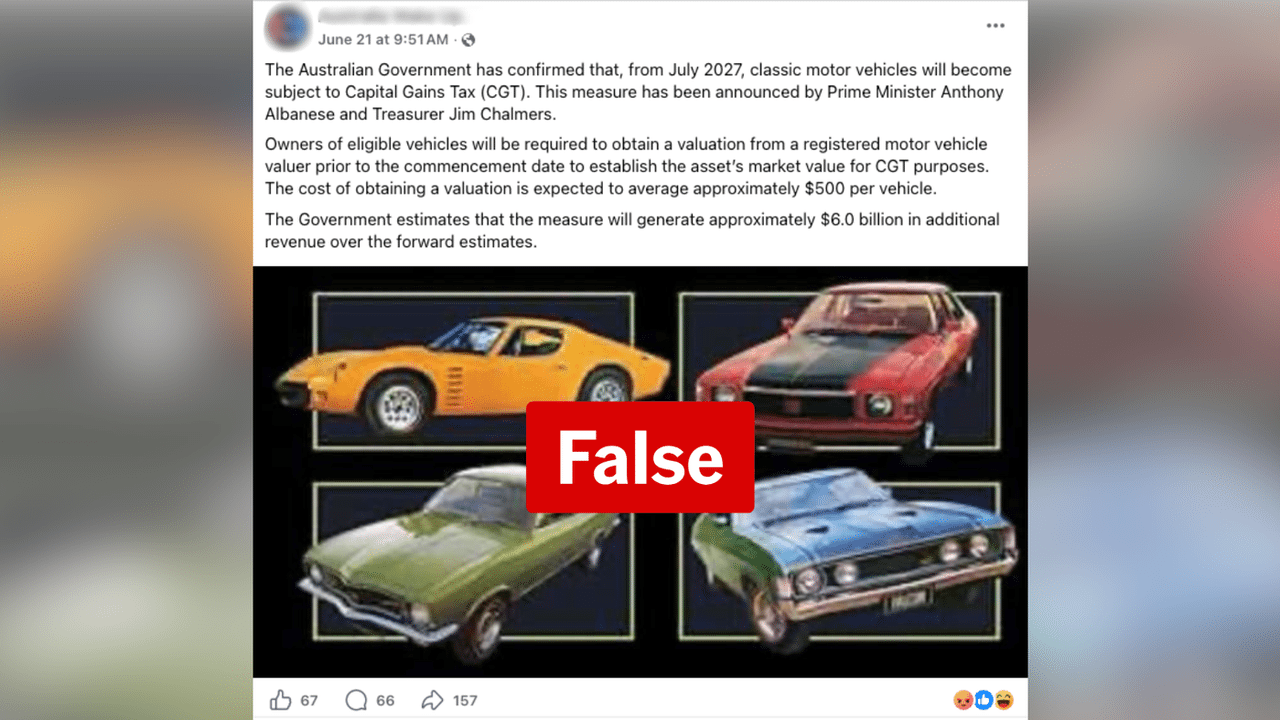
Classic cars are not subject to CGT and will not be affected by the new measures.
CGT is a part of income tax that must be paid when certain assets, such as property investments, shares and cryptocurrency, are sold for a profit.
The tax also covers certain collectables bought for more than $500, including artwork, jewellery, antiques, coins, rare books and stamps, according to the ATO website.
But the ATO has confirmed that all cars remain exempt.
"A capital gain on a personal use asset (including boats, furniture, and household items) is subject to CGT if you acquired it for more than $10,000," an ATO spokesperson told AAP FactCheck.
"Whilst a car is classed as a personal use asset, it is also specifically excluded from these rules because it has its own exemption under section 118-5 of the Income Tax Assessment Act 1997.
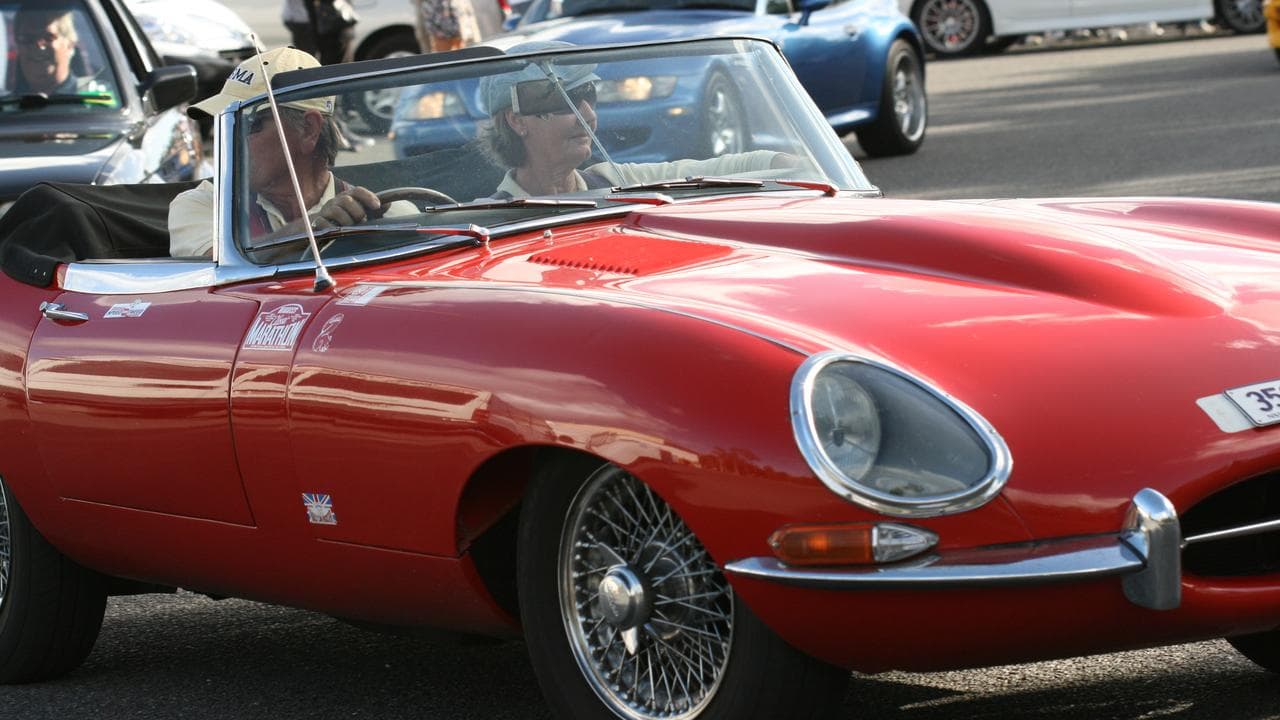
For CGT purposes, a car is defined as a motor vehicle designed to carry less than one tonne and fewer than nine passengers, the ATO spokesperson said.
"This means any cars that meet this definition, including classic and collectable cars, are exempt from CGT."
Finance Minister Katy Gallagher told parliament on June 25 that cars, including classic and vintage vehicles, would remain exempt.
Responding to Nationals Senator Ross Cadell's question about his mate's CGT liability for an "HK Holden" he was rebuilding, she confirmed the existing exemption remained unchanged.
"This is not changing. Those current arrangements apply," Senator Gallagher told parliament.
"It's clear on the ATO website. An ATO determination sets out that even where a car is a collectable, it still remains a car for the purposes of this exemption, and any CGT is disregarded."
AAP FactCheck is an accredited member of the International Fact-Checking Network. To keep up with our latest fact checks, follow us on Facebook, Instagram, Threads, X, BlueSky, TikTok and YouTube.


