When not toiling in a sweaty underground substation, Aurelia St Quintin spends her days slaving over her university texts.
The third-year apprentice electrician joined Ausgrid directly out of high school and is concurrently completing a bachelor of electrical engineering.
“My career looks a lot different to that of most of my friends," she says.
"But I feel really proud when we're together, to point out infrastructure and be able to explain to them how it all works.”
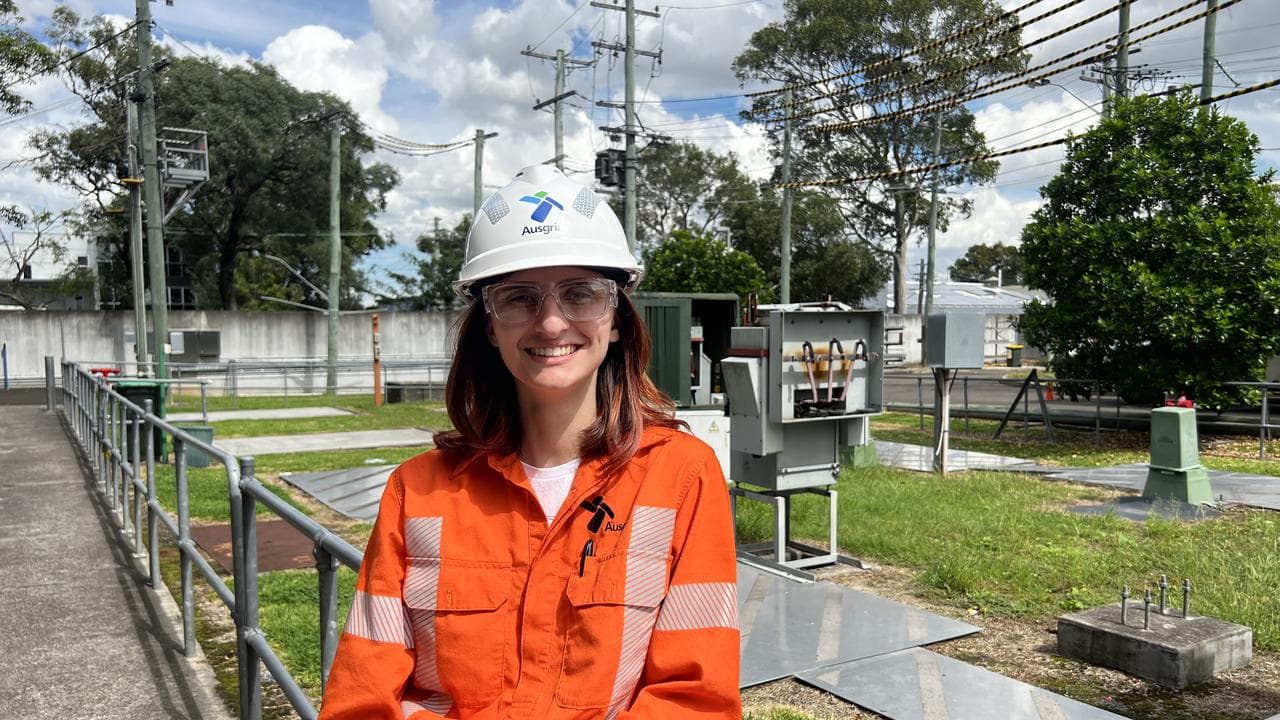
Ms St Quintin says she enjoys the challenge of a busy schedule and learning how the concepts of her apprenticeship and degree compliment each other.
Starting Monday, apprentices will be celebrated and apprenticeships promoted as a way of highlighting their role in shaping the future of industry across the country, during National Apprenticeship Week.
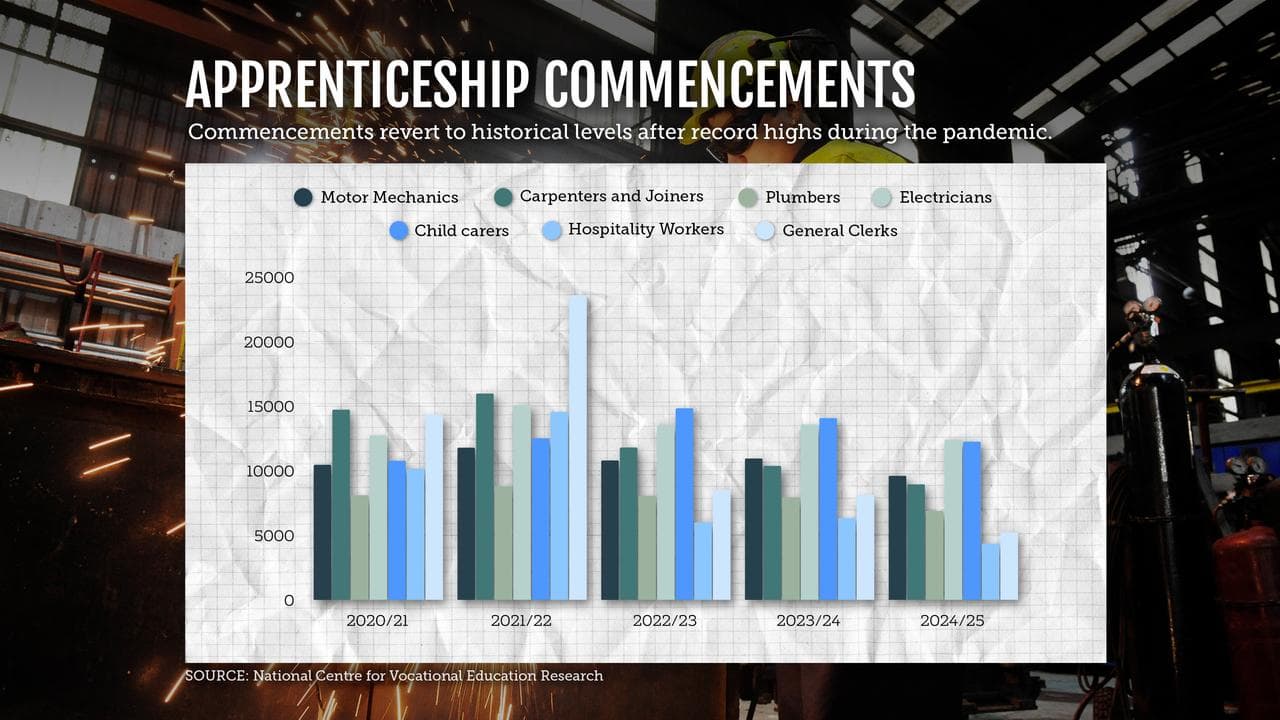
Apprenticeships boomed during the COVID-19 pandemic, boosted by a $1.2 billion federal wage subsidy, but commencements numbers have dropped since its expiry.
Still, a few fields have remained resilient, including electricians and child care workers, figures show.
According to the National Centre for Vocational Education Research, 133,255 Australians began apprenticeships in the 12 months to June 30, a drop of 51.9 per cent from their peak in 2021/22.
Trades in-training starts in 2024/25 remained higher than they were before 2019 but non-trade traineeships were about 10 per cent below pre-pandemic levels.
Among the fields that saw apprenticeship growth from 2022-25 while their overall workforces shrunk were environmental science, structural steel and welding work, aircraft maintenance engineering, toolmaking and engineering patternmaking, air conditioning mechanics, aged and disabled care, security work and livestock farming.
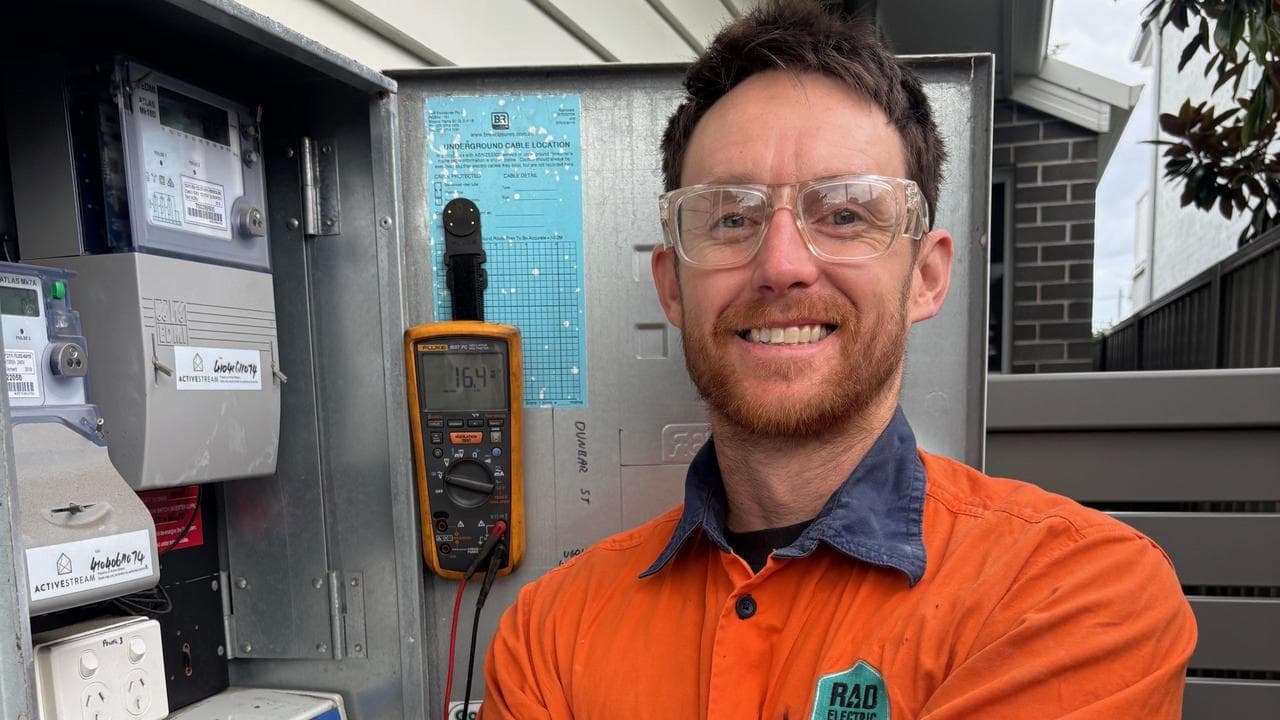
In Newcastle, 35-year-old Joshua Jones is working as an electrician at fibre optic and data cabling company RAD Electric Co. after receiving his TAFE electrotechnology certificate.
“Electrical is a trade where your skills are in demand and can take you anywhere,” he says.
“An apprenticeship gives you real experience, real qualifications and long-term career options."
As a father, Mr Jones says choosing a trade that offers stability and long-term career options was important to him.
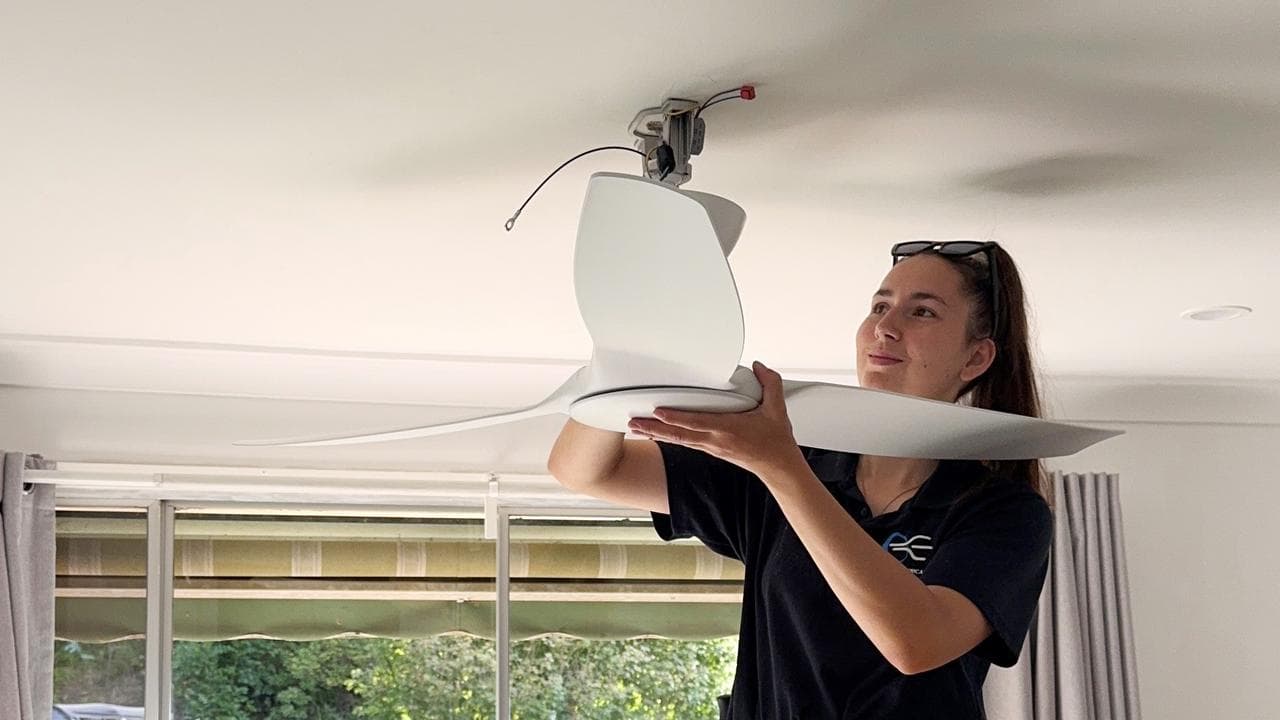
Elisha Jane Grice, a Central Coast mum of two who works as electrician with Terrigal Electrical after getting a similar TAFE certificate, says she was drawn to the trade for its hands-on nature.
"I knew I didn’t want a general office job," she says.
"I love being outdoors and doing something different every day and an apprenticeship really suited that.”
She is the only woman in her training cohort but describes both TAFE and her workplace as supportive environments, crediting her employer with being flexible about family life.
“An apprenticeship is sometimes seen as the easy option but it’s definitely not," Ms Grice says.
"The skills you learn are so valuable and you can take them anywhere, which makes it really rewarding."
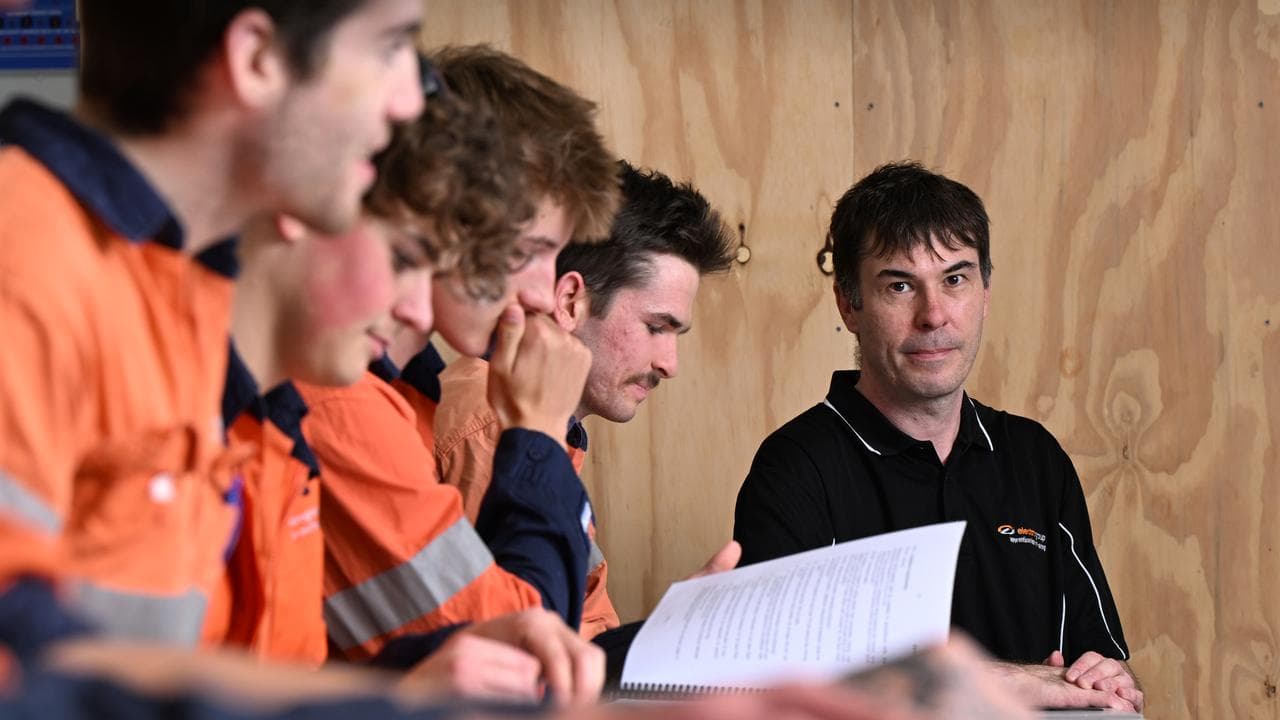
Ms Grice and Mr Jones are part of a trend of more mature Australians taking up apprenticeships.
Commencements among 25-44-year-olds are up 54 per cent since 1995, compared with 17 per cent growth for those 19 and under.
"What we’re seeing in classrooms right across the state is a real shift in who is coming into trades,” says TAFE NSW electrical trades team leader, Stuart Bailey.
“More adults are choosing apprenticeships because they want practical skills, secure work and a career that can grow with them."
Older students bring life experience and motivation and a clear sense of purpose and stability, he adds.
Ausgrid welcomed its most recent intake of apprentices into its "bright spark" program in January.
The cohort, which includes a number of mature-age starters, gets to choose from three trade streams: electrical, linework and cable jointing.
Each offers on-the-job rotational training with experienced field teams across overhead works, substations, transmission lines, underground works and safety, says Ausgrid, which maintains the poles, wires and cable that deliver power to over 1.8 million NSW customers.
“It’s a really exciting time to take up an apprenticeship in the energy sector," according to the company's group executive for people and culture, Celina Cross.
"An apprenticeship with Ausgrid is no longer just a trade pathway, it’s a front-row seat to the energy transition," she says.
"We are feeling the impacts of a growing skills gap in the energy industry and we’re responding by investing in our apprenticeships to build capability now, and into the future."
The company offers its apprentices supervision, support and mentoring from experienced field teams during the program, Ms Cross says.
Just over a quarter of the apprentices are women.
Ms St Quintin says she's enjoyed great support and mentoring but adds that the early starts have been an adjustment. She's not a morning person.
There were also days where Ausgrid's underground substations in the Sydney CBD could get very warm but the job was so interesting she got used to it.
She's now working on Sydney's Northern Beaches, learning about protection of electrical infrastructure including overhead lines and kiosks.
She hopes to become an engineering officer when she finishes her studies so she can do both technical and field work.


