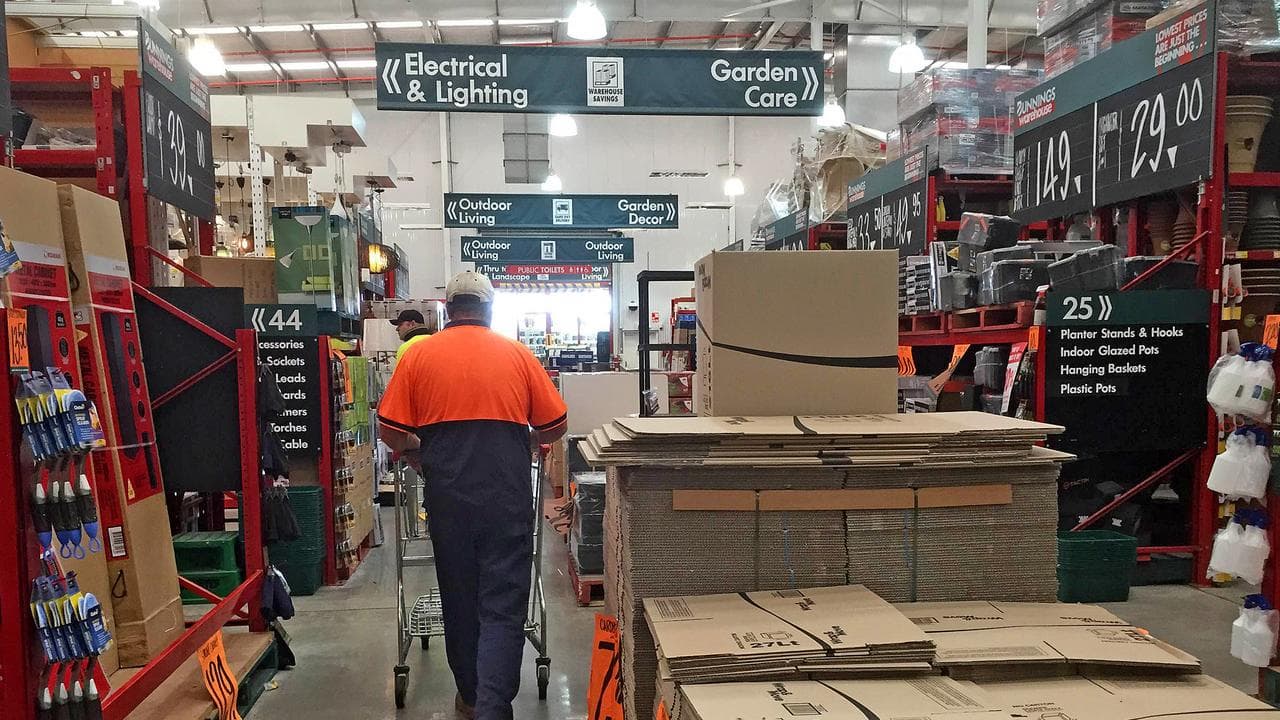
Aussie do-it-yourselfers and builders have given the owner of Bunnings Warehouse a sales runway into fiscal 2027, after better weather amped up opportunities for outdoor projects.
Wesfarmers, which also owns Kmart, Target, Officeworks and Priceline alongside smaller chemicals and fertiliser businesses, pointed to unusually dry and warmer weather across many parts of Australia in July.
"In the winter months, when it's a little bit drier, more activity can be done outside, more construction activity, so that can be a short-term benefit for sales," chief executive Rob Scott told reporters on Thursday.
"Notwithstanding that, we're very pleased with the ongoing performance and momentum of Bunnings - (it's) a very resilient business through a range of economic cycles."
In the first seven weeks of 2026/27, Bunnings' sales rose above the second half of the last financial year.
For 2025/26 overall, Bunnings generated sales of 3.9 per cent to $20.33 billion, accounting for the lion's share of Wesfarmers' group revenue.
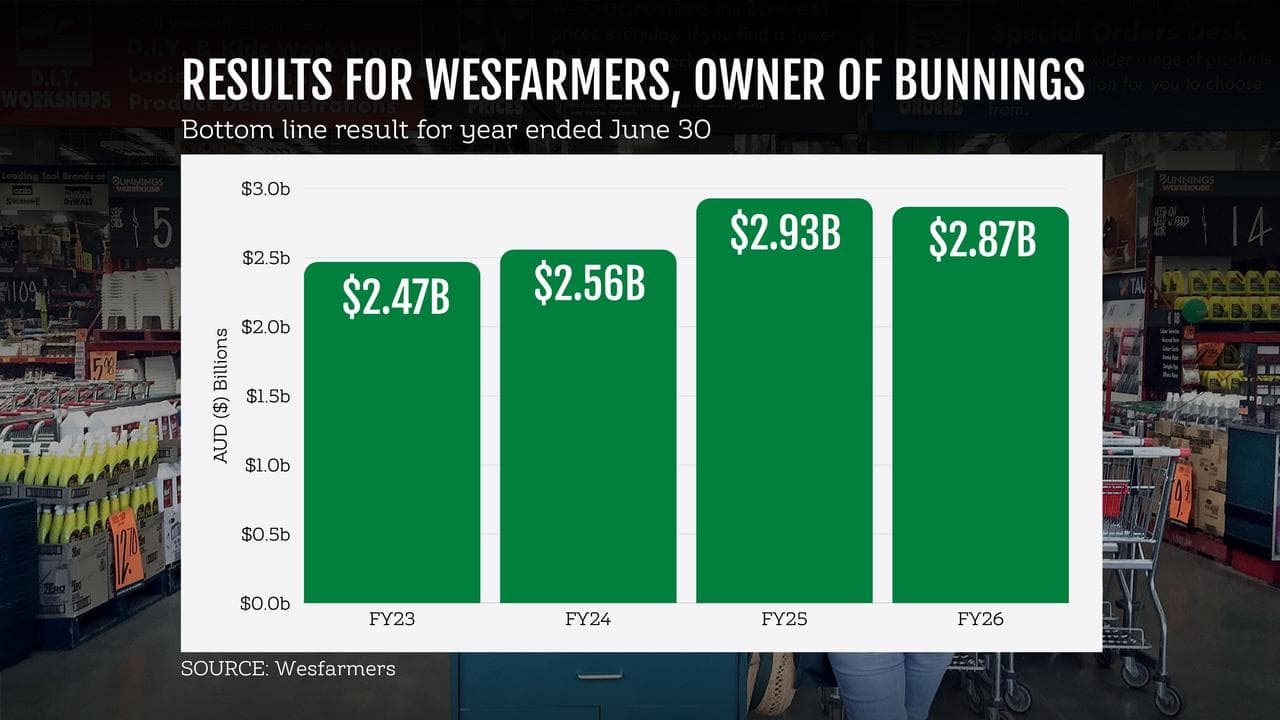
The West Australian firm made a base net profit of $2.87 billion, a fall of 1.8 per cent, but the result skewed lower due to a gain from an asset sale in the previous year.
After that's taken out, the result was much better, reflecting an increase of 8.3 per cent for the 12 months ended June 30, on a revenue lift of 3.4 per cent to $47.27 billion.
Mr Scott said the overall result was supported by strong contributions from its key Bunnings, Kmart and the chemicals, energy and fertiliser groups.
"As households continued to experience cost of living pressures, our retail businesses dropped prices on thousands of products during the year to support household budgets," he said.
Although Mr Scott noted that households remain under economic pressure, he also told an earnings call that Wesfarmers wasn't seeing a worsening of conditions, just a continuation of the softer trend seen through calendar 2026.
The "everyday low prices" campaigns by Bunnings Warehouse and Kmart group, which includes Target, were working as long as the group continued to drive internal efficiencies.
"Customers are looking for lower prices and trusted value, and we can deliver on this all the time with our everyday low prices model," Mr Scott said.
"We don't have to rely on just specials and promotions when it suits us."
Bunnings will soon have a new boss when the division's former chief customer officer Rachael McVitty takes over from Michael Schneider, who retires in February.
During the year, Kmart group sales rose 2.8 per cent to $11.66 billion. Officeworks delivered 3.7 per cent growth to $3.68 billion, although earnings fell as a restructure of the business continues.
The high-profile Priceline chain lifted network sales by 12.7 per cent, helping the overall health division to sales of $6.47 billion.

But one of the standouts for Mr Scott was the chemicals, energy and fertiliser group, which delivered a stellar 5.9 per cent sales gain to $3.14 billion.
The division includes Wesfarmers' lithium business, comprising a co-owned spodumene mining operation at Mount Holland, 500km east of Perth and the Kwinana battery-grade lithium hydroxide refinery south of the city.
The lithium assets delivered their first profit in 2025/26, Mr Scott said, adding that production rates would pick up in the new year as it resolved odour issues that raised the ire of householders near the Kwinana operation last year.
"We're very confident we will address that issue," he said.
Wesfarmers already has offtake contracts for 80 per cent of the lithium hydroxide it produces and has been eyeing strong demand for lithium battery technology, particularly for energy-hungry data centres.
Shares in the group, which declared a final dividend of $1.20, taking the total for the year to $2.22, fell 1.6 per cent to $81.92 in afternoon trading.


