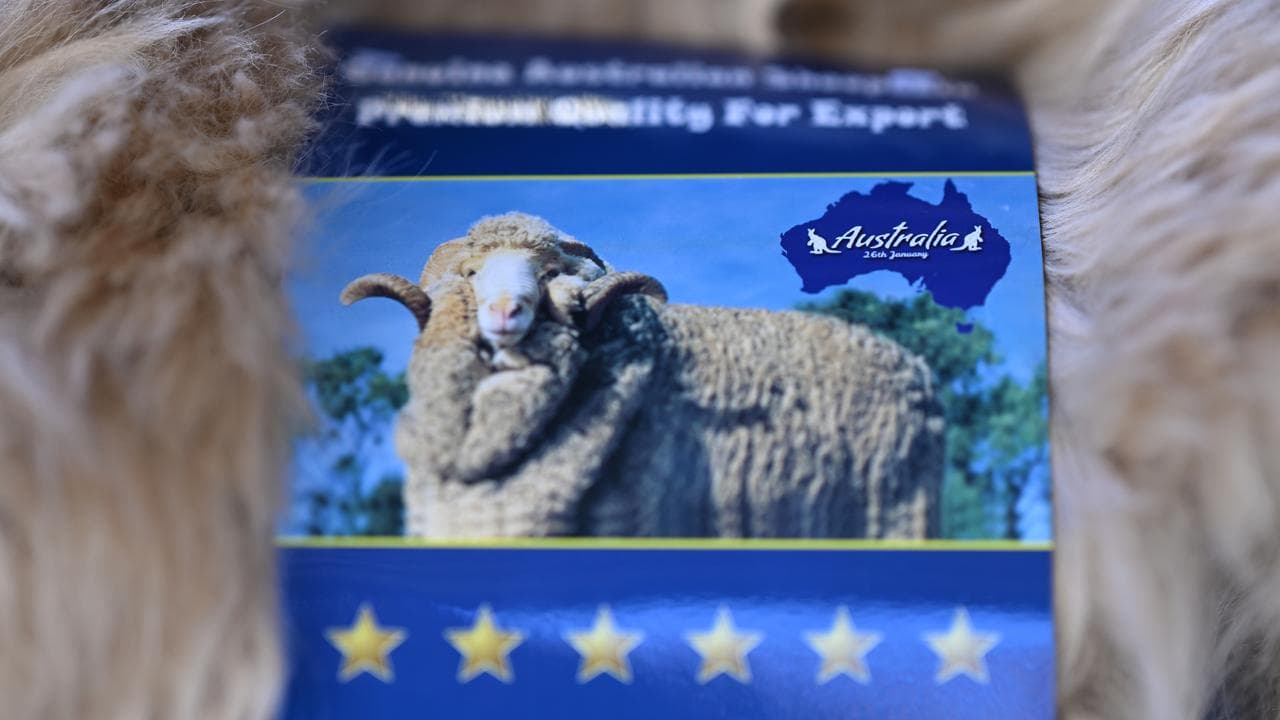
A key sheep breeder is calling for improved animal welfare standards to be recognised so it can benefit from the higher prices already reaped by Australian wool producers.
Customers are willing to pay up to $2 more per kilo of wool to farmers backed by the nationally recognised Responsible Wool Standard certificate, which recognises the phasing out of controversial practice mulesing.
Many sheep meat farmers had also phased it out but weren't getting recognised for it, ex-Meat & Livestock Australia board member Andrew Michael said.
"The minute a lamb leaves my property, we have no traceability,'' the sheep breeder told AAP.

"We don't know whether it's mulesed, un-mulesed, used pain relief, or anything.
''There's nothing in our vendor declaration.''
Traditional farming practices such as mulesing, which is illegal across Europe, New Zealand and South Africa, are still prevalent in Australia's industry.
Mulesing is a century-old practice of surgically removing strips of wool-bearing skin from a lamb’s hind area to prevent flystrike, a potentially fatal condition.
Mr Michael's Leahcim breeding operation in South Australia's Mid North phased out the practice 22 years ago.
To avoid mulesing, most farmers like Mr Michael selectively breed sheep that have higher follicles and less skin wrinkles, making them less prone to flystrike.
The condition occurs when blowflies lay eggs in bacterial prone areas of the sheep's skin which then eat away at the flesh, causing blood poisoning and death.
Mr Michael said a lack of traceability was preventing farmers from gaining access to a growing market overseas.
There had been a growing interest from wool processors in Japan looking to strike deals with merino companies, as long as the wool could be traced back to farms that had ceased mulesing.
This year’s Australia-EU Free Trade Agreement rang alarm bells from both sides of the industry for delivering a sheep meat quota to Australia of 30,851 tonnes against New Zealand’s 163,769 tonnes.
Wool Producers Australia warned the national industry had nothing to gain under the deal but could potentially lose if the EU imposed its own production standards on imports.
Meat & Livestock Association said mulesing status was not a barrier to international access for Australia's sheepmeat export market.
The association added that current traceability systems such as the National Livestock Identification System and the National Vendor Declaration framework were highly regarded by international markets.

Non-mulesing alternatives such as "breeding for improved flystrike resistance, genetics and other management practices" should be supported when suitable, the association's Elizabeth Bradley told AAP.
But Mr Michael said the current National Vendor Declaration standards did not include non-mulesed animals as part of the animal welfare assessments.
''Ten years ago, Australia used to get $1 a kilo premium for our wool above South Africa and every other country because of the quality,'' he said.
''Now we get $1 a kilo less than the other countries because they can go to New Zealand - it's cost Australia billions."


