The United States says it is launching the second phase of its plan to end the Gaza war, even as key elements of the first phase - including a complete ceasefire between Israel and Hamas - remain unfulfilled.
The first phase has been shaken by issues including Israeli airstrikes that have killed hundreds in Gaza, the failure to retrieve the remains of one last Israeli hostage, and Israeli delays in reopening Gaza's border crossing with Egypt.
By pressing on with phase two, the US and its mediator partners will need to tackle the even more vexing challenges of disarming Palestinian militant group Hamas, which has refused to give up its arms, and deploying an international peacekeeping force.
Announcing the second phase on social media, President Donald Trump's special envoy Steve Witkoff said it "establishes a transitional technocratic Palestinian administration in Gaza" and would begin the process of disarmament and reconstruction.
The Palestinian body will have 15 members and will be led by Ali Shaath, a former deputy minister in the Western-backed Palestinian Authority who had been in charge of developing industrial zones, according to a joint statement by mediators Egypt, Qatar and Turkey.
Israel and Hamas signed off in October on Trump's plan, which says that the Palestinian technocratic body will be overseen by the international "Board of Peace" that is meant to govern Gaza for a transitional period.
Other members tapped by Nickolay Mladenov, the former UN Middle East envoy who is expected to represent the Board of Peace on the ground, include people from the private sector and NGOs, according to a list of the names obtained by Reuters.
Witkoff did not say how many members the body would include or name them.
Another announcement related to the Board of Peace was also expected to be made at Davos next week, a European diplomat said.
A US official who briefed reporters on condition of anonymity said invitations were sent out on Wednesday to potential Board of Peace members personally selected by Trump.
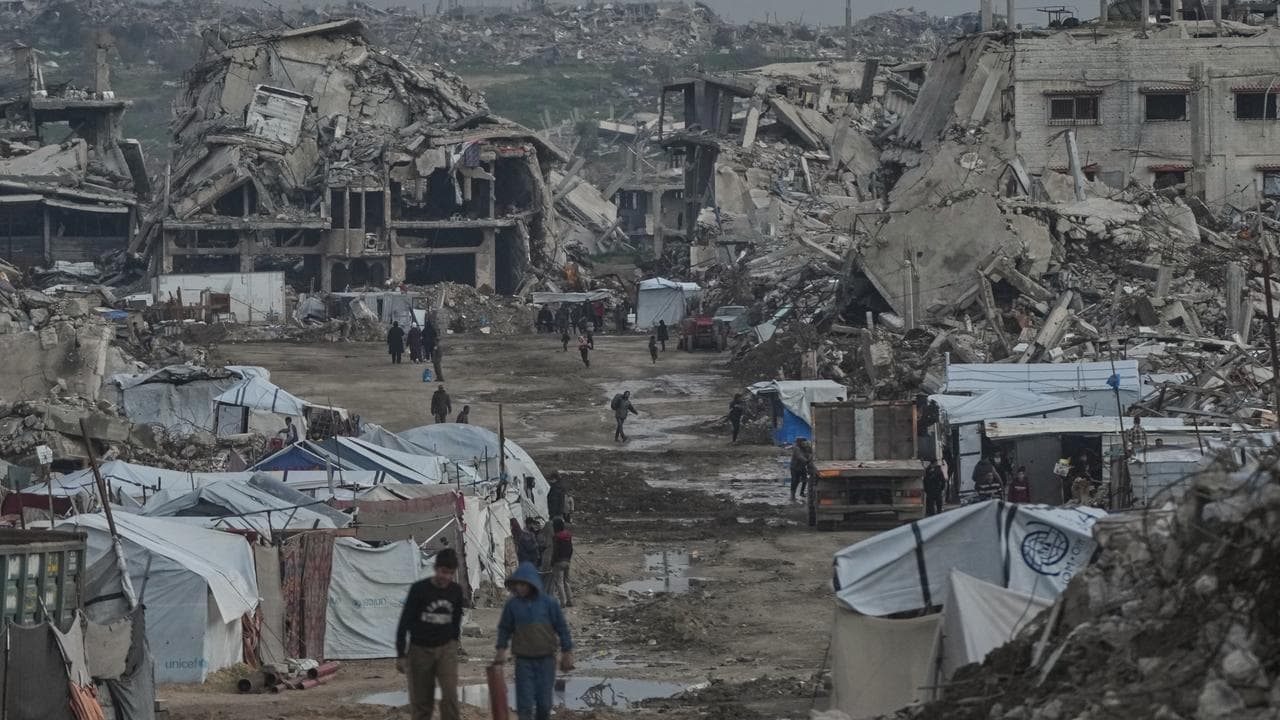
Rebuilding Gaza's shattered homes will take at least until 2040, but could drag on for many decades, according to a 2024 United Nations report.
Witkoff said that phase two of Trump's plan also will begin "the full demilitarisation and reconstruction of Gaza, primarily the disarmament of all unauthorised personnel."
Hamas, which refuses to lay down its weapons, agreed in October to hand over governance to the technocratic committee.
It remains unclear how Hamas, which has regrouped since a fragile ceasefire began in October, will be disarmed as required by the plan.
Hamas leaders and other Palestinian factions are in Cairo for talks on the second phase, the group said, where members of the technocratic Palestinian committee were expected to meet with Mladenov.
Egyptian sources said talks with Hamas will now focus on the group's disarmament.
Further Israeli withdrawals within Gaza are tied to disarmament, though Hamas has said it will give up its weapons only once there is a Palestinian state.

Hamas and its rival Fatah group, led by Palestinian President Mahmoud Abbas, have both endorsed the list of technocratic committee members, Egyptian and Palestinian sources said.
It will also include the head of the Gaza Chamber of Commerce, Ayed Abu Ramadan, and Omar Shamali, who has worked for the Palestine Telecommunications Company, Paltel, Palestinian sources said.
The sources said the list would also include Sami Nasman, a retired senior Palestinian Authority security officer and a longtime critic of Hamas. Nasman, a member of Abbas's Fatah movement, is originally from Gaza but has since 2007 been living in the West Bank.
Israeli officials did not immediately respond to a request for comment.


