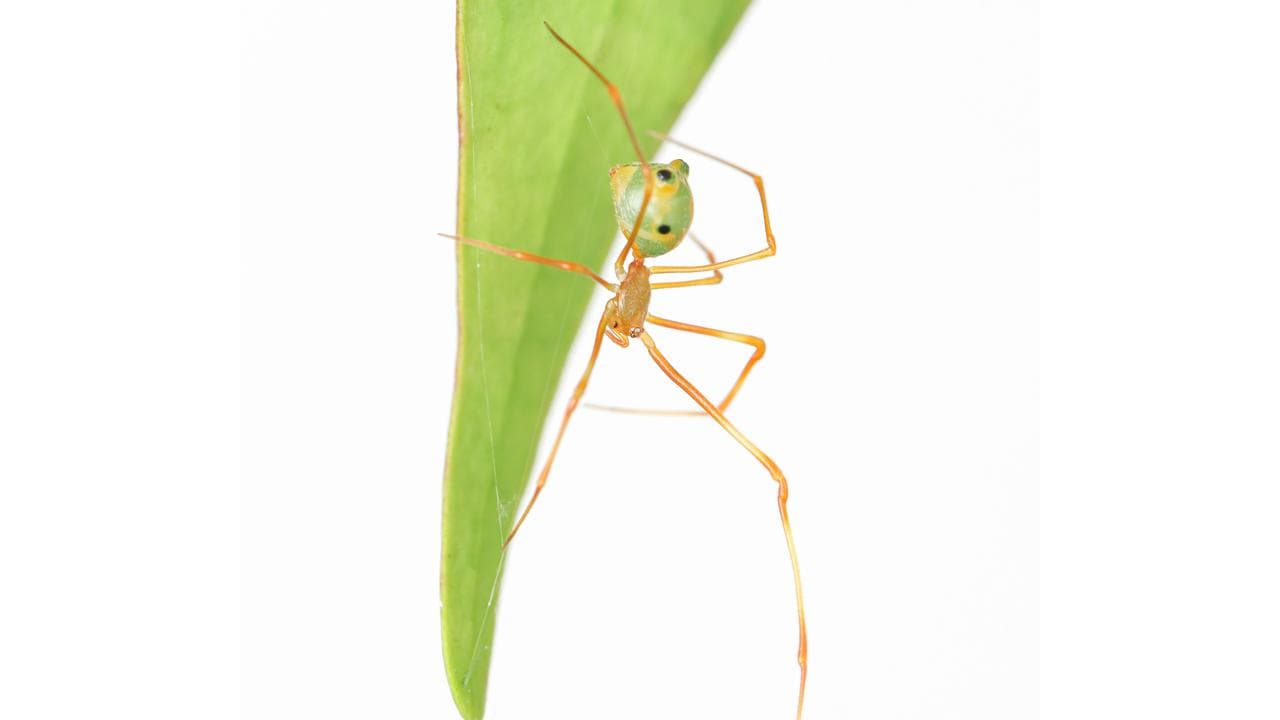
A bizarre species of spider from the remote rainforests of far north Queensland springs a nasty surprise when its prey is lured into its web.
The tiny and newly discovered ballista spider - named after an ancient Roman weapon that used a spring to launch a stone - uses an ingenious method to literally launch its prey into the air.
A fussy eater, the spider targets a single species, the territorial and aggressive green tree ant (Oecophylla smaragdina), which it lures with a fragrant pheremone.
And its hunting technique is extraordinary.
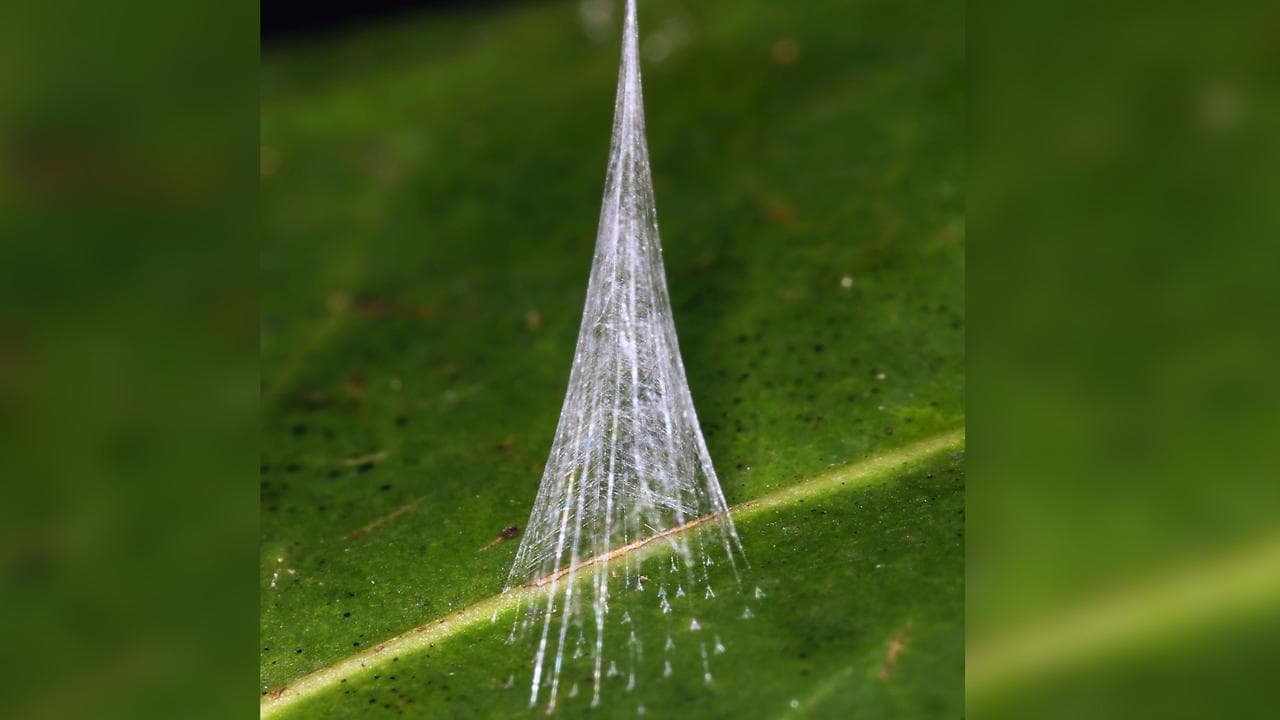
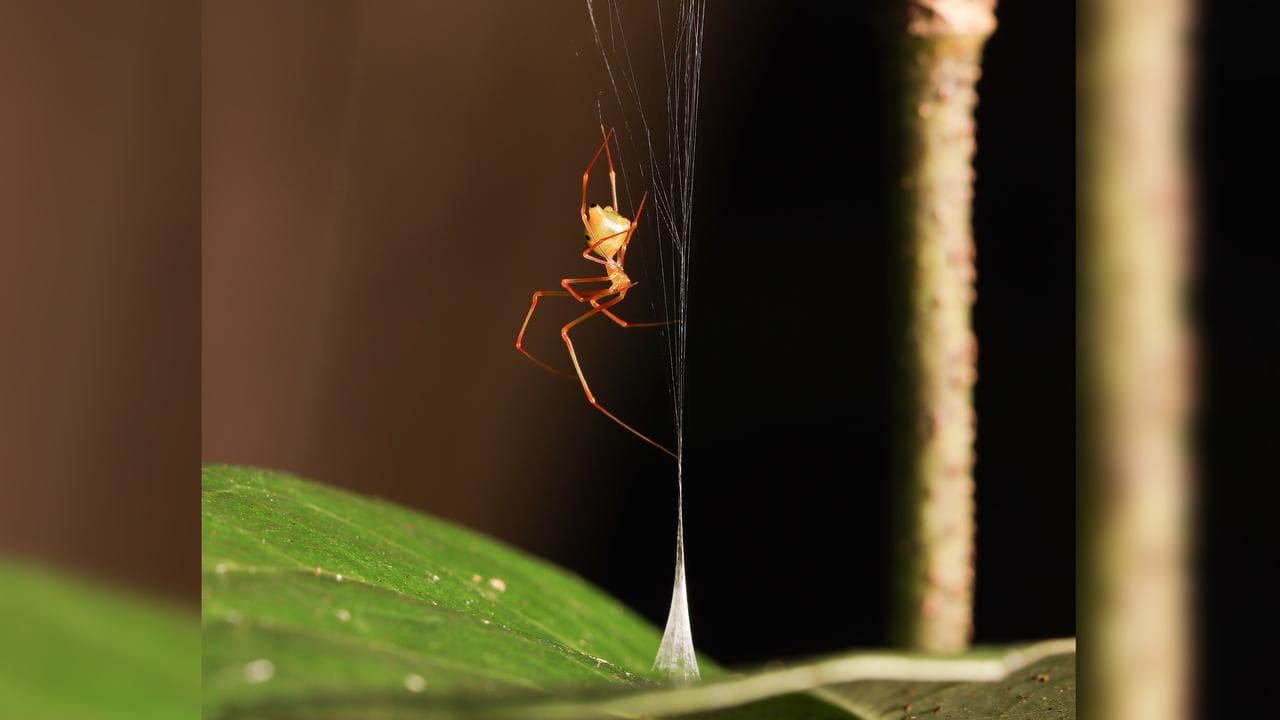
First, the nocturnal spider builds an anchor point on a leaf, a branch, or the forest floor, before spending up to four hours spinning up to 60 vertical tension lines bundled together in a cone near the ground.
The spider then wraps the cone with extra silk before retreating upwards. When the ant is attracted, it reacts aggressively, biting the cone - and detaching it from the anchor point.
The ant is then catapulted more than 30cm upwards into the spider’s core web, at an acceleration of more than 1300 metres per second. Once entangled, the spider then wraps the ant in silk to be devoured.
The unique arachnid was first observed by spider taxonomist Professor Greg Anderson, who is also an emeritus fellow at the Berghofer Queensland Institute of Medical Research.
Researcher Professor Ajay Narendra of Macquarie University and postgraduate student Pranav Joshi then spent 10 days and nights in rainforest near Cooktown locating specimens.
Using high-speed and infrared cameras, they were able to observe the spiders in detail and capture their unique hunting behaviour on film.
Prof Narendra said it was extremely unusual for a spider to target such a notoriously aggressive species as the green tree ant as prey - let alone to eat that species alone.
“Ants have a range of chemical defences, including the ability to sting in some species, and they use alarm signals to rapidly recruit hundreds and even thousands of other ants as backup," he said.
“We suspect, during the final construction stage, the spider adds a pheromone that specifically lures worker ants and induces an aggressive attack, triggering the snare."
He said the ballista spider's web was the only known example designed to catch a single species, and where the mechanism is triggered by the prey rather than by the predator.
It was thought that the mechanism allowed the spider to pick off the potentially hazardous prey one at a time while remaining at a safe distance from ant trails and nests.
The spider is yet to be formally named, but belongs to the genus Propostira.


