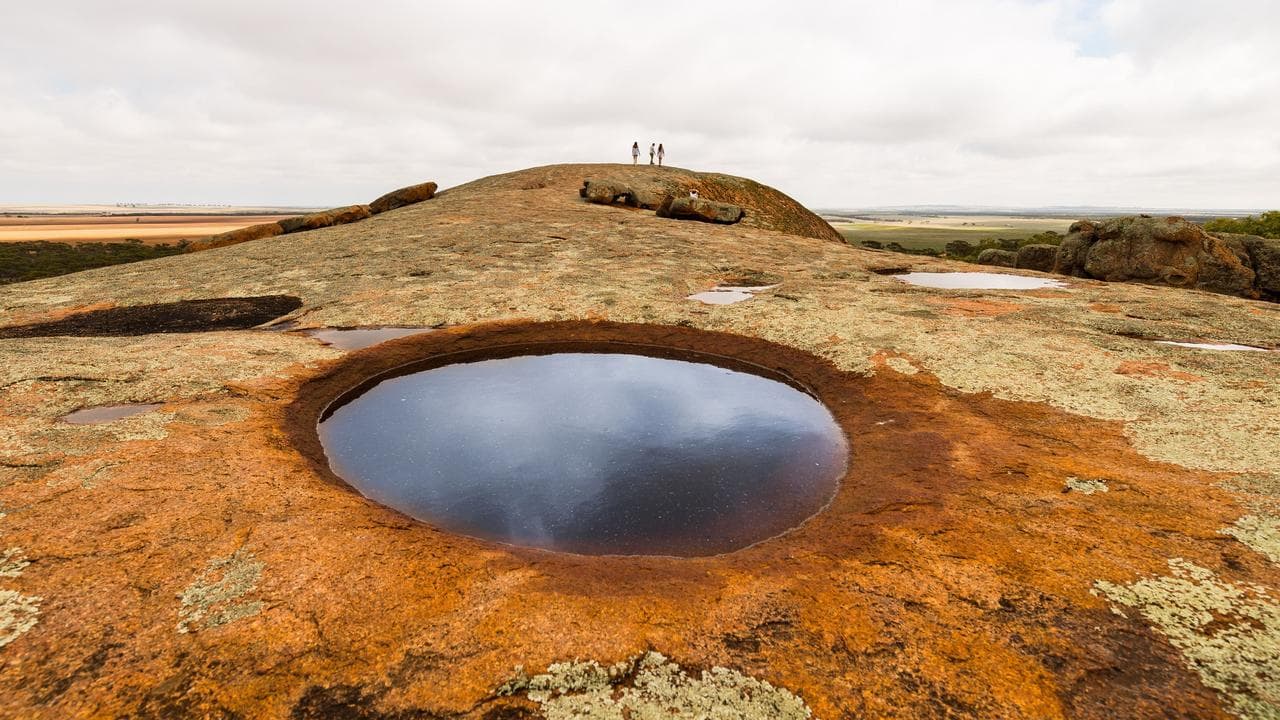
Home to sacred waterholes, an ancient geological site could transform as two renewable companies look to lodge large-scale development plans.
Legislation being flexed for the first time is levelling the playing field between energy companies and native title holders, according to Kokatha/Wirangu man Dr John Binda Reid.
Four renewable projects with a proposed capacity of 13 GW were selected by the South Australian government last month to build a green energy hub in the Whyalla region.
Another two companies have been shortlisted in the Gawler Ranges region in an area covering 5,200 square kilometres of native title land.

Both areas were released for developers in January under South Australia’s Hydrogen and Renewable Energy Act.
It's the country’s first dedicated legislation for large-scale renewable energy and was a result of 18 months of discussions with 26 native title holders.
Dr Reid, from the Gawler Ranges Aboriginal Corporation (GRAC) and Adelaide University, said it was a massive undertaking that allowed Aboriginal people to mandate and enforce protection of environment and cultural heritage.
“That free, prior, informed consent actually became instructive to how we wanted renewable energy companies to engage with us,” he said.
It’s the inspiration behind what Dr Reid calls the GRAC Matters Guide, a set of criteria for companies to follow involving respectful, two-way relationship-building between Aboriginal communities.
“The main thing we wanted the companies to understand was the significance of the environment, nature, the ecologies, the ecosystems and the biodiversity that had been vulnerable because pastoralism had damaged that previously,” he said
"It was the introduction or the beginning of the decline of Gawler Rangers Aboriginal traditional society.
“We didn't want to be recolonised in the same way.”
At the centre of the guide is the protection of sacred waterholes, otherwise known as the “university of the bush”.
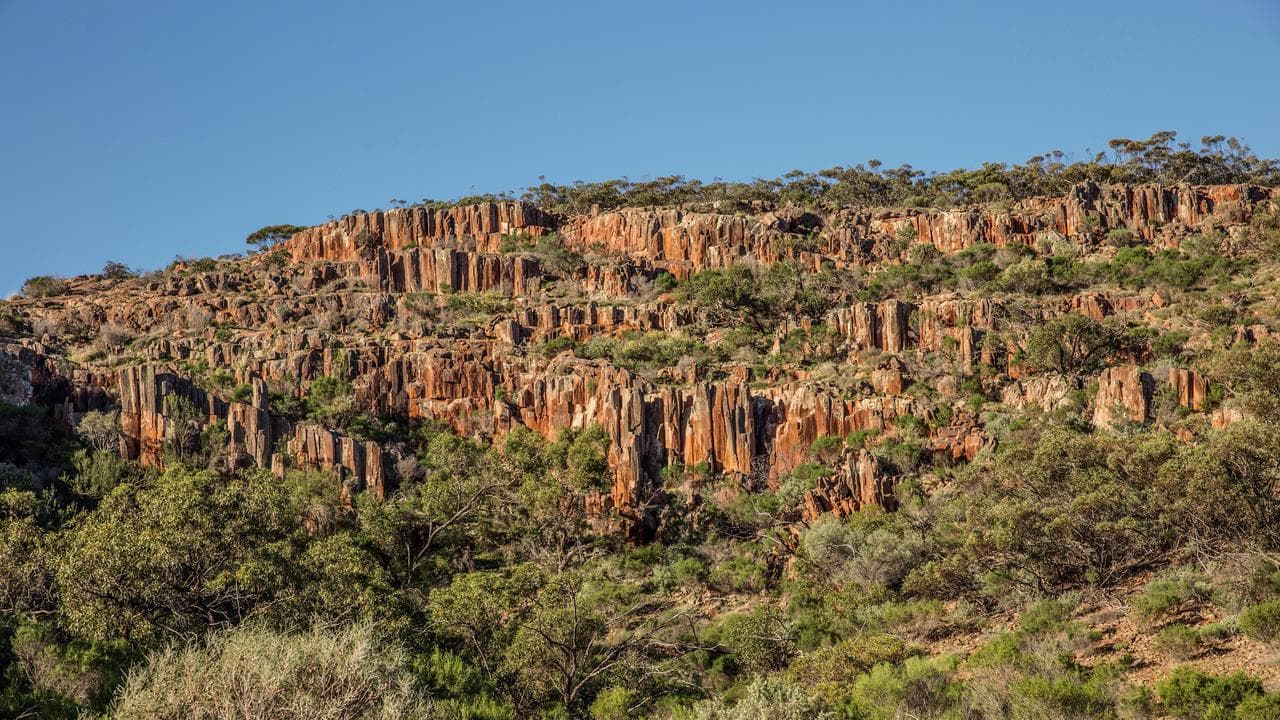
“Those cultural matters pertained to water sovereignty and to the deep spiritual understanding of the significance of water to our cultural survival,” he said.
But Dr Reid says communities are now also using the guide to improve their own energy literacy and it has contributed to a “shared vocabulary” between traditional owners and proponents.
Dr Leon Terrill from the Faculty of Law and Justice at UNSW said small native title bodies in particular faced challenges to educate and negotiate agreements on a two way benefit.
“From a practical perspective, the development of materials that improve literacy and understanding around what the project is, as well as what people's rights are, that's going to put them in a better position to negotiate agreements to their benefit,” he said.
The Great Matters Guide is now being implemented in six regional towns and has been used in negotiations for mining agreements and carbon farming projects.
“They reckon it's the best thing since buttered bread," Dr Reid said.
"It gives them clear direction on how they should obtain their native title mining agreement.”


