
Daniel Andrews had seemingly carved out a $6.9 billion epitaph for the Commonwealth Games.
Now awe-struck sporting bigwigs are flocking to Glasgow to study how the city managed to host the same event, armed with a budget that is four per cent of the figure floated by the former Victoria premier when he pulled the pin.
The Glasgow 2026 opening ceremony on Friday morning (AEST) will launch a scaled-down sporting extravaganza that has inescapable political undertones.
Victoria's sudden and unprecedented withdrawal from the 2026 Games, attributed to spiralling costs and a price tag of $6.9b that an inquiry later suggested was "overstated and not transparent", is still fresh in the mind of Australian athletes, coaches and officials.
Fans too.
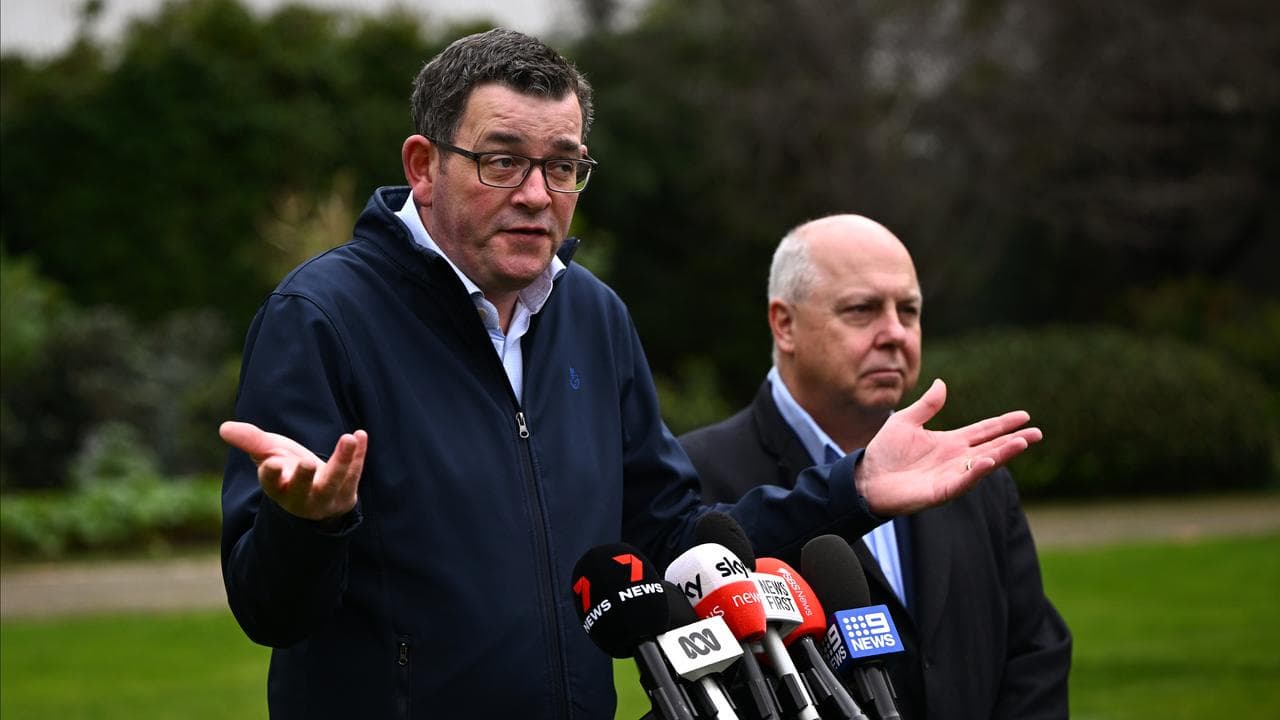
The return of hosting rights, which sparked global outrage and rightly raised questions about the future and relevance of the Commonwealth Games, led to Victoria paying $380 million in compensation.
Victoria premier Jacinta Allan is not expected to travel to Glasgow, while there is already much intrigue about whether Anthony Albanese and Anika Wells will make the trip for a Scottish party funded by a Labor-run state.
The irony is Glasgow 2026, with a bare-bones budget of 150 million pounds ($A286 million), is actually a fascinating and worthwhile case study in how to rapidly craft a major event on the cheap without any government funding.
Sporting bodies and major event bosses have sat up and taken notice as Phil Batty, installed as Glasgow 2026 chief executive 18 months ago, and his organising committee worked tirelessly, ruthlessly, collaboratively and innovatively to make it happen.
"During the course of the Games we've got lots of other events coming to see and experience what we've done and how they can take that forward," Batty tells AAP.
"So not just Olympics but your Invictus Games, your Euros 2028, the Tour de France next year.
"All of those events have been coming in to find out what we've done and hopefully will take bits of that learning into their own event and adapt it.
"What we've sought to do here is future-proof this. So that it's not just about one edition in 2026, it's about 2030, 2034 and the next 100 years of the Commonwealth Sport movement.
"But it's not just the Commonwealth Games. All major events need to modernise for the future."
Batty, who performed a senior role on the 2022 Birmingham team, is predictably a big believer in the power and relevance of the Commonwealth Games. But also a realist.
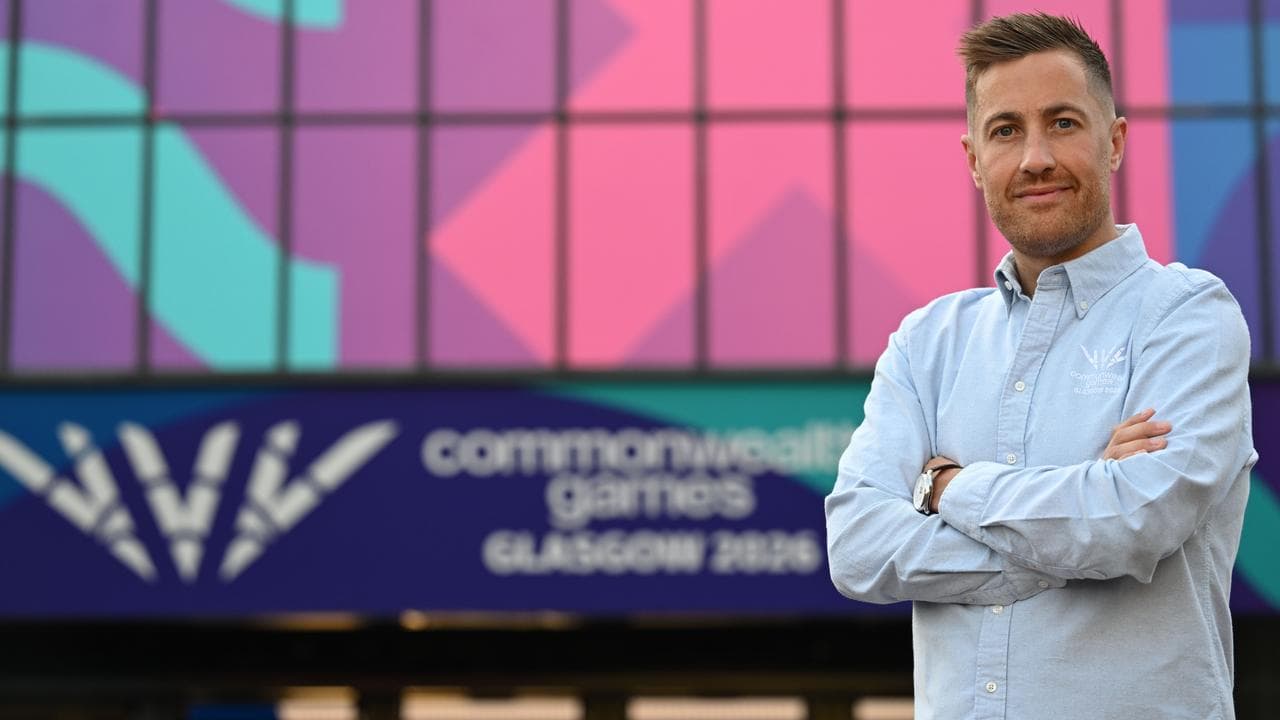
The fresh-faced administrator and proud member of the LGBTQ+ community was an interested onlooker working in Singapore when the Commonwealth Games Federation (CGF) hit town for a landmark meeting in November, 2023.
Victoria’s bitter blow left the fate of the 2026 Games - and the long-term future of an institution long shackled by history - in immense jeopardy.
“I popped in to see some friends,” Batty recalls.
“The right people, which is all 74 nations, were going to have a conversation about ‘should we exist and if we should exist, what should we be?’.
“And it was universal in that room that yes, the Games should exist. But it needed to reinvent.
"I didn’t ever foresee that I would be the one leading that. It's very rare you are given a project where the mandate is to properly rethink and recreate something that's been around for 96 years.
“The change we've achieved here in Glasgow in 18 months is change that maybe would have taken 18 years if there hadn't been that mandate.”
So how different will these Games look and feel?
And how much input, outside bankrolling this experiment, has Victoria’s government had?
“We haven't actually met. We've mainly worked really closely with the team at Commonwealth Games Australia,” Batty says.
Victoria was set to showcase 21 sports at venues spread across Geelong, Bendigo, Ballarat, Gippsland and Shepparton.
Glasgow will feature 10 sports. The bulk of them, including bowls, will be staged indoors at an inner-city hub.
You can traverse the four venues, all of which were used at the 2014 Commonwealth Games, in just eight miles.
Public transport, rather than private shuttles, will be the norm for most hangers-on in the travelling circus.
There will be live sites. There are merchandise vans and some bunting around - and a unicorn mascot called Finnie with a traffic cone for a horn (IYKYK).
But there is no wall-to-wall advertising in town.
No bells, nor whistles. No buildings entirely blanketed with herculean heroes, no behemoth-like broadcast bubble, no sponsors seizing public space to spruik their wares.
‘No buzz’ is how some have described it; although a sold-out Chris Hoy Velodrome and a swimming centre that is also set to be at capacity for every final suggests there is something bubbling.
Tapping into the legacy of the 2014 Games - infrastructure, lessons and muscle memory - has been vital in reducing costs and carbon footprint.
The reality of being “really responsible”, as Batty terms it, about the fiscally-prudent streamlined schedule is that much-loved sports were cut.
There is no marathon, cycling road race, triathlon or event that literally stops a host city.
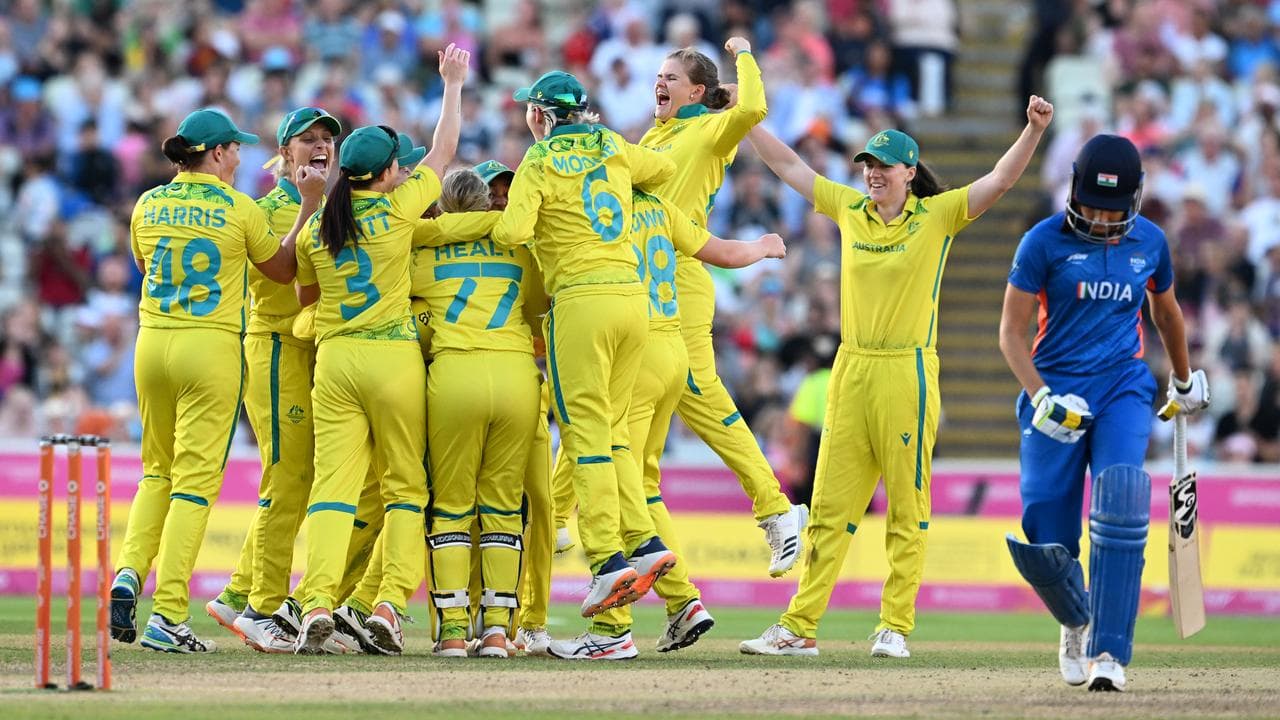
The axing of cricket, rugby sevens and hockey, which would all have required booking and servicing additional venues, triggered much consternation in Australia.
Athletes are staying at hotels and lodgings dotted around the city.
It is far from the first ‘village without walls’ model but must surely be the most hastily arranged on this scale.
“It's been an incredibly fast-paced project,” Batty admits.
“Staging this in such a short period of time has required everybody to work more collaboratively than I think has ever happened before.
“But this hasn't been about compromise. This is a brilliant Games, it's just a different Games. It's smarter, it treads lighter on the city.
“There's a real focus on how do you protect the medal moments? How do we ensure that for athletes, the services that allow them to train, compete, rest and recover are protected?
“That has remained sacrosanct and the focal point of everything we’ve done.
“The services we're delivering here in Glasgow are designed around achieving the same standard as a world championships … just delivered in a different way.”

The true test comes now and the stakes are high for Batty’s team, the Commonwealth Games and even the Olympic movement.
Ahmedabad will host the next Commonwealth Games in 2030, an event that India hopes will be a dress rehearsal for the 2036 Summer Olympics.
The Ahmedabad 2030 team has taken an active interest, especially in Glasgow's environmental sustainability measures.
But theirs will be a different and bigger beast with additional sports and the mammoth 132,000-capacity Narendra Modi Stadium as the centrepiece.
Batty, who has booked Simple Minds for the exit track that is the closing ceremony on August 2, can't wait to see what lies ahead.
“I’m really proud of everything we’ve done and I just can't wait to get started,” he says.
"But it’s not like what we're creating here in Glasgow is ‘the model’. It’s a more inclusive approach that allows more nations to figure out their model.
"The new model of the Commonwealth Games will be the greatest hits of all those editions."


