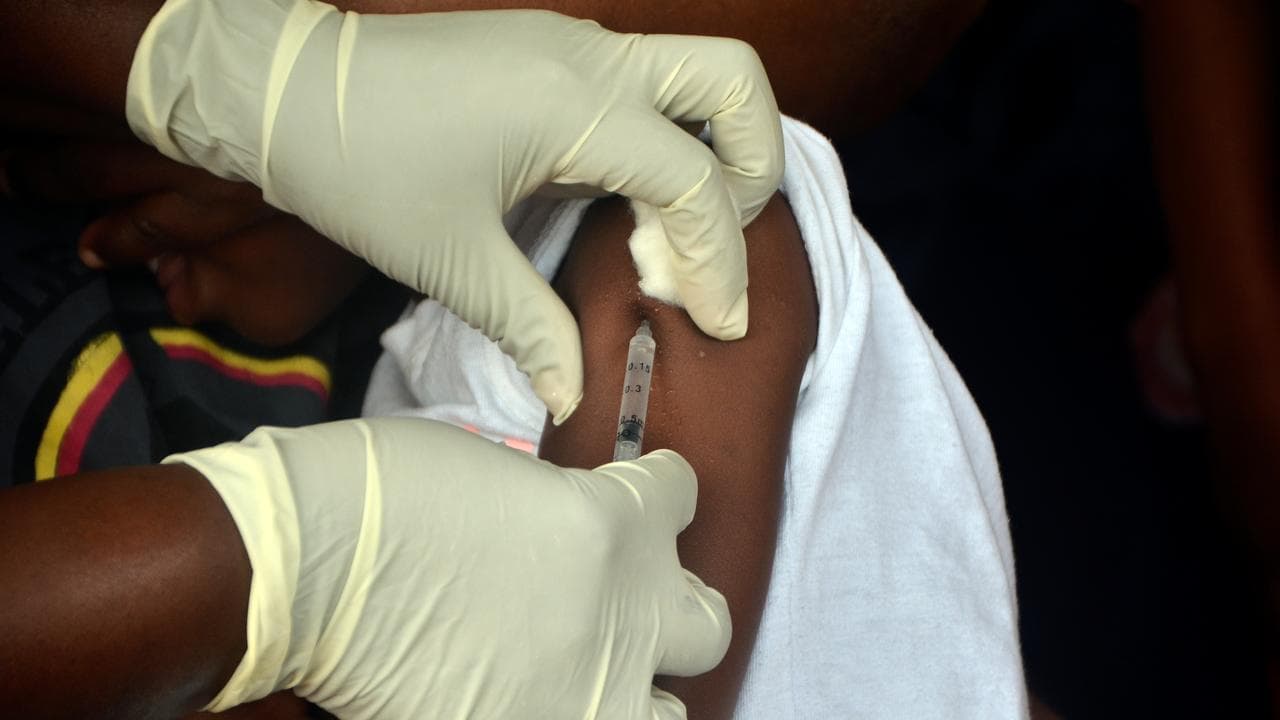
What was claimed
African countries are removing an HPV vaccine currently being tested on girls in Papua New Guinea.
Our verdict
False. The vaccine used in PNG is not new and most African countries have introduced HPV vaccination programs.
AAP FACTCHECK - False claims about the HPV vaccine are circulating online after the Papua New Guinea government launched a national immunisation program to tackle cervical cancer.
Among the falsehoods is that PNG is being used as a testing ground for the human papillomavirus (HPV) vaccine while African countries are withdrawing it from use.
But the HPV vaccine used in PNG is not new and the number of African countries with HPV immunisation programs has increased in recent years, not decreased.
No African countries have discontinued using the vaccine, which is given to young people to protect them against sexually transmitted infections that can cause several types of cancer, including cervical cancer.
The claim appeared on social media after the PNG government announced in September that it was embarking on an HPV immunisation program to vaccinate around 60,000 eligible girls aged between nine and 14.
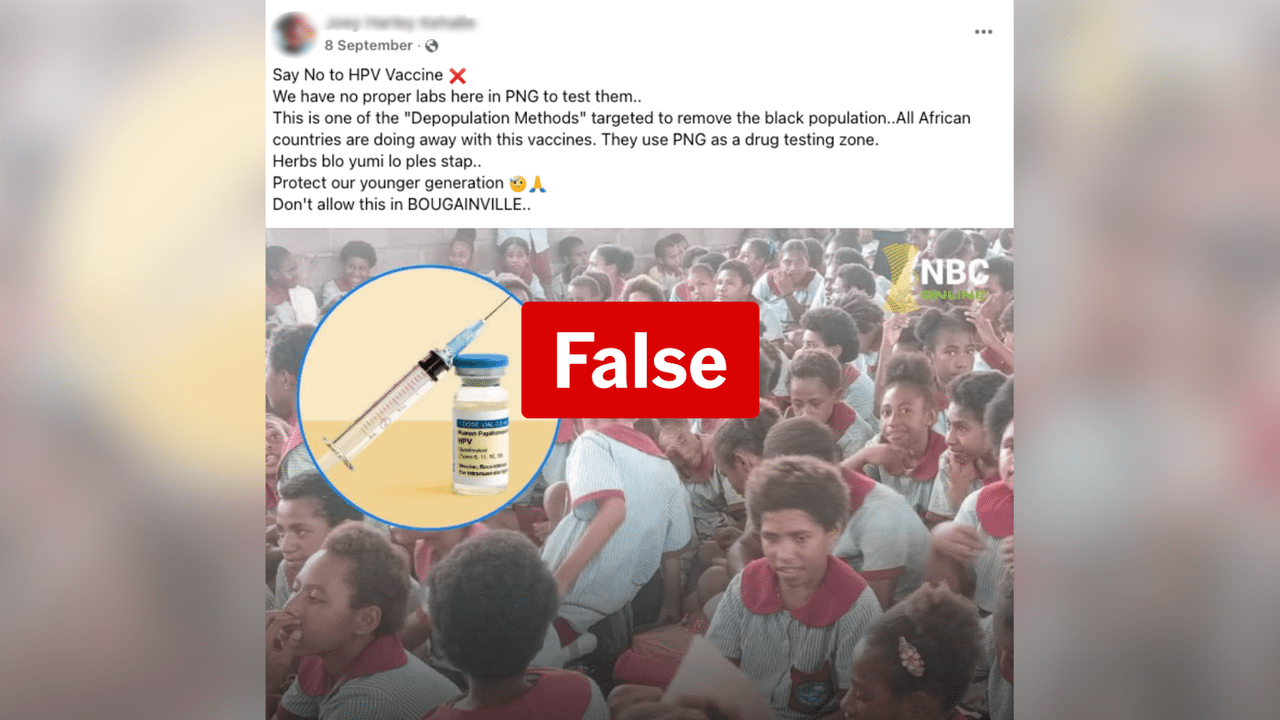
"Say No to HPV Vaccine," a September 8 Facebook post reads.
"We have no proper labs here in PNG to test them. This is one of the "Depopulation Methods" targeted to remove the black population.
"All African countries are doing away with this vaccines [sic]. They use PNG as a drug testing zone."
The rollout is being led by the National Department of Health in collaboration with the Australian government, UNICEF, the World Health Organization (WHO), Gavi and community groups, according to a joint press release.
A spokesperson for Gavi, an international organisation that supports immunisation programs in low-income countries, said the Gardasil vaccine used in PNG was developed by pharmaceutical firm Merck.
Gardasil was co-developed by Australian researchers and first approved for use in Australia in 2006.
"The vaccine has been approved by multiple regulatory authorities and prequalified by the World Health Organization, and has been used in immunisation programmes around the world for many years," the Gavi spokesperson told AAP FactCheck.
A spokesperson for UNICEF said HPV vaccines have been used in the Pacific region since 2008, in both Fiji and the Solomon Islands.
Health authorities in PNG's Western Highlands Province also began a local immunisation program in 2024, and almost 29,000 girls in the region have been vaccinated, the spokesperson said.
The claim that all African countries are abandoning the vaccine is also false.
Dr Nosheen Safdar, from the WHO's Regional Office for Africa, said the opposite is happening.
"The claim that African countries are abandoning HPV vaccination is false,” Dr Safdar told AAP FactCheck.
"Thirty-six countries in the WHO African Region now vaccinate girls against HPV, three times as many as in 2019, and more are preparing to join them.
“Women in Africa face some of the highest cervical cancer death rates in the world, and the HPV vaccine, used safely around the world for 20 years, is one of the most effective tools we have to prevent it."
A WHO spokesperson added that no countries in the region had announced plans to withdraw or stop.
The WHO publishes a global map showing countries that include the HPV vaccine in national immunisation schedules.
As of September 2026, the map shows that 36 of the 47 countries in the WHO African region have introduced the HPV vaccine into their national immunisation programmes.
A WHO spokesperson told AAP FactCheck that seven of those introductions - Angola, Benin, Comoros, Ghana, Madagascar, Namibia and Burundi - took place since January 2025.
The WHO African Region covers 47 of Africa's 54 countries, the spokesperson said.
The other seven countries - Djibouti, Egypt, Libya, Morocco, Somalia, Sudan and Tunisia - fall under WHO's Eastern Mediterranean region.
The HPV vaccine is included in the immunisation programs of four of the WHO’s Eastern Mediterranean nations, with Somalia, Sudan and Egypt being the exceptions, the HPV immunisation map shows.
AAP FactCheck is an accredited member of the International Fact-Checking Network. To keep up with our latest fact checks, follow us on Facebook, Instagram, Threads, X, BlueSky, TikTok and YouTube.


