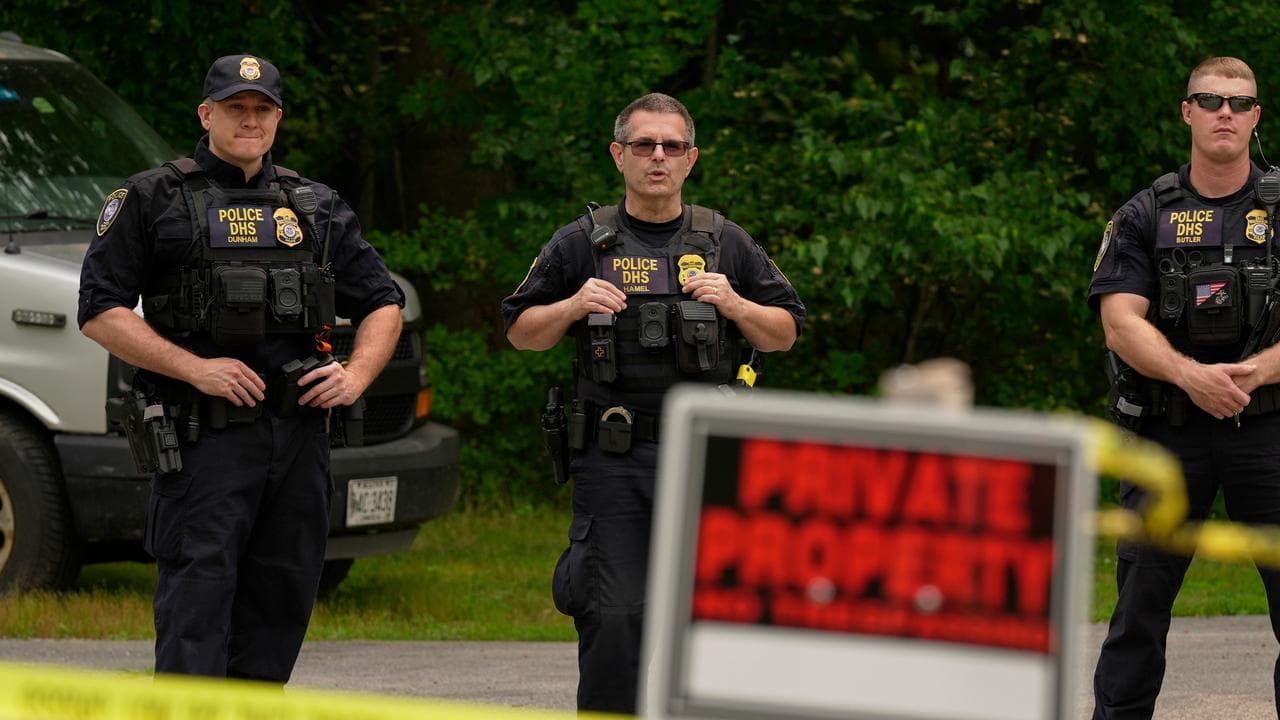
The US Immigration and Customs Enforcement agency has ordered its officers to suspend most vehicle stops around the country, after agents fatally shot two men six days apart during traffic stops in Texas and Maine.
The shift in tactics, which President Donald Trump's border czar, Tom Homan, called a "temporary pause" in vehicle stops, was implemented one day after an ICE agent killed a driver from Colombia in the coastal Maine town of Biddeford, about 25km south of Portland.
It came one week after a similar deadly shooting of a Mexican national by an ICE officer in Houston.
Although both the men shot were characterised by the US Department of Homeland Security, parent agency of ICE, as being "illegal aliens", DHS officials have acknowledged neither was the intended target of deportation operations.
No video footage of either shooting has surfaced, and federal authorities have offered no evidence to support contentions that either man posed a threat to ICE agents or the public at large justifying the use of lethal force to stop them.
The back-to-back incidents brought to at least seven the number of people shot dead during immigration enforcement operations since January 2025, when Trump returned to office and launched a campaign of mass deportations.
Since the beginning of June, ICE arrests in Maine have more than quadrupled to around 70 per day in early July, according to internal ICE data shared with Reuters by a source.
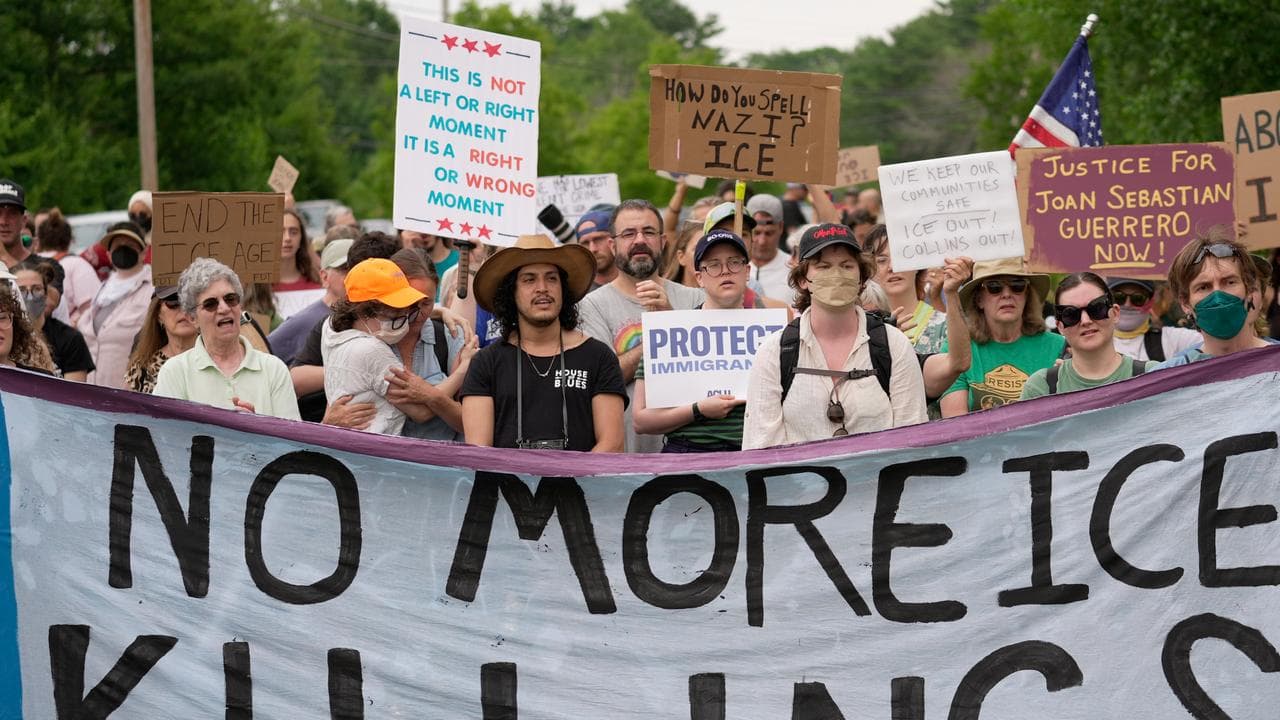
The shooting in Maine sparked immediate protests on Monday, and further demonstrations were taking place on Tuesday.
"It's not a policy change, it's a temporary pause," Homan said of the vehicle-stop suspension in an interview on the Fox News Channel on Tuesday.
"This is going to be a short-term review to make sure ICE agents are safe and doing the right thing."
Officers had other options for taking people into custody besides stopping them in their vehicles, he said.
DHS issued a statement after Monday's shooting, saying an ICE officer "fearing for public safety" opened fire when the driver attempted to flee.
Officials have not explained how the driver might have posed a threat that would justify the shooting.
According to ICE policy, officers may use deadly force only when there is "imminent danger of serious bodily injury or death to the officer or to another person" and is not authorised "solely to prevent the escape of a fleeing suspect".
US Senator Angus King, an independent from Maine who caucuses with the Democrats, told reporters that the agents involved were not wearing body cameras.
DHS said the agents were surveilling the last known address of someone with a final order of removal from the country and followed a car they saw departing the residence.
DHS Secretary Markwayne Mullin later told King that the driver of that car - the man killed in the shooting - was not the target of the operation.
Immigration advocates said the person shot was a 26-year-old man from Colombia who was authorised to work in the US, Colombian President Gustavo Petro in a post on X identified the man killed as Johan Sebastian Duran.
"He was killed because he was believed to be an inferior being with no rights," Petro wrote, adding that he expected Colombia's foreign service in the US to take the "swiftest possible" actions to hold those responsible accountable.
Duran, who grew up in Bucaramanga, Colombia, had a partner and a young daughter and worked two jobs, including food delivery, the Portland Press Herald reported.
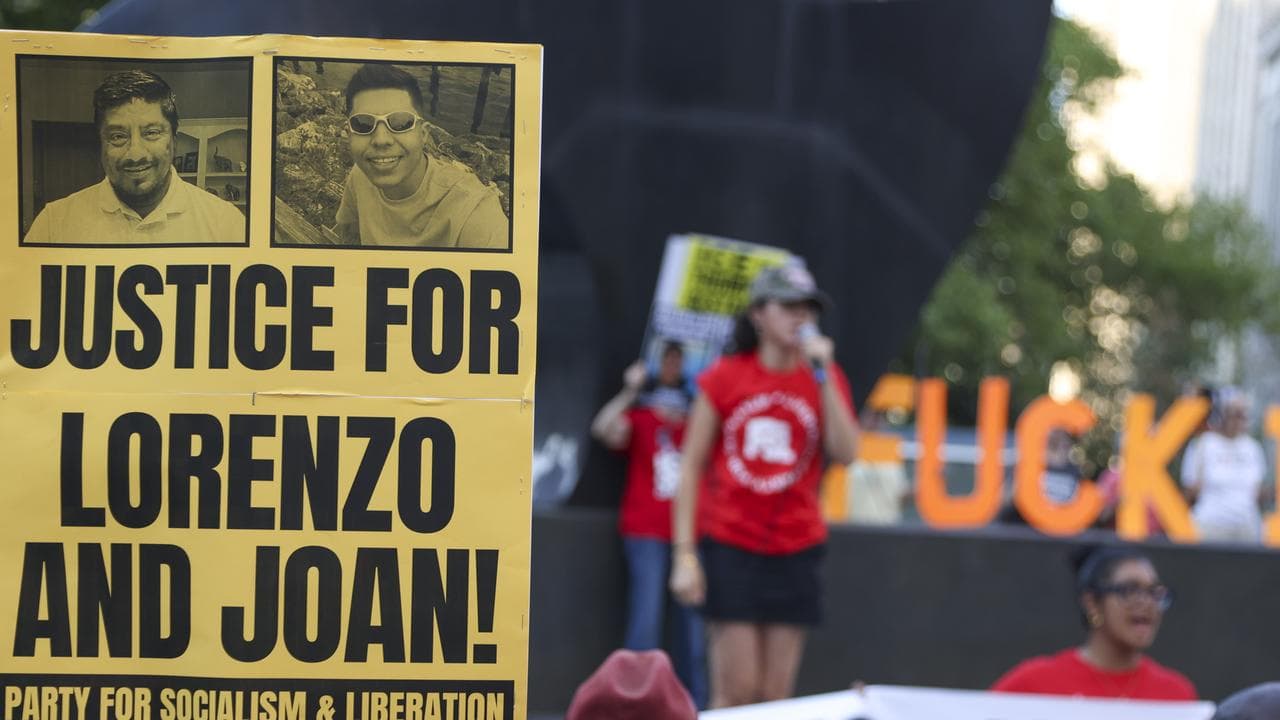
The shooting came six days after an ICE agent in Houston's heavily Hispanic East End fatally shot a 52-year-old man, Lorenzo Salgado Araujo, after a traffic stop during an immigration enforcement operation. Salgado was not the target of the operation, a DHS official has said.
ICE said in a statement that Salgado, a Mexican national living in the US illegally for over three decades, rammed a law enforcement vehicle with his van and attempted to run down an officer who fired in self-defence.
The agency offered no evidence to support its account. In similar instances over the past year, initial ICE and DHS statements about the use of force have been contradicted by video footage or other evidence, sometimes in court.


