Israel says its military is conducting a "large-scale operation" to locate the last hostage in the Gaza Strip as the United States and other mediators pressure Israel and Hamas to move into the next phase of their ceasefire.
The statement came as Israel's cabinet met to discuss the possibility of opening the Gaza Strip's key Rafah border crossing with Egypt, and a day after top US envoys met with Prime Minister Benjamin Netanyahu about next steps.
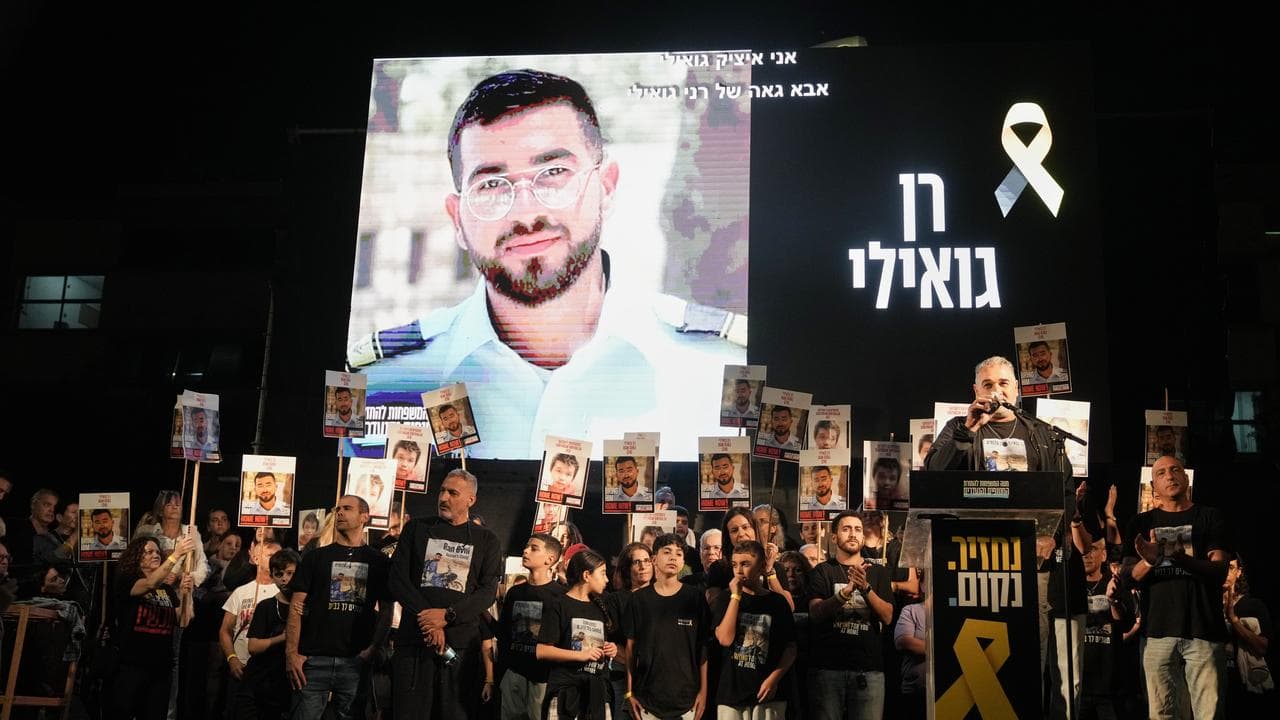
The return of the remaining hostage, Ran Gvili, has been widely seen as removing the last obstacle to moving ahead with opening the Rafah crossing, which would signal the ceasefire's second phase.
The return of all remaining hostages, alive or dead, has been a central part of the first phase of the ceasefire that took effect on October 10.
Before Sunday, the previous hostage was recovered in early December.
While Israel has carried out search efforts before for Gvili, more detail than usual was released about this one.
Israel's military said it was searching a cemetery in the north of the Gaza Strip near the Yellow Line, which marks off Israeli-controlled parts of the territory.
Separately, an Israeli military official said Gvili may have been buried in the Shujaiyya–Daraj Tuffah area, and that rabbis and dental experts were on the ground with specialised search teams.
The official spoke on condition of anonymity because they were discussing an operation still ongoing.
Gvili's family has urged the Israeli government not to enter the ceasefire's second phase until his remains are returned.
But pressure has been building, and the US administration has already declared in recent days that the second phase has started.
Israel has repeatedly accused Hamas of dragging its feet in the recovery of the final hostage.
Hamas in a statement on Sunday said it had provided all the information it had about Gvili's remains, and accused Israel of obstructing efforts to search for them in areas of the Gaza Strip under Israeli military control.


