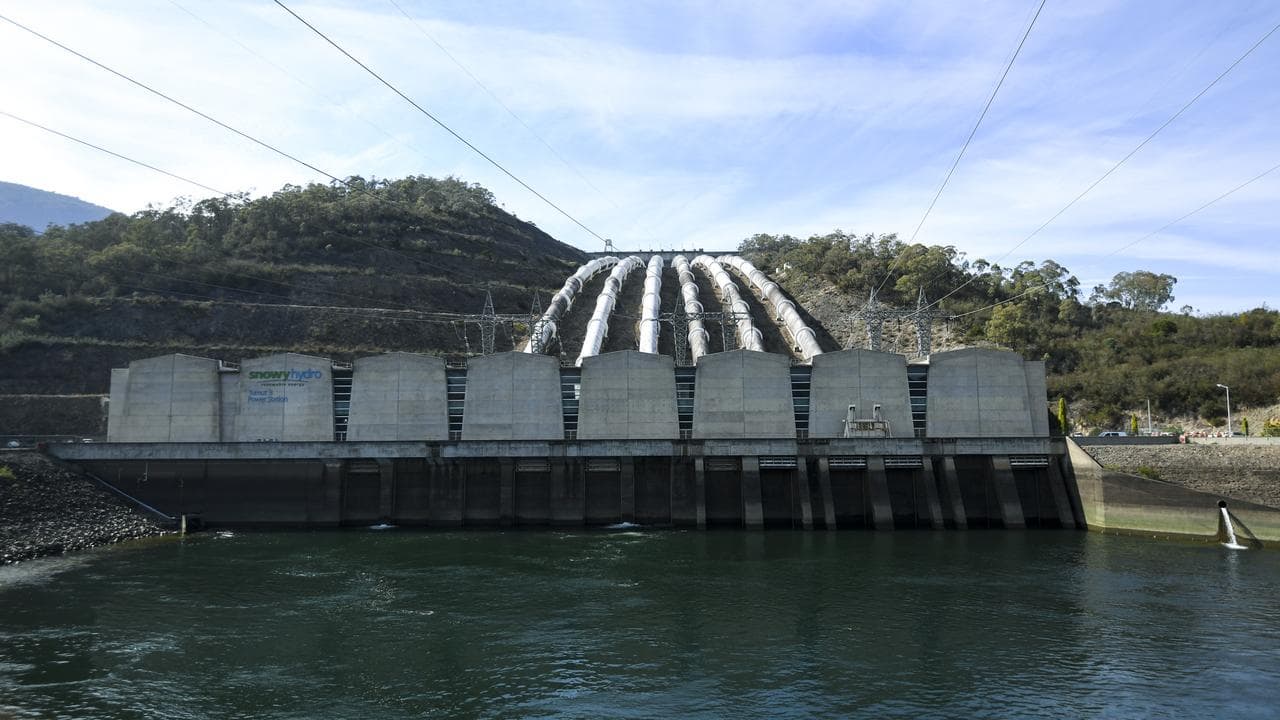
Despite its massive cost, Australia's largest renewables project will be pumping power long after everyone's lights go out, Chris Bowen says.
The federal energy minister concedes the Snowy Mountains hydro-electric scheme's Snowy 2.0 add-on could now set taxpayers back up to $25 billion.
That's compared to $2 billion when it was proposed by a Malcolm Turnbull-led coalition in 2017.
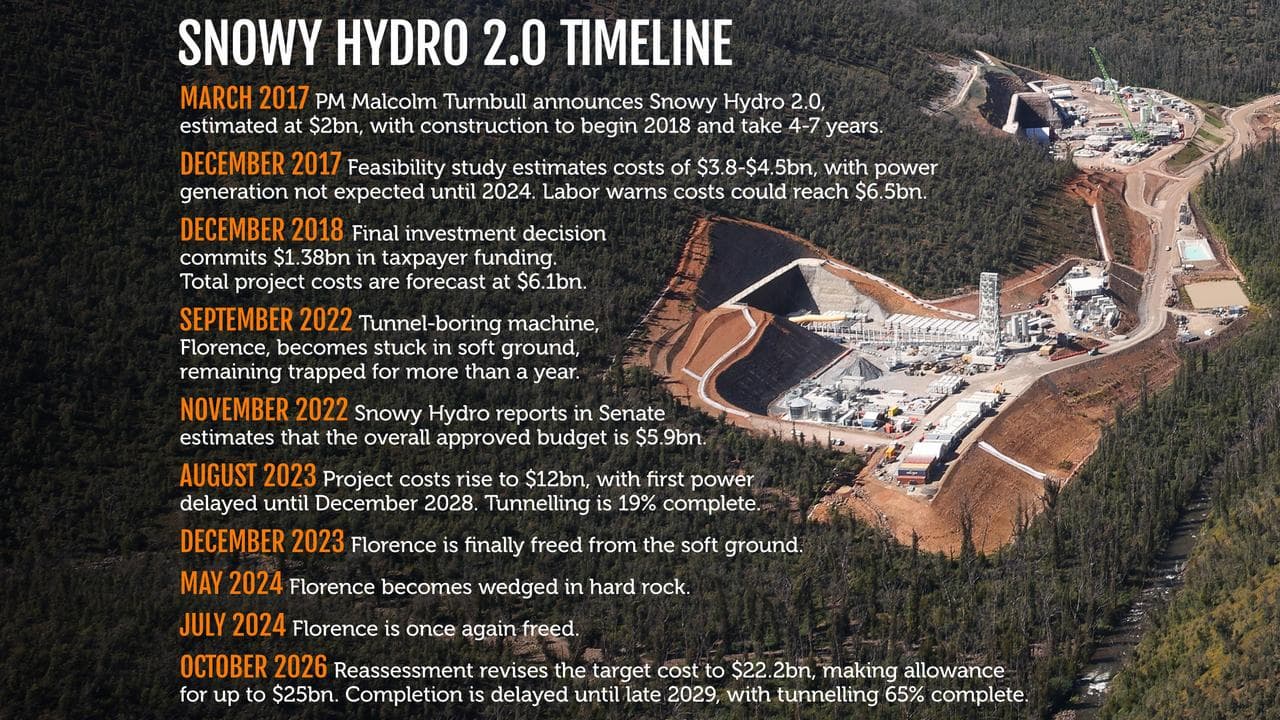
The new figure includes a $2.8 billion buffer on the project's target cost of $22.2 billion.
Its original completion date of 2021, already well out the window, has been pushed back another year to late 2029.
"While recognising that the cost blowout is very unfortunate, we need to remember this program ... will provide energy for Australians for 150 years," Mr Bowen told reporters on Saturday.
"That's the big advantage of hydro over solar, over wind, over gas, over coal, over nuclear, over everything."
Australia could invest in no other power source that would last as long, he said.
"When we're all departed the scene, when we're all long retired and gone, Snowy 2.0 will still be working."
While the $22.5 to $25 billion cost was more than he would like, Mr Bowen said its spread over a century-and-a-half meant Snowy 2.0 would still be "in the best interest of Australians".
Geological challenges have been blamed for the soaring costs, exacerbated by inherited design flaws.
"The original decisions were made very immaturely," Mr Bowen said on Friday.
"Hardly any geotechnical work had been done, not enough soil testing had been done ... the project designers working in a very complicated field have learnt a lot."
One of the project's tunnel-boring machines, Florence, was bogged for most of 2023 and became wedged in harder-than-expected rock in 2024.
The tunnelling is 65 per cent complete, according to the latest update, having only gone 19 per cent of the way in 2023 when the project was overhauled.
The "reset" involved renegotiating the agreement between the government-owned Snowy Hydro corporation and Italian contractor WeBuild.
Snowy 2.0 chief executive Dennis Barnes, who was parachuted in at the time of the reset, was also dismayed at the cost increases, but said progress was promising.
Opposition energy spokesperson Dan Tehan demanded Mr Bowen resign over the higher costs and delays, with coalition members criticising the "cost-plus" contract model entered into after the 2023 reset.
The energy minister dismissed the call to quit his role.
Despite everything, there was no question the project would proceed to the finish line, Mr Bowen said on Saturday.


