
Federal government reforms to housing investment concessions continue to weigh on lending activity, adding pressure on a market already weathering high interest rates and cost-of-living strains.
Two major banks have now linked the changes to negative gearing and the capital gains tax, revealed in the May budget, to a drop in housing loan applications of up to 20 per cent.
Westpac released its outlook on Monday in its third-quarter trading report, which comes ahead of its fiscal 2026 results announcement in November.

Australia's second-largest bank said an undersupply of housing, combined with population growth, was expected to partially offset the impact of higher rates and Labor's policy changes.
However, overall housing credit growth is set to fall from 6.8 per cent in this fiscal year to 4.7 per cent in fiscal 2027.
Most of the decline appears to have been driven by property market investors, with loan applications forecast to drop to 4.5 per cent next year, from 9.1 per cent this year.
The bank had an average of 29,000 mortgage applications a month in the third quarter.
But looking closer at the run rate, the decline in applications between May 15 and July 31 - after the budget was released on May 12 - was 20 per cent.
The Westpac and NAB updates don't bode well for the numbers to come from Commonwealth Bank, which reports its annual results for the year ended June 30 on Wednesday.
Australia's biggest mortgage lender is still expected to post a net profit around $10.8 billion, which would be a bit higher than its fiscal 2025 result.
Shares of all the big banks fell on Westpac's news, with the latter dipping by 4.5 per cent to $36.22 and NAB losing almost two per cent to $41.50.
Commonwealth Bank also lost two per cent, to $174.36, while ANZ also lost about the same to $36.94 in early afternoon trading.
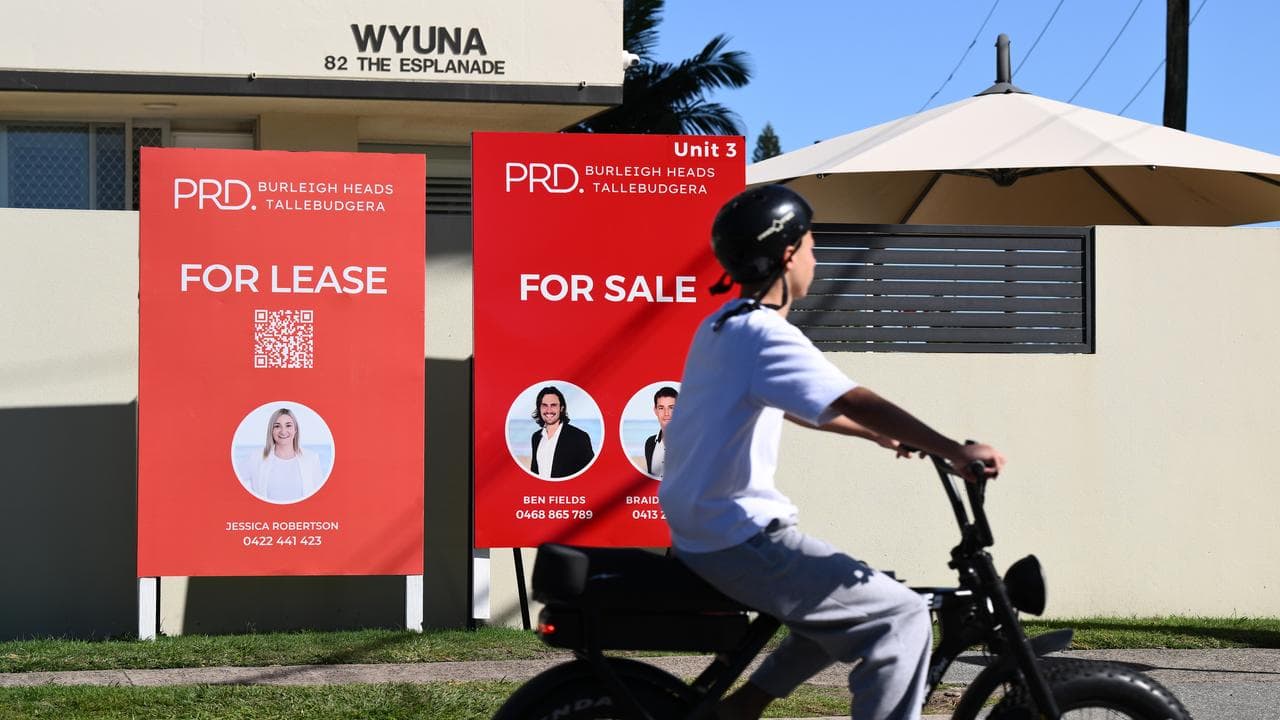
Under Labor's tax changes, people who owned an investment property before budget night could continue to negatively gear it.
But properties purchased or which changed ownership following budget night lost the concession, meaning any losses accrued on the property could not be offset against the owner's personal income.
At the same time, the 50 per cent capital gains tax discount - for individuals, trusts and partnerships - will be replaced by cost-base indexation plus a 30 per cent minimum tax rate from July 1, 2027.
National Australia Bank reported in July that home-loan lending applications had fallen by 15 per cent in the June quarter, compared to the March quarter.
Meanwhile, Westpac reported an unaudited bottom-line net profit of $1.8 billion for its third quarter.
That was up two per cent on the two-quarter average in the first half of fiscal 2026, after excluding notable items.

"We have a strong balance sheet and are focused on supporting our customers through uncertainty while delivering sustainable returns," chief executive Anthony Miller said.
"While many households are feeling the impact of cost-of-living pressures, businesses are investing and our customers have continued to show resilience."
Westpac, NAB, and ANZ will all report their fiscal 2026 results in November.


