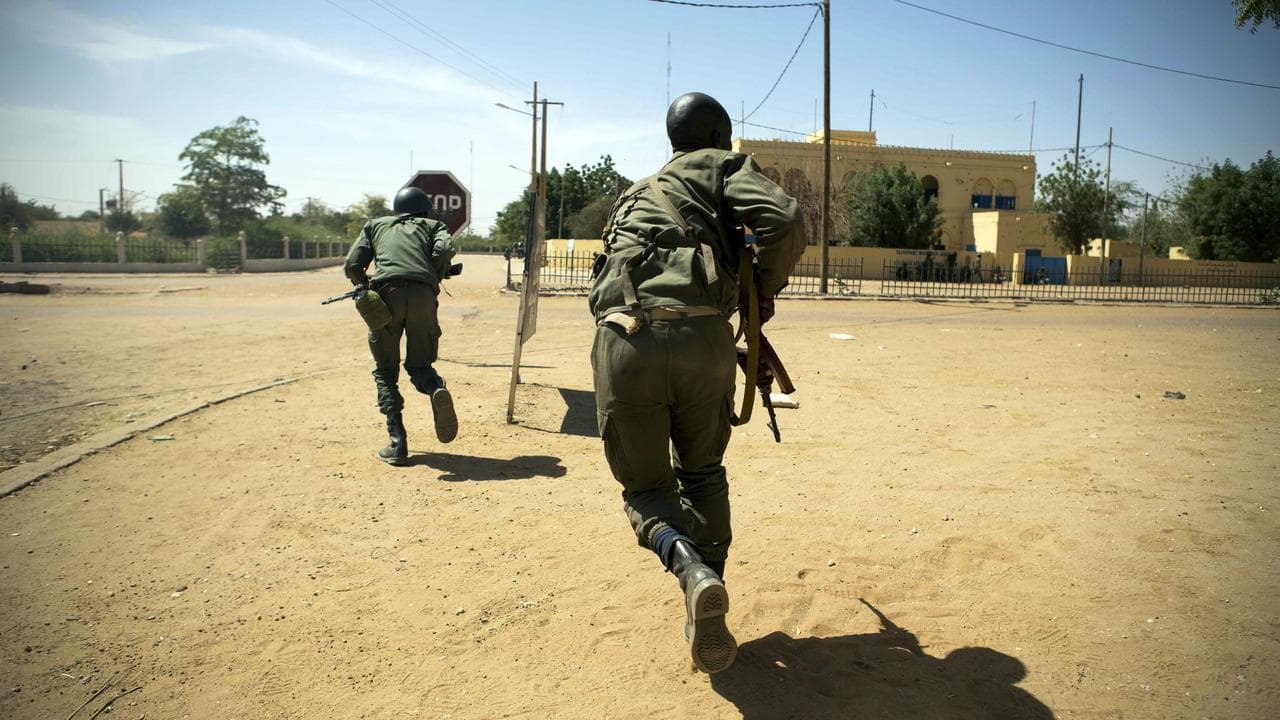
An al-Qaeda affiliate and rebels have claimed responsibility for co-ordinated attacks across Mali, in one of the boldest operations insurgents have mounted in their campaign against the military-led government.
Mali's army said it killed "several hundred" assailants and repelled the assault, which hit multiple sites in or near the capital, Bamako.
It said a large-scale sweep operation was under way in Bamako, the nearby barracks town of Kati and elsewhere in the gold-producing country.
Al-Qaeda-linked Jama'at Nusrat al-Islam wal-Muslimin (JNIM) issued a statement, published by SITE Intelligence Group, claiming responsibility for Saturday's attacks in Kati, on the Bamako airport and in localities further north, including Mopti, Sevare and Gao.
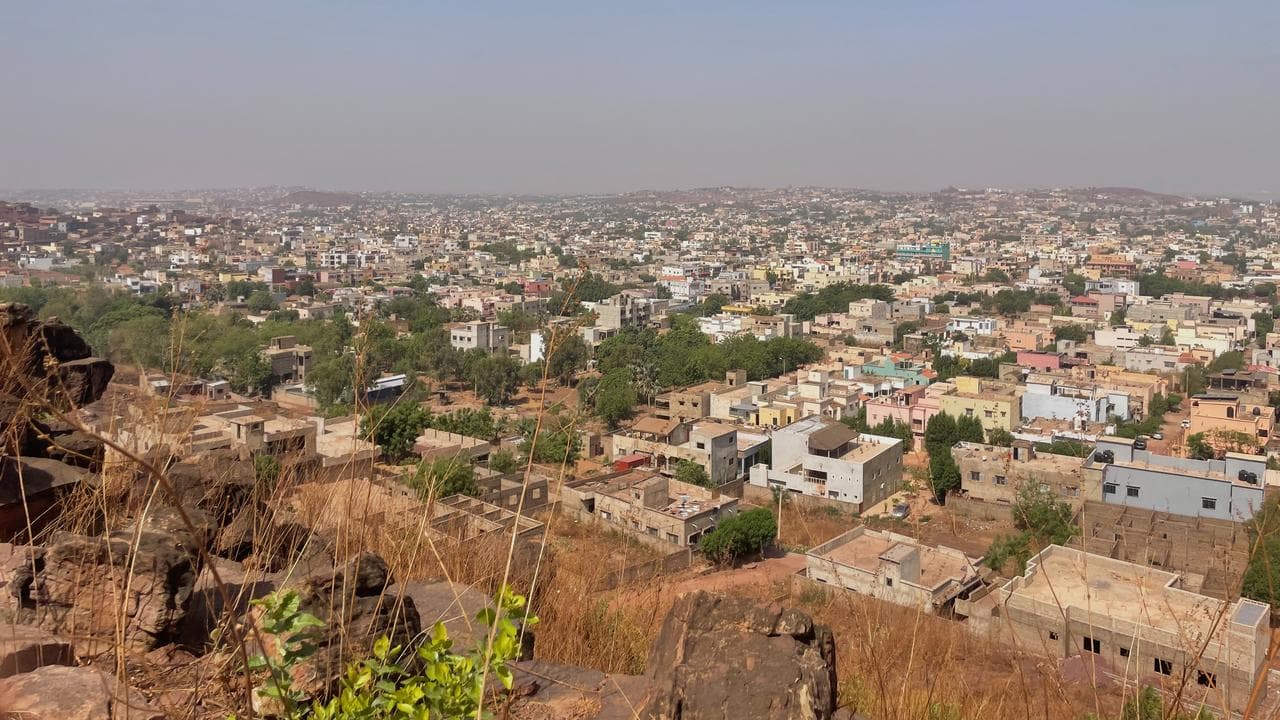
It also said the city of Kidal was "captured" in an operation co-ordinated with the Azawad Liberation Front (FLA), a Tuareg-dominated rebel group.
FLA spokesperson Mohamed Elmaouloud Ramadane earlier said on social media its forces had taken control of positions in Gao and one of two military camps in Kidal.
Reuters could not independently verify the JNIM and FLA claims.
"This looks like the biggest co-ordinated attack for years," said Ulf Laessing, head of the Sahel program at Germany's Konrad Adenauer Foundation.
The US embassy told its citizens to shelter in place and Britons were advised against travel to Mali, where the army said it had been attacked by unidentified "terrorist" groups.
The airport was closed, with flights turned back or cancelled. South of Bamako, people trying to access the airport had found themselves almost inside a combat zone, with heavy gunfire nearby and helicopters overhead, one passenger said.
Two explosions and sustained gunfire were heard shortly before 6am local time on Saturday near the military's main base in Kati, north of Bamako, and shots were still ringing out there more than four hours later, a Reuters witness and two residents said.
Two witnesses said Mali Defence Minister Sadio Camara's house in Kati was destroyed in the attack.
A witness in the central town of Sevare said shooting began there at 5am local time on Saturday and gunfire had come from all directions.
The selection of targets was remarkable, said Heni Nsaibia, senior West Africa analyst at Armed Conflict Location & Event Data Project.
Kati and Bamako are "at the heart of the regime" and Kidal, the site of a symbolic military victory in 2023, has been central to the government's "narrative of regaining territorial control", he said.
The army had said shortly after 11am on Saturday the situation was under control, but a resident of Gao - a major military hub in the north - reported hearing a loud explosion and exchanges of fire between soldiers and insurgents at about 12pm.
By evening, an uneasy calm prevailed in Gao, where the governor declared an overnight curfew, the same source said.
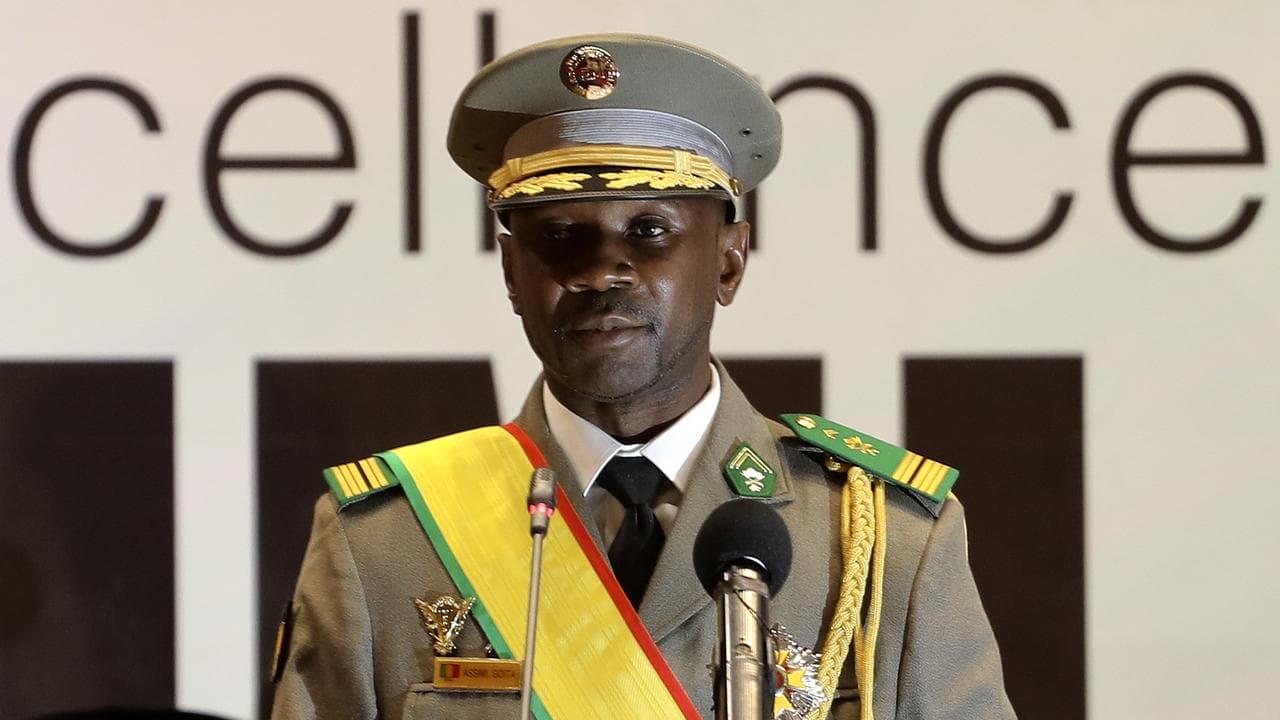
Saturday's attacks signal a potential escalation in an insurgency that began in 2012. In September 2024, JNIM attacked a gendarmerie training school near Bamako airport, killing some 70 people and a year later announced a blockade on fuel imports.
Mali is also grappling with a much longer history of Tuareg-led rebellion in its north. The current government, headed by Assimi Goita, took power after coups in 2020 and 2021 with a pledge to restore security which it has so far struggled to deliver on.
Goita's government, which has leant on Russian mercenaries for support while initially spurning co-operation with Western countries, has recently pursued closer ties with Washington.
JNIM said on Saturday it had not targeted the Malian military's Russian partners and wanted to build a "balanced and effective future relationship", the SITE translation of its statement said.


