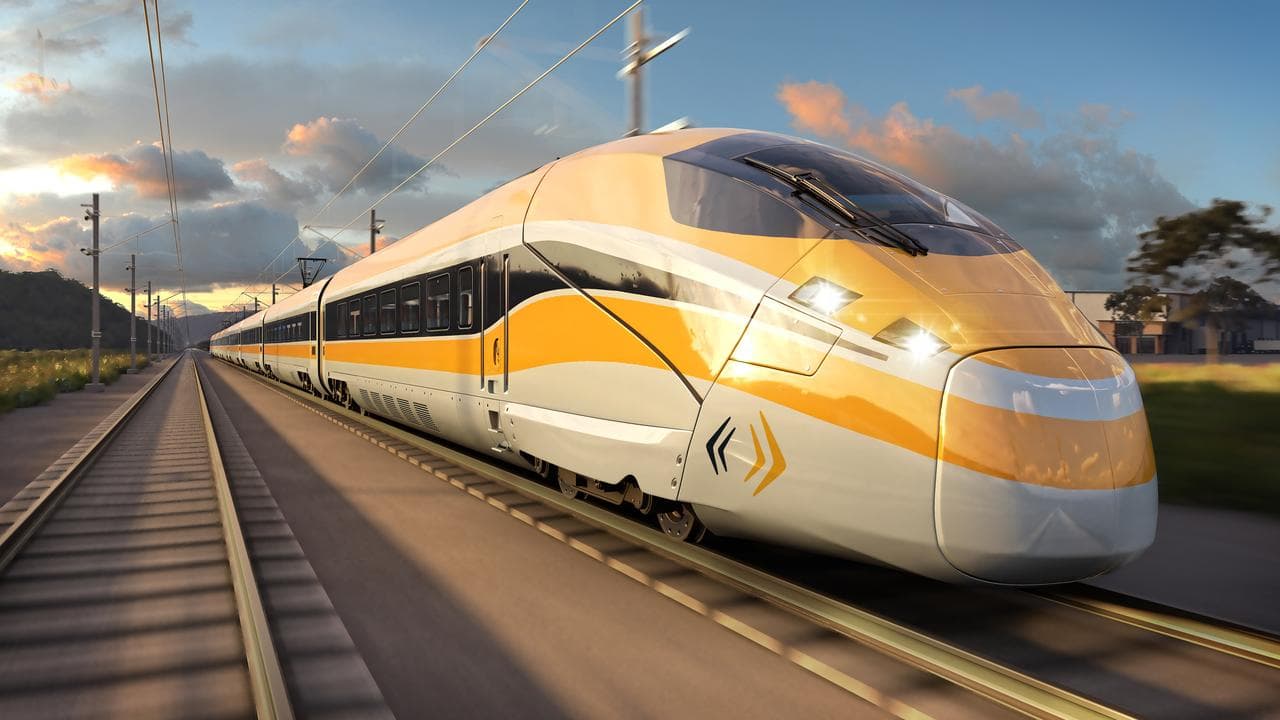
Australia has its best chance at finally getting high-speed rail, as the federal government splurges almost $700 million to make the project shovel-ready within a few years.
A two-year development phase started on Tuesday, ensuring work on the long-awaited transport project can begin.
The development phase will be responsible for the approvals process of the route, awarding contracts and finalising the design.
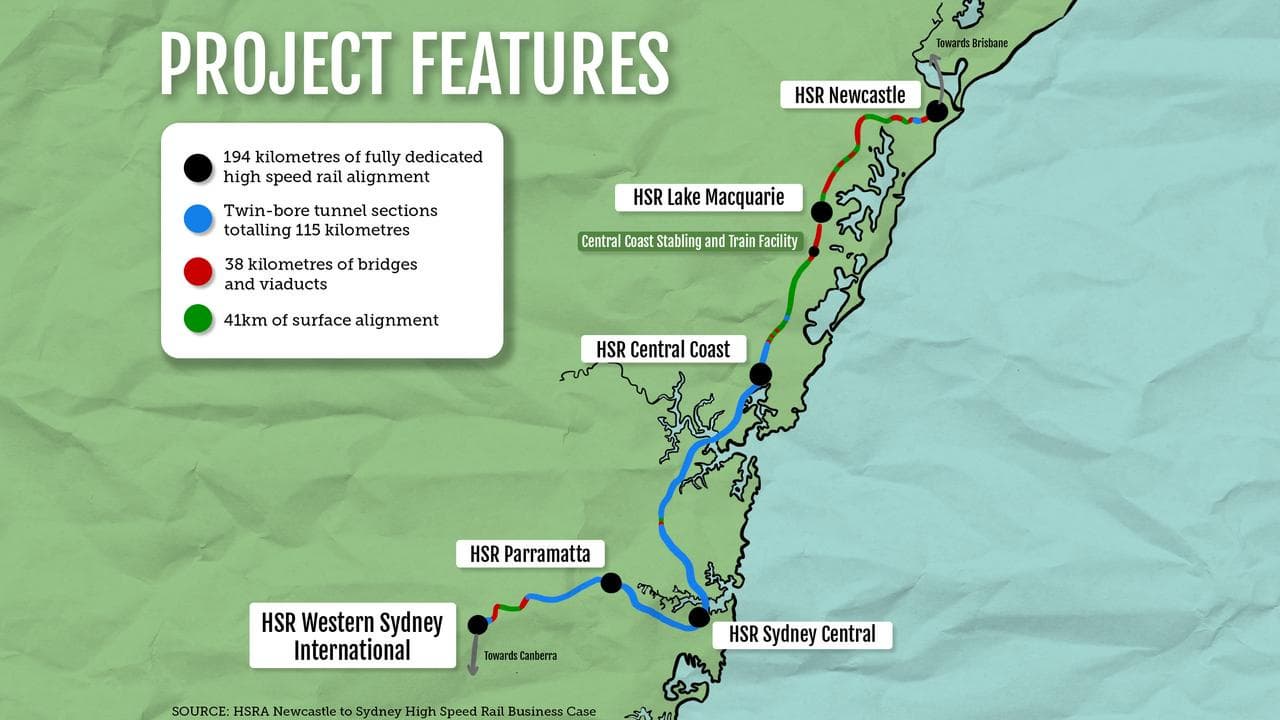
It's estimated a high-speed rail line would mean travel time of only one hour between Sydney and Newcastle and 30 minutes from Sydney to the Central Coast.
The federal government will pump an extra $229 million into the plan, bringing the Commonwealth's spend to almost $660 million.
The total cost of the project, including an airport extension, has been estimated at more than $90 billion - making it one of Australia's most expensive infrastructure projects.
Transport Minister Catherine King said should the development phase be successful, a decision on the project would be made by 2028, with construction to start the following year.
"This is getting it ready for a final investment decision. If you think of the way the private sector works, they do a huge amount of work before they actually are ready," she told reporters in Newcastle.
"We want to make it happen. We really want to see it come to Australia finally. We can't be the only populated country in the world without high-speed rail."
The business case projects a boost of $250 billion to the economy over the next 50 years, with the first stage set to produce about 99,000 jobs.
Stations would be set up in Sydney, the Central Coast, Lake Macquarie and Newcastle.
Further stages include expanding the high-speed rail to Parramatta in Sydney's west, before heading to the city's second airport.
Plans are being developed for potential expansion to Melbourne and Brisbane.
Australia had the best chance since high-speed rail was first placed on the agenda in the 1980s to stand the project up, City Futures Research Centre director Christopher Pettit said.
"It's more of an imperative as a solution to the housing crisis with Melbourne and Sydney bursting at the seams," he said.
"It offers growth corridors to help alleviate that."
The smaller leg between Sydney and Newcastle was the start of an exciting project which would help activate regional areas while building Australia's "backbone", Professor Pettit said.
"For many Australians there's a lot of appeal to high-speed rail with comfortable carriages you can work in ... it can be more productive and quicker than driving," he said.
High-speed rail has long been touted as a transport option in Australia, but successive governments over multiple decades have failed to make the thought bubble leave the station.
There has been several proposals for a high-speed route linking Melbourne, Sydney and Brisbane.
Monash Institute of Railway Technology director Ravi Ravitharan said he was confident it would get off the ground because of the significant investment and planning.
"You have to start somewhere and high-speed rail is a must for us as a country to move forward with the interest of connecting major cities and improving access to education and health," he said.
The project was key to Australia achieving its climate targets as rail produced a significantly lower level of emissions compared with planes, Professor Ravitharan said.
It would transform Australia's east coast, Australian Railway Association chief executive Caroline Wilkie said.
"High-speed rail has been a dream for decades but, today, we are a step closer to making it a reality," Ms Wilkie said.


