What was claimed
An increase in HIV cases in Fiji has been caused by COVID-19 vaccines.
Our verdict
False. COVID vaccines don’t cause HIV, and experts say Fiji’s HIV epidemic has been driven by intravenous drug use.
COVID-19 vaccines have not caused a surge in HIV cases in Fiji, despite claims on social media.
Experts told AAP FactCheck the outbreak has been predominantly driven by unsafe intravenous drug use, and there was no evidence COVID vaccines caused HIV.
Fiji's government announced a national HIV emergency on September 15, 2026, saying the number of cases is estimated to have reached one in 60 Fijian adults, a 16-fold increase since 2019.
Numerous social media posts are linking the outbreak to COVID vaccines.
“HIV in Fiji because of the COVID vaccine,” reads a September 16 post by a user from Fiji.
Social media users from outside the country are also making similar claims.
"HIV is a jab injury," a September 14 Facebook post by a New Zealand user reads.
“And Fiji had a severe jab policy. No jab no job. No jab no welfare.”
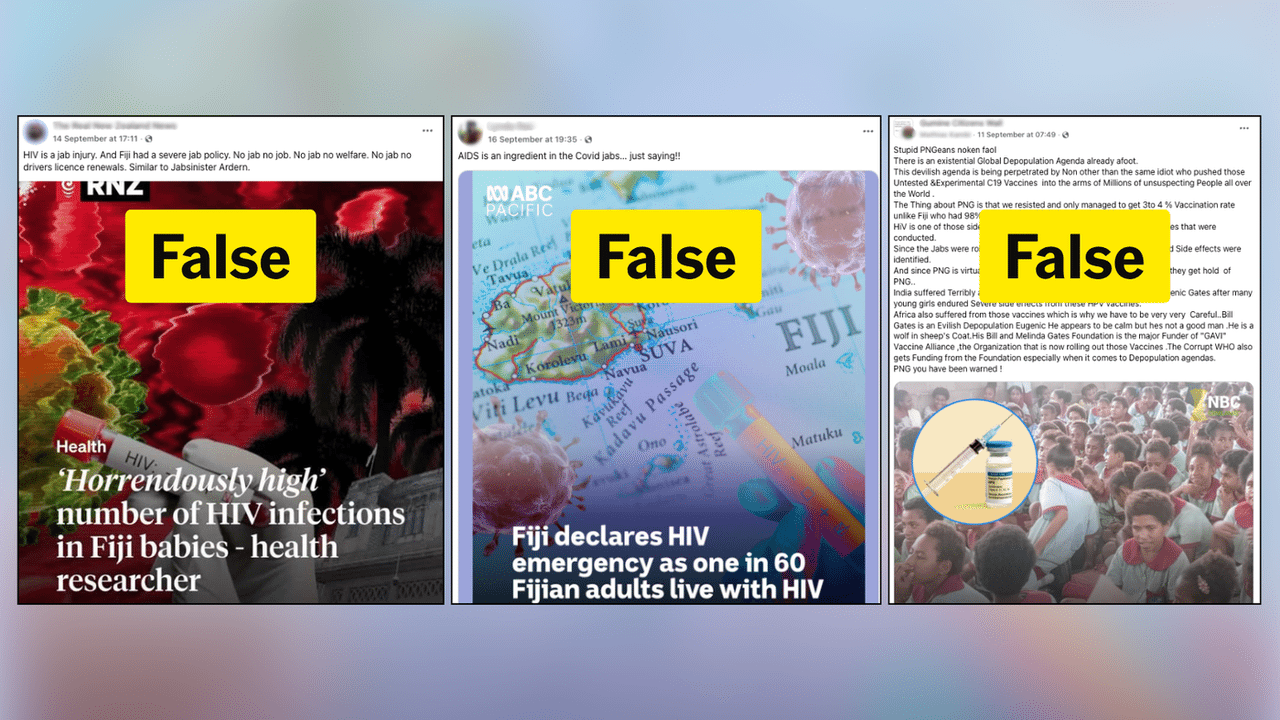
A September 16 Facebook post by an Australian user goes even further by sharing an article about Fiji’s HIV emergency and claiming AIDS is “an ingredient in the COVID jabs".
HIV is the virus that, if left untreated, can lead to AIDS.
Another Facebook post, by a Papua New Guinea user, links the spike in Fijian HIV cases to COVID vaccines and claims HIV is a side effect of the jabs, “according to empirical studies”.
However, experts told AAP FactCheck there is no evidence of a link between HIV and COVID vaccines.
In February 2026, the WHO declared that unsafe intravenous drug use was a major driver of HIV transmission in the country.
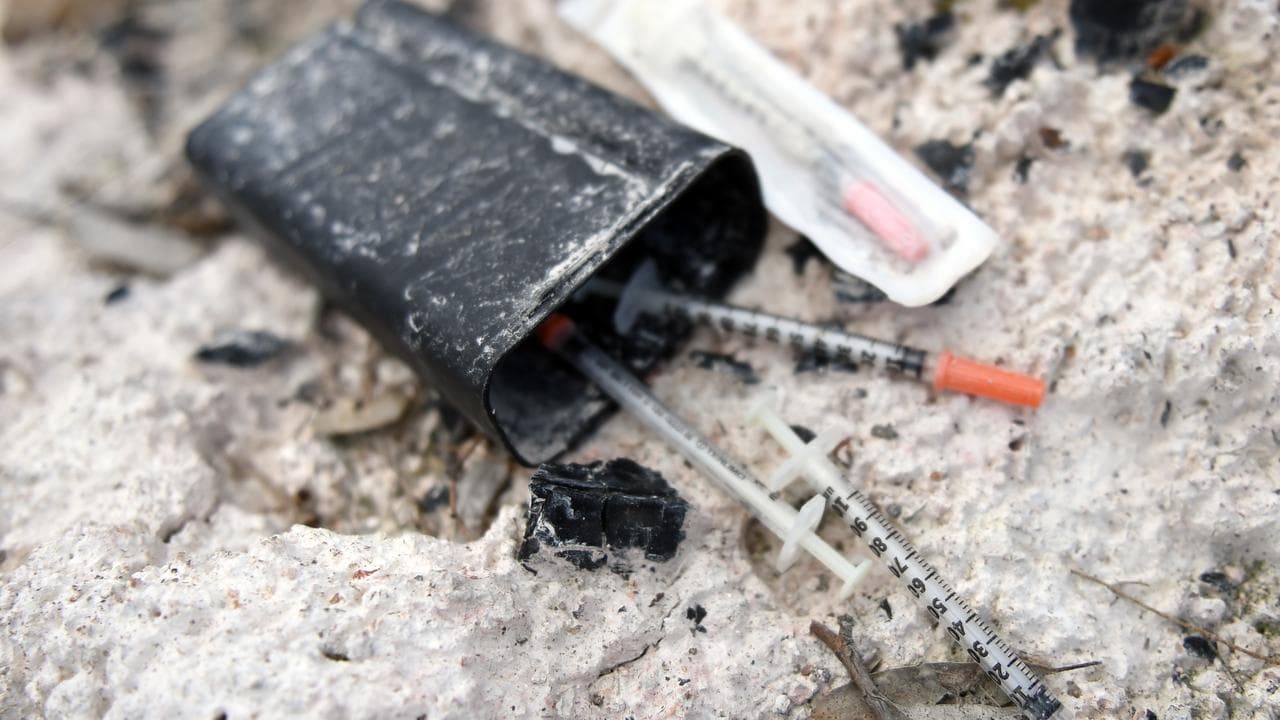
The capital Suva had a shortage of syringes and people were engaging in unsafe injecting practices, while stigma had prevented those infected from seeking medical help, the WHO said.
An earlier rapid assessment report commissioned by the WHO and the UN Development Programme said nearly half of those who began HIV treatment in 2024 said intravenous drug use was their "primary risk behaviour for HIV infection" (page 4).
Methamphetamine was the most common injected drug, the report found (p4).
Lisa Maher, an expert on HIV prevention at UNSW and the lead researcher of the 2025 rapid assessment report, said there was "absolutely no evidence" that COVID vaccinations were associated with Fiji’s HIV outbreak.
"However, there is strong, high-quality evidence that this outbreak is being driven by unsafe injection drug use and, in particular, receptive sharing of needles and syringes," Professor Maher told AAP FactCheck.
AAP FactCheck has previously debunked false claims that mRNA vaccines cause AIDS, which were based on a misinterpretation of a 2025 pre-print study.
The study found that some people who experienced long-term side effects after COVID vaccination had lower levels of certain CD4 T cells, a type of white blood cell that plays an important role in the immune system.
The HIV virus also attacks CD4 T cells, and when a person's T cell count falls below a certain threshold, the condition is called Acquired Immunodeficiency Syndrome (AIDS).
However, an author of the 2025 study told AAP FactCheck that participants still had T cell counts within the normal range, and the slight change in T cells among participants did not resemble those in AIDS cases.
The study also did not establish that COVID vaccines had caused the immune differences observed.
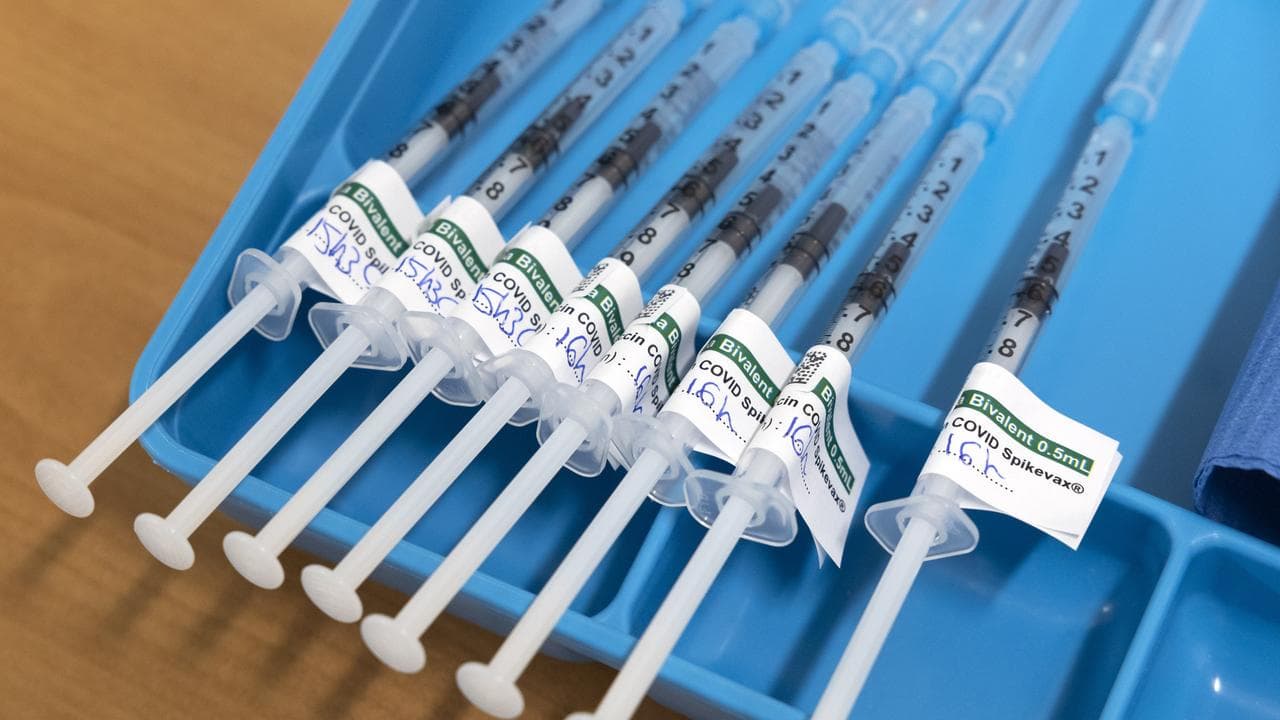
Subsequent studies have investigated whether COVID vaccines affect T cell levels and have found no evidence of a harmful decline.
A 2025 paper published in Nature Communications examined T cell counts in those who had been repeatedly vaccinated and found no decline.
Dawn Bowdish, an immunologist at McMaster University in Ontario and a lead author of the paper, said no robust study had found COVID vaccines reduced the number of T cells.
"Billions of people have been vaccinated, and those billions of people go and get medical blood tests for all the things a person might need a blood test for," Professor Bowdish told AAP FactCheck.
"If CD4+ T cell levels were dropping due to vaccination, we would have ample documentation by now."
Additionally, a 2024 study examining the impact of vaccination on T cells in people with HIV found that participants experienced an increase in CD4 T cells after vaccination.
AAP FactCheck is an accredited member of the International Fact-Checking Network. To keep up with our latest fact checks, follow us on Facebook, Instagram, Threads, X, BlueSky, TikTok and YouTube.


