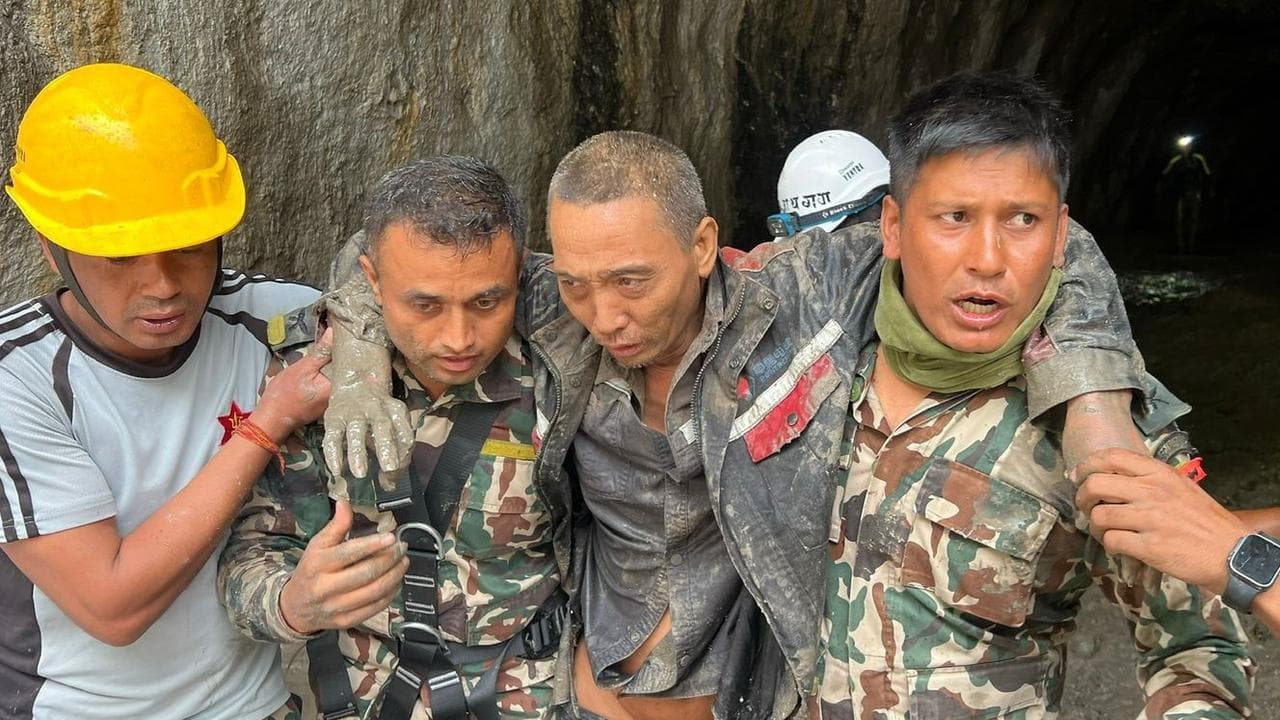
Rescuers in Nepal have pulled a Chinese national and a woman to safety 10 days after devastating floods hit the country, officials say.
The man was rescued on Saturday from a hydropower tunnel, according to a social media post by the country’s prime minister’s office, bringing the total to three workers pulled alive from the Trishuli hydropower project.
Two Nepalese workers were rescued from a tunnel at the Trishuli 3A hydropower plant on Friday.
Nepal's army said a joint rescue team of Nepalese military personnel and South Korean disaster experts rescued the man from a 225-metre tunnel and he was undergoing a health assessment.
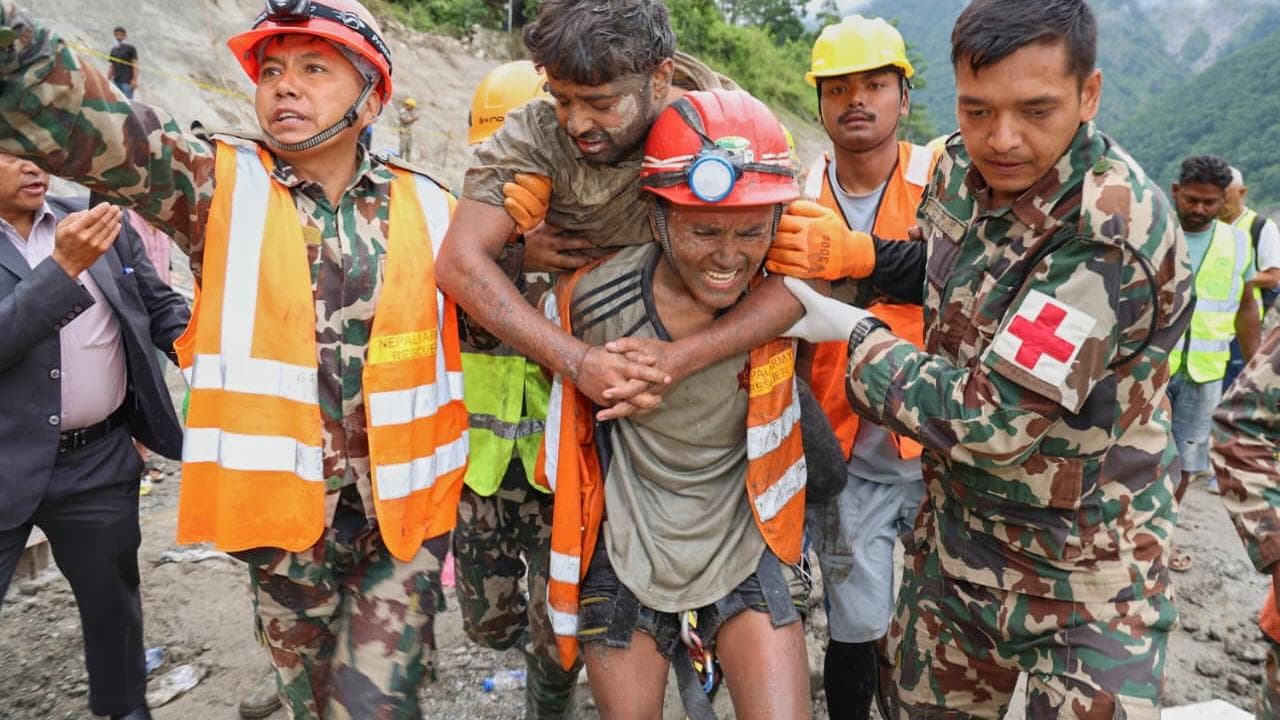
Images showed him being evacuated by helicopter, with an army medic checking on him during the flight.
About 900 workers are missing from 12 hydropower projects across Nepal, with roughly 500 believed to be trapped in various tunnels, authorities said.
In flood-hit Nuwakot town, a woman was rescued alive from a house, Nepal's army spokesperson said on Saturday.
Officials said she was being airlifted to Kathmandu.
Images released by Nepal’s army showed rescuers finding the woman covered in mud.
They gave her bottled water before pulling her to safety, wrapped in a grey blanket.
The latest rescues come after two Nepalese men, aged 30 and 45, were pulled from a tunnel at the Trishuli 3A hydropower plant on Friday.
The men, named as Sanjay Sah, a mechanical foreman, and Kabir Maharjan, a mechanical supervisor, were flown to a military hospital in the capital Kathmandu.
One of the rescued men was suffering from mild hypothermia and had been able to communicate clearly, an army spokesman said, while the condition of the other man was initially unclear.
Videos from Nepalese media showed one of the survivors, covered in mud, being pulled out of an open shaft.
He had been working in the plant's control room as the flood wave approached, a representative of the Nepalese army quoted Sah as saying.
Sah said he had warned dozens of colleagues about a "serious dam breach" and shouted at them to get to safety immediately.
"But while I was trying to save everyone, I was running out of time. I did not manage to get out myself in time," Sah was quoted as saying.
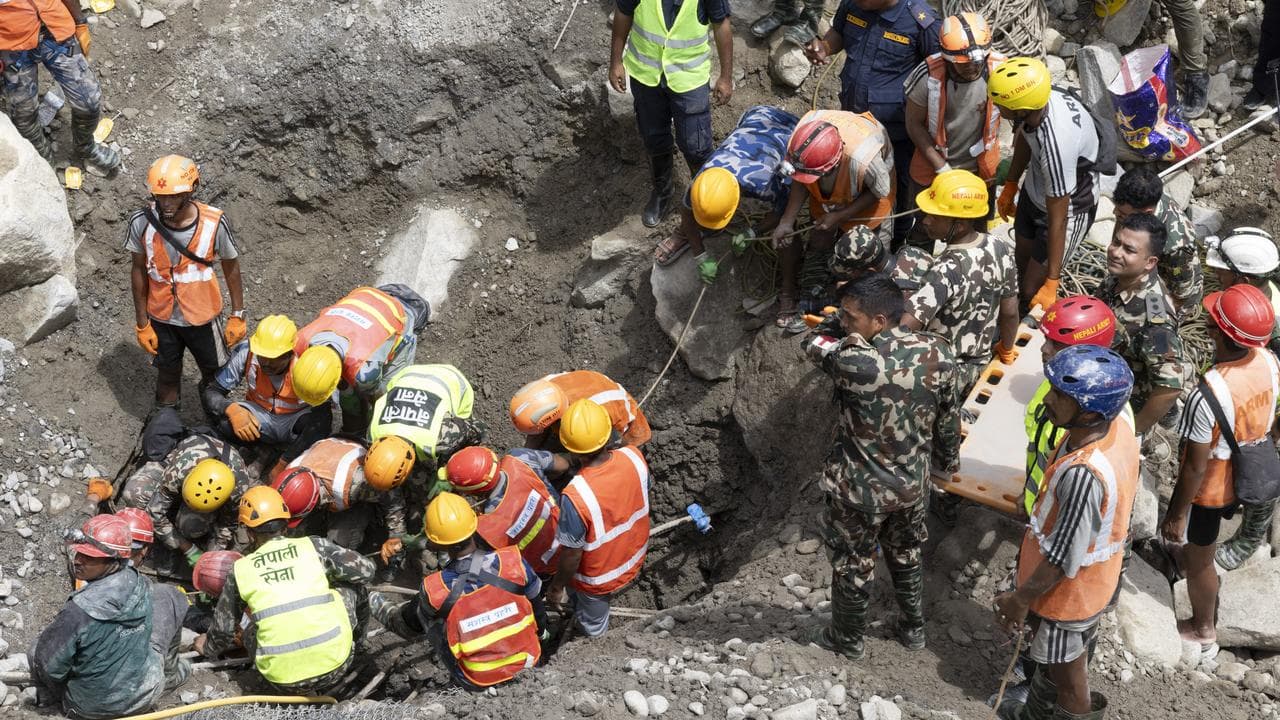
More than a week after the disaster, rescuers from the army and police had stepped up their rescue efforts after hearing voices, lawmaker Shri Ram Neupane was quoted by the newspaper The Kathmandu Post as saying.
"Don't panic, we are here to rescue you," the rescue team were reported as shouting. An "OK" came back in reply from the shaft.
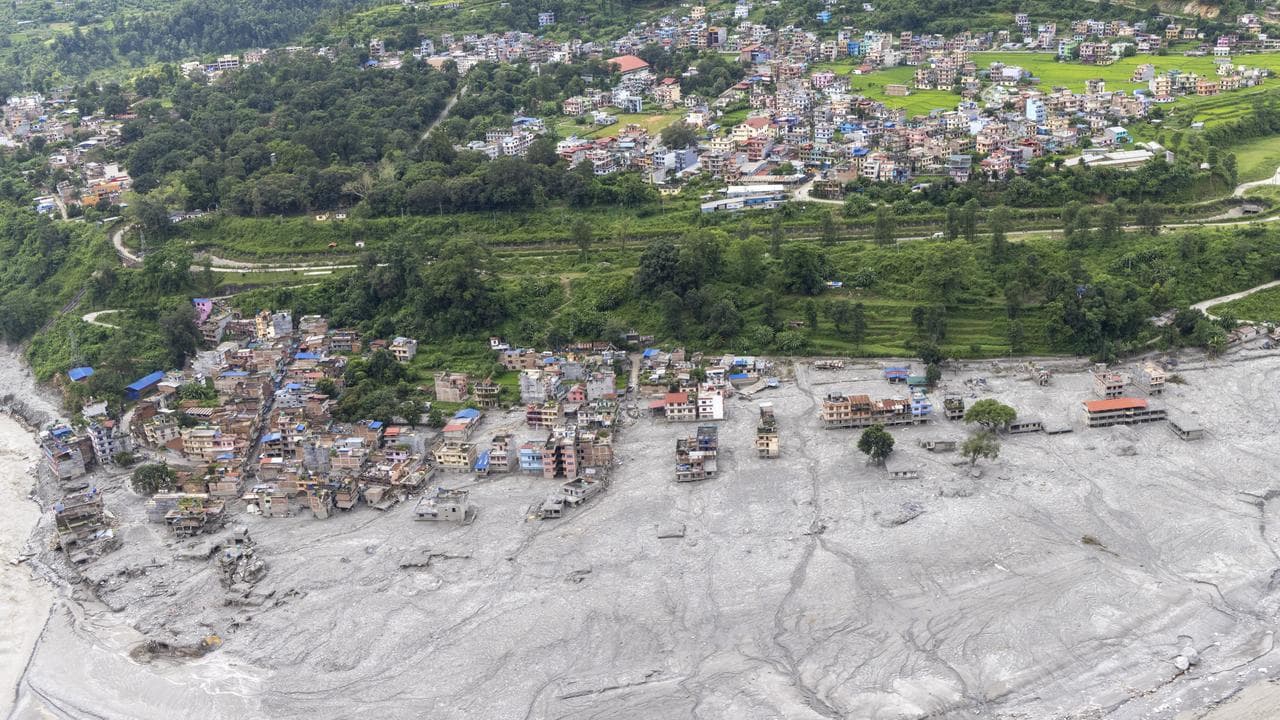
The flooding, which originated in a glacial region of the Himalayas, devastated numerous hydropower facilities, some still under construction.
Hundreds of workers remain missing and are believed to be trapped in tunnel systems at the plants.
Teams of specialists from India, China and South Korea were taking part in the search and rescue operations in co-operation with the Nepali Army, the Foreign Ministry in Kathmandu said.
According to official figures released on Friday, the death toll in Nepal had risen to 1290, with almost 4800 people still missing, including 601 foreign nationals.
The death toll on the Tibetan side of the border rose to 31 on Friday, an increase of 10 since the previous tally, according to Chinese state media.
It was not clear whether they were Chinese or foreign nationals. Some 531 people were reported missing.
The European Commission said 82 tonnes of essential relief supplies from EU stocks were flown into Nepal on Friday.
Separately, Germany, Luxembourg, Latvia and Norway were sending protective equipment, medical supplies and emergency power equipment.
Australian disaster response specialists left for Nepal on Friday to join the search for survivors, as the Albanese government expressed "serious concerns" for the welfare of its missing citizens.
Authorities in Canberra on Friday confirmed two people had made contact overnight, bringing the number of missing Australians to 36.
with Reuters, AP, AAP


