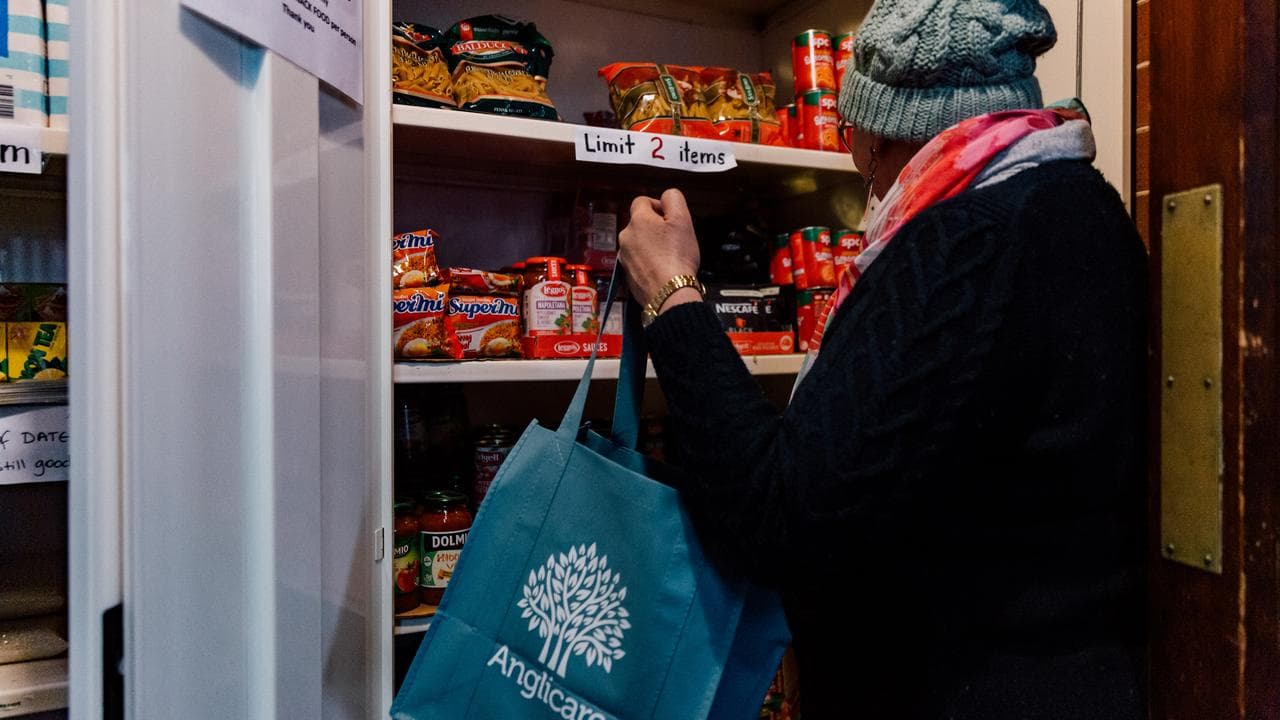
Leaving an abusive partner and starting over can feel like your entire life has gone up in flames.
"I say that my life burnt down in a fire and I lost everything," says a violence survivor willing to speak to AAP on condition of anonymity.
"But if my house had really burnt down in a bushfire I think I would have gotten more support."
In the middle of a global pandemic, in 2021 the NSW woman fled her family home after years of coercive control, physical, verbal, emotional and financial abuse.
She left to save herself but had little knowledge about what the financial impact would be.
"If I had known what it would cost me to leave, I would never have had the courage to leave," she says.
"And that is because leaving him has cost me literally everything. It cost me my home, all my belongings, it cost me a chunk of my super."
Legal fees fighting through the family court system set her back thousands of dollars.
Worst of all, her ex-husband took custody of her children.
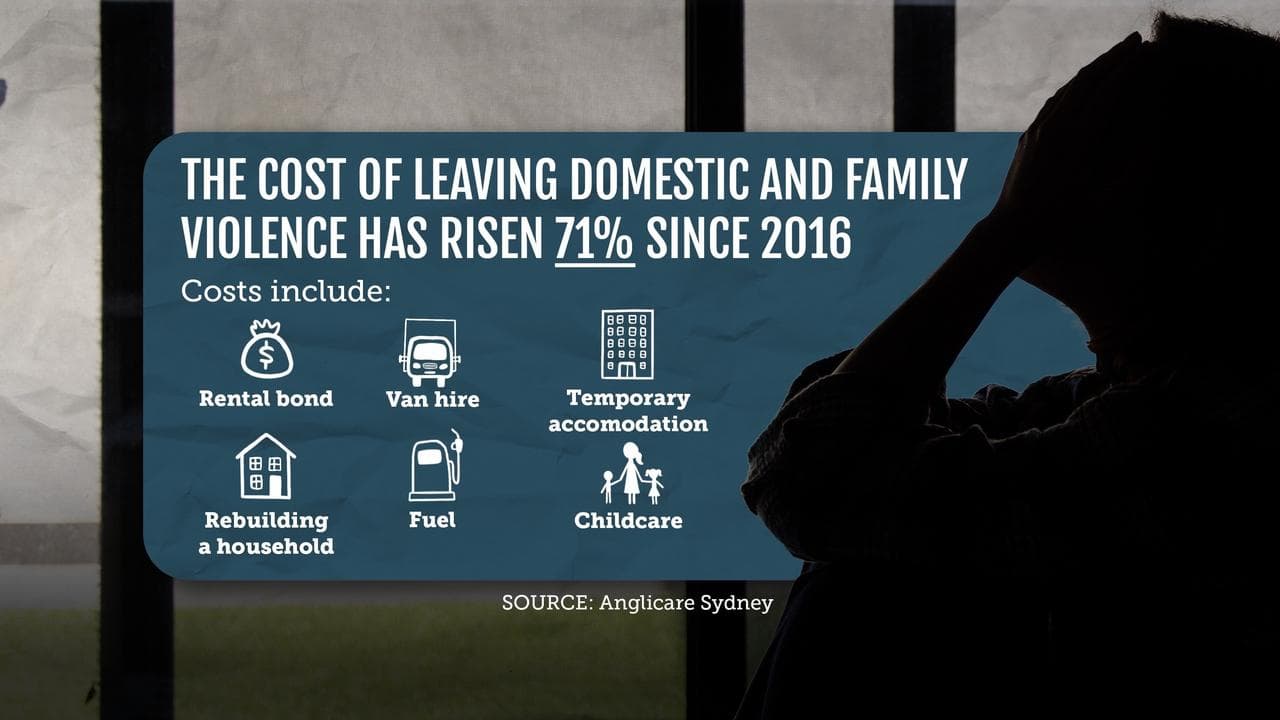
New research has found the cost of leaving family violence has risen 71 per cent in the past decade.
The Anglicare Sydney analysis reveals the cost has jumped from $4098 to $7017 since 2016, with rent and bond costs almost doubling, and fuel and child care soaring 50 per cent.
"For many victim-survivors, leaving already takes enormous courage," says Anglicare general manager of relationships and wellbeing Claire Dunlop.
"What this research shows is that financial barriers are becoming another obstacle to safety.
"When housing costs, childcare, transport and everyday essentials keep rising, people can feel trapped between violence and financial insecurity."
Anglicare is calling for stronger financial supports, increasing the national Leaving Violence Program from $5000 to $7000, funding another 3000 long-term social and affordable homes for people leaving violence.
It also wants an increase in paid domestic and family violence leave from 10 to 15 days, stronger workplace protection and more flexible work arrangements.
The NSW victim who told AAP her story says she was expected to continue working as a public servant while experiencing post-separation abuse, depression, financial stress and prolonged legal battles.
She says she was offered more support when her dog died.
"Work were amazing when my dog died, I got flowers sent I got told to take as much time as I needed," she says.
"My children were stolen and withheld from me, a week to the day by their father who'd just been sentenced for breaching a family violence order, and I was expected to just rock up to work as if nothing had happened."
As time went on, she was told by her employer to "leave this stuff at the door".
She had to use her personal and annual leave and then purchase leave to attend court and prepare for hearings.
"Would they have told somebody who was going through through cancer, 'You've got to leave your cancer diagnosis at the door?'"
She would like to see workplaces treat family violence in the same way as a health issue going forward.
Melanie Greblo, founder and chief executive of Humans of Purpose, a not-for-profit that re-skills survivors of domestic violence, says 90 per cent of the women in their digital skills academy have physical or mental health challenges.
She says it's important for workplaces to see value in offering a soft landing place for people, rather than viewing survivors as a deficit.
"We have to see beyond these challenges in women, to the incredible resilience they have, the grit they have, the dedication to rebuild a life," Ms Greblo, a survivor of domestic violence herself, tells AAP.
"If they're just given a soft place to land for a while, a kind workplace that has the mechanisms in place ... they'll move mountains."
She urges workplaces to better educate themselves on what it's like for victim-survivors to rebuild.
"I don't think we've seen in Australia yet the real opportunity we have to make employment and workplaces part of the solution," Ms Greblo says.
While funding frontline and crisis support is critical, she stresses leaving a relationship "is not the finish line".
"It is the start of an uphill, arduous and gut-wrenching journey for that woman," she says.
"We need to start thinking about the cost of rebuilding and who bears that cost; women are bearing it entirely."
A Victorian domestic violence survivor also willing to talk to AAP about her predicament estimates she spent more than $130,000 leaving two abusive relationships due to financial abuse, joint debts and legal fees.
"There were many points at which I thought I will never financially recover from this," she says.
The mother-of-two ran a farming partnership with her ex, on top of her career as a psychologist, and they purchased a farm together.

She says he used that asset as a means to run up joint debt for credit lines and to take out business loans.
"I had constant fear of going bankrupt for a good six years after our separation because I would get calls from creditors, or the bank was calling.
"Every time I felt like I could take a bit of a breath, it was like something else would hit, another bomb would drop."
She eventually settled with him after years of expensive litigation and unsuccessful prosecutions and says her situation highlights inadequacies in the family law, including a lack of support for victim-survivors.
"I received no assistance for my legal fees at all," she says.
"If you are a low enough income earner to access legal aid, then good luck getting a rental or a mortgage, or actually being able to financially support yourself and your children.
"But then if you have any kind of career that pays over $65,000 you're exempt from almost all legal support."
She says perpetrators are abusing victim-survivors through the family law system and it needs a complete overhaul.
"It's just such a broken system ... there's no criminal repercussions for what they're doing in a family law court," she says.
"So if they don't return the child, if they don't disclose their bank statements, if they don't pay that bill that they're supposed to pay, nobody's coming after them for that."
1800 RESPECT (1800 737 732)
Lifeline 13 11 14
Men's Referral Service 1300 766 491


