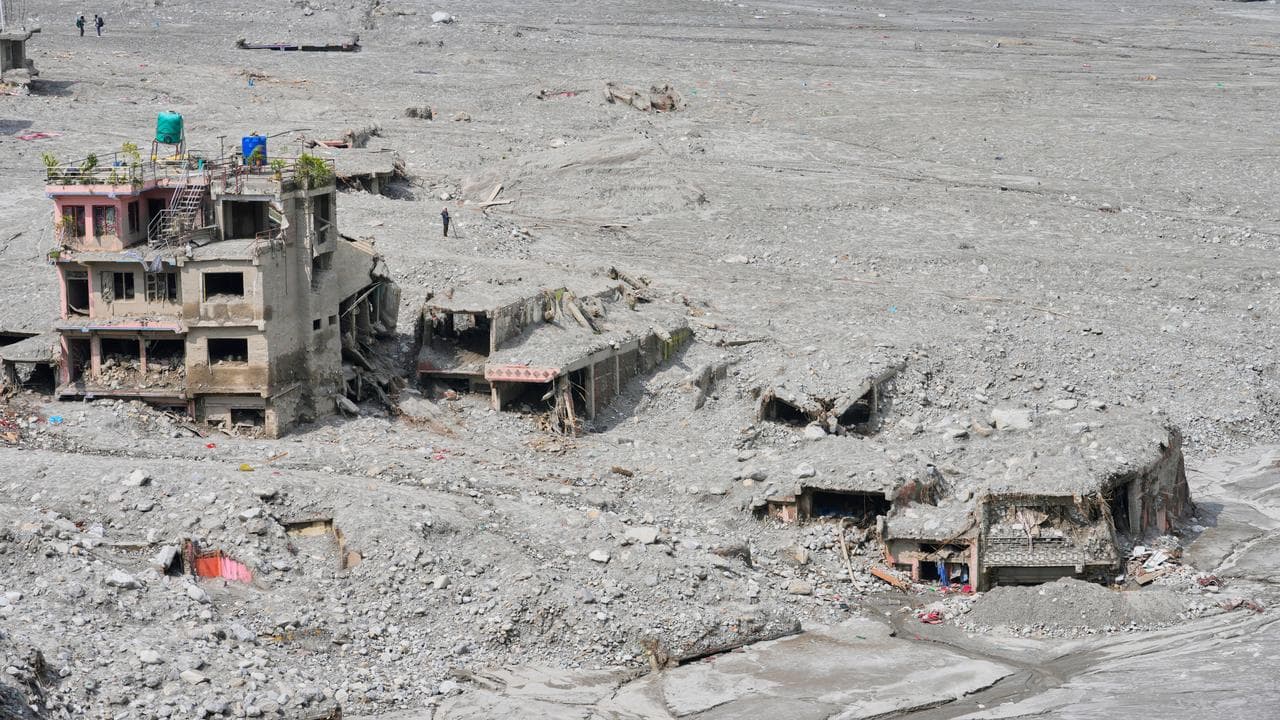
With roads and bridges destroyed and helicopters busy with search and rescue operations after devastating floods, Nepal’s army is turning to drones to deliver relief to displaced people.
At least 1367 people are confirmed dead and more than 5000 are missing in Nepal since a Himalayan glacier broke off near the Nepal-China border in late August and caused devastation along rivers further downstream.
“Most of our helicopters are busy with rescue operations. There is no other way to send food, essentials, medicine and fuel, except for drones, which are the best option to utilise, and we should prioritise them more,” said Santosh Budhathoki, a contract drone pilot for the Nepal army.
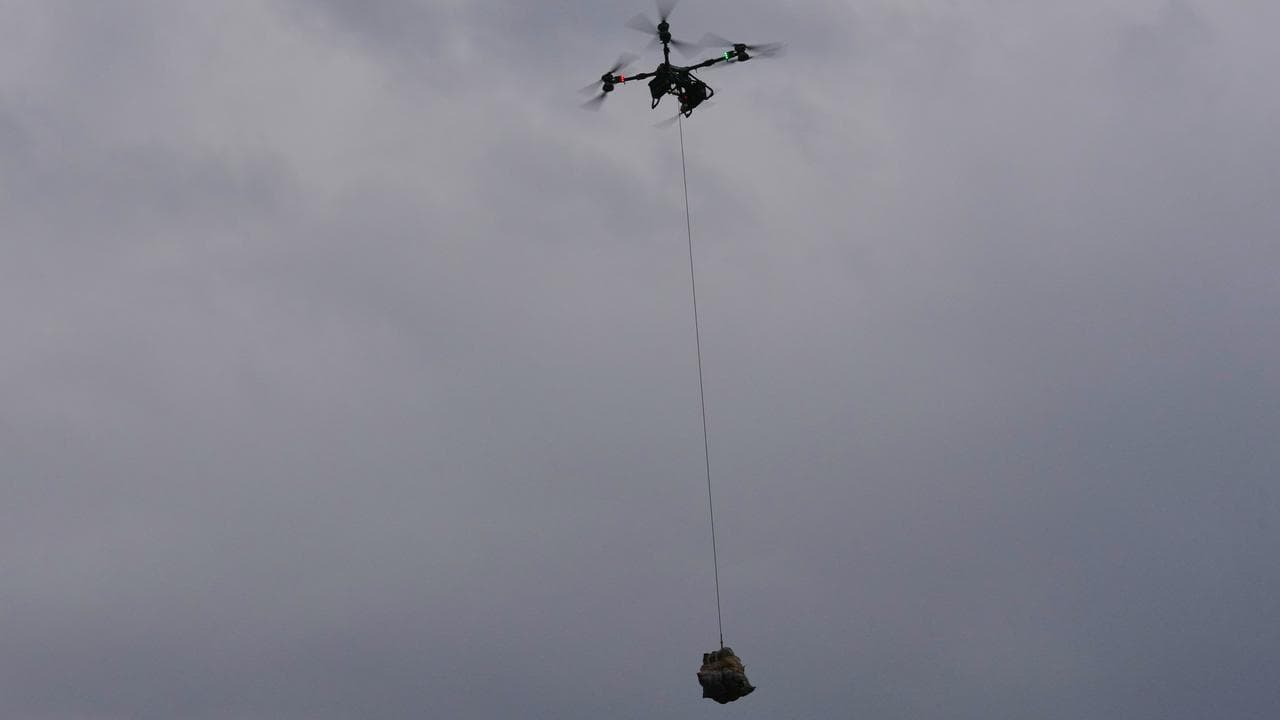
Drones are used over distances of up to three to four kilometres and can haul up to 60kg at a time and they are already making an impact for affected communities in dire need of aid, he said.
The army is making around 10 to 16 aid deliveries a day with a fleet of four DJI FlyCart 100 drones, all donated from China as part of a recent aid package.
In addition to aid delivery, drones have also been used to move the bodies of flood victims in some affected areas, while reconnaissance drones have also been heavily used in search and rescue operations.
Meanwhile, rescuers are focusing on three hydropower project tunnels where they believe dozens of workers could be trapped.
At least 11 hydropower projects were engulfed when a glacier collapsed into a river on the Nepal-China border on August 26, burying the entrances to the tunnels of these projects under debris and mud and cutting off those trapped inside.
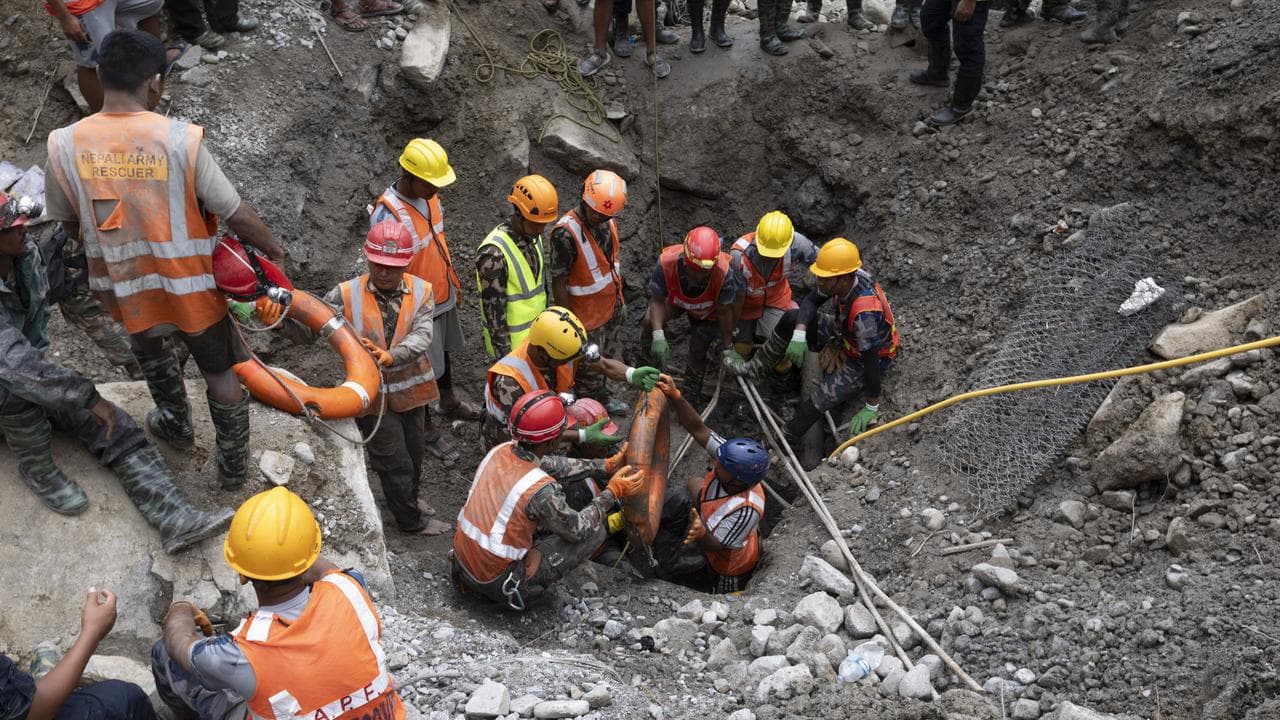
Teams were also focused on tunnels of the Upper Trishuli 3A and 3B projects, which are linked by an interconnected tunnel.
Oxygen has been supplied to the tunnels through pipes, with new equipment needed to open a passage into them.
Nepal's Prime Minister Balendra Shah vowed there would be no let-up in the rescue operations.
"We know our responsibility and its sensitivity. We are translating the humanitarian spirit of the Nepali people into practice through the search and rescue operation," he said in a social media post late on Monday.
About 121 of a total 900 people missing from the hydroelectric projects could have been trapped in these tunnels, army rescuers said, while others may have been working elsewhere at the power plants but not inside the vast network of tunnels.
In recent days, search teams have rescued four people, including a Chinese national who was pulled from a tunnel on Saturday. The others were two hydropower workers rescued from another tunnel on Friday and a Nepali woman pulled out from her buried house on Saturday.
Both China and Nepal have said climate change was responsible for the glacier collapse which triggered the flooding.


