
Australia's net migrant intake has continued to fall from its post-COVID record as the migration debate turns from numbers to values.
Net overseas migration (NOM), which measures the amount of people that move to Australia minus those that move away, dropped to a little over 305,000 in the last financial year, the Australian Bureau of Statistics reported on Thursday.
That's 6000 less than the NOM in the year to March and 250,000 less than the peak in September 2023.
But the rate of decline is decelerating.

While the result was below Treasury's forecast NOM of 310,000 in 2024/25, published on Wednesday, it appears unlikely it will reach future forecasts of 260,000 in the current financial year and 225,000 in 2026/27, former immigration department deputy secretary Abul Rizvi said.
There were two factors limiting the decline in migration levels, he said.
Following a tightening in student visa policy from mid-2023 to mid-2025, the government announced higher planning levels for 2026, which drove up offshore university applications in September and October.
Secondly, Australia's strong labour market, especially compared to New Zealand, has kept arrivals higher.
Right-wing commentators and politicians latched onto the spike in migration numbers following the pandemic border closures, during which the NOM turned negative.
Liberal MP Andrew Hastie, for example, has accused the Albanese government of worsening the housing crisis.
In recent weeks, and especially following the Bondi attack, the migration conversation has shifted from how many to who.
"Who we bring into our country is really important," Mr Hastie told Sky News on Tuesday.
"They have to sign up to Australian values, which are fundamentally Judeo-Christian values: equality, the rule of law, consent, democratic traditions - all those things are fundamentally Judeo-Christian.
"What we're seeing is that radical Islamic theology is completely incompatible with the Australian achievement, as John Howard calls it."
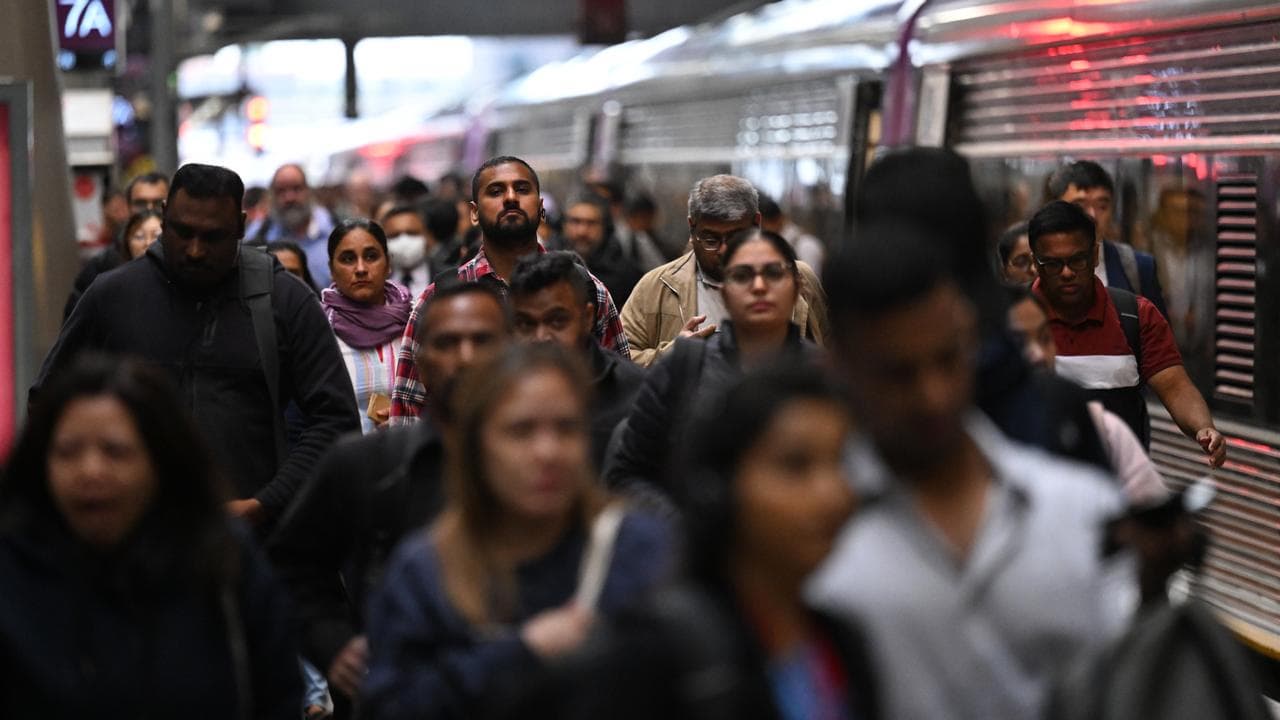
Mr Rizvi anticipates a highly-charged internal debate within the coalition about whether to go back to a discriminatory migration policy.
While Australia's migration policy discriminates based on skills, age and health status, the country has not had a discriminatory migration policy in terms of race, religion or nationality since the 1970s.
Reintroducing measures that limit migrants from Muslim-majority countries, for example, would in practice be extraordinarily difficult to implement and incredibly divisive, Mr Rizvi said.
High Court challenges to any such policy would be inevitable.
Screening visa applicants for anti-Semitic views - as floated by the coalition - or beefing up ministerial powers to strip visas from non-citizens with extremist sympathies - as promised by the government - would do little to change the volume of migrants coming from certain parts of the world.
"The vast bulk of people's views aren't documented all over the place, and to do the research on their values would take a long, long time, and would clog an already-clogged system to such a degree that the system would just become unworkable," Mr Rizvi said.


