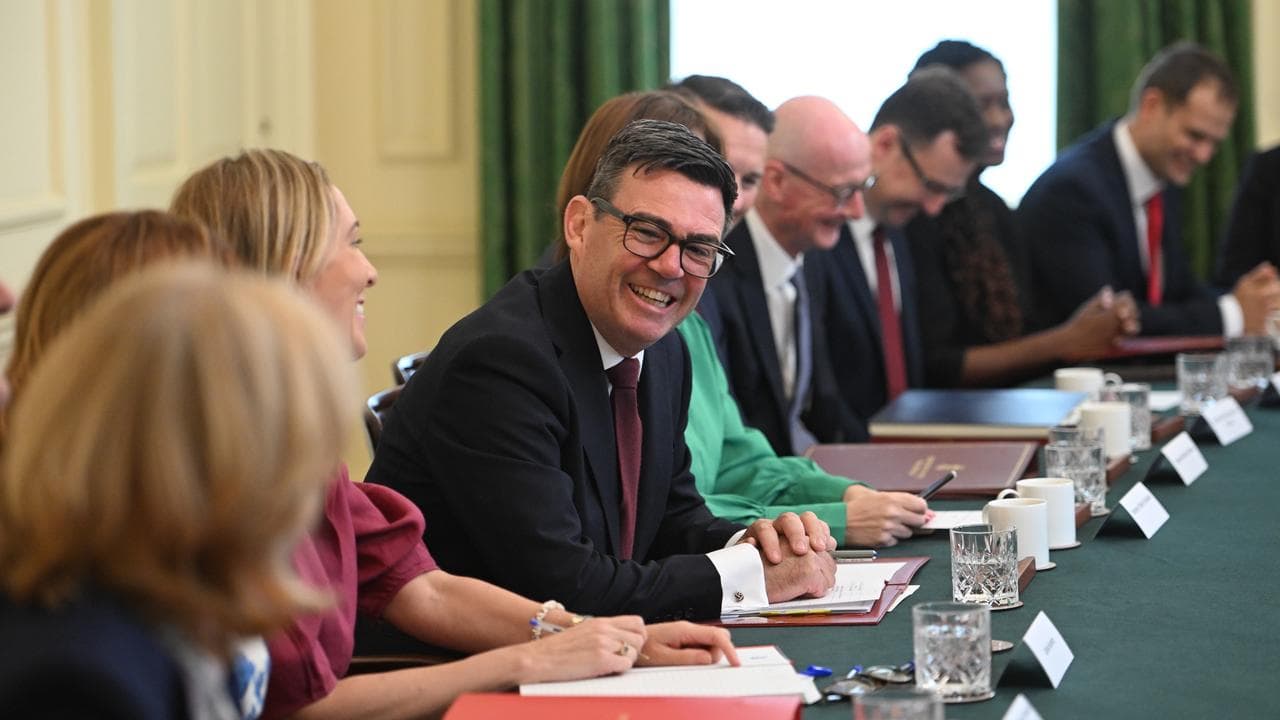
New UK Prime Minister Andy Burnham has gathered his cabinet for its first meeting and vowed to take a "one-team approach" despite purging allies of predecessor Keir Starmer from the government.
Burnham told his top team that he would lead a "cost-of-living government" focused on easing the economic burden felt by millions of people.
"We need to think every day, what can we do just to take that little bit of pressure off people's shoulders, to give them that little extra sense that help is coming, so they can have that bit of hope that things are getting better," Burnham told the cabinet.
Burnham made a small down payment on that pledge by announcing a tax cut on energy bills that will save the average household about 45 pounds ($A86) a year.
The cut will take effect on October 1, Burnham said, with the funding coming from scrapping a plan for digital ID cards announced by Starmer.
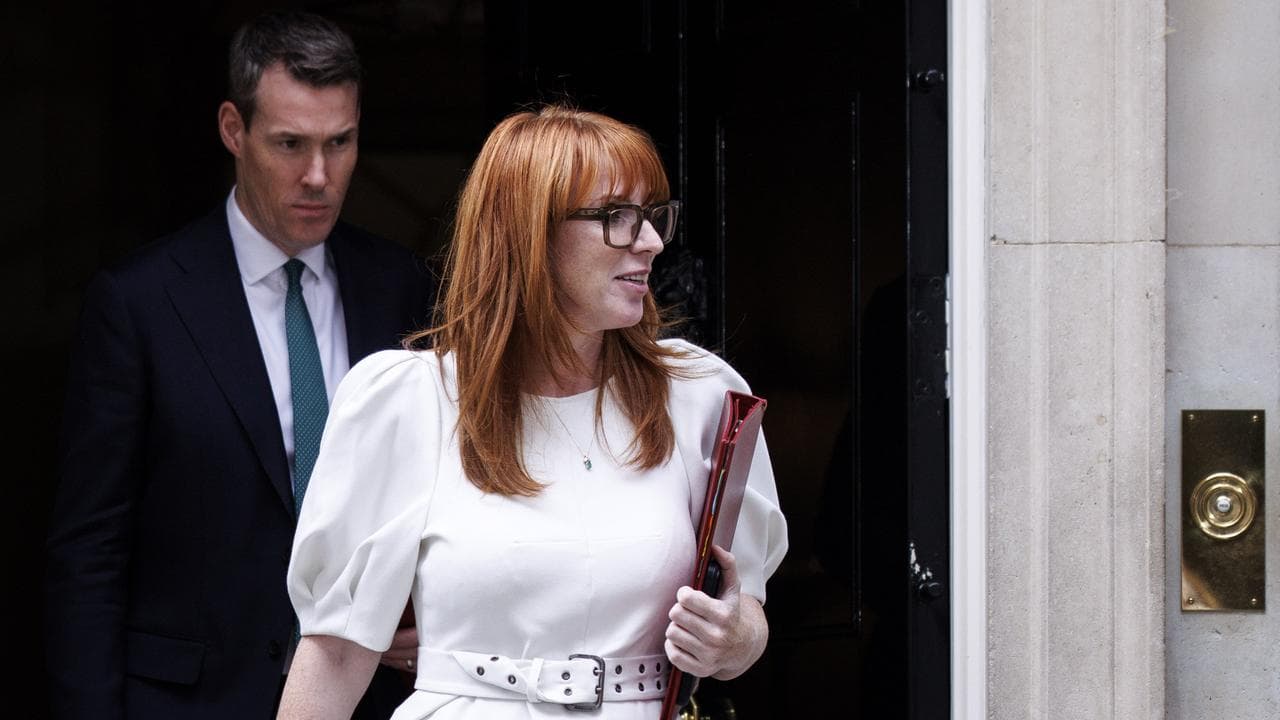
The former mayor of Greater Manchester entered Downing Street on Monday after replacing Starmer as leader of the governing Labour party, becoming the United KIngdom's seventh prime minister since 2016.
Starmer resigned just two years after winning a landslide election victory, forced out by his own party after a series of missteps and U-turns.
In his first speech as prime minister, Burnham pledged to ease the cost of living, decentralise political power, revitalise industry and end street sleeping by homeless people - a tall order, especially given the UK's sluggish economic growth in recent years.
Burnham acknowledged at the cabinet meeting that the government would have to make difficult financial decisions and "take a really hard look at what our priorities are".
After taking office on Monday, Burnham set about remaking the government in his image.
Starmer's finance minister Rachel Reeves was ousted, replaced by John Healey, a former defence secretary who resigned in June and accused the Treasury of failing to spend enough on the military at a time of rising threats.
In an interview after he quit, Healey called the Treasury "a dead hand on dynamic government" and "in denial".
Wes Streeting, whose resignation as health secretary in May helped topple Starmer, took over the defence portfolio.
Other key cabinet appointees include Foreign Secretary Ed Miliband, Housing Secretary Angela Rayner and Business Secretary Jonathan Reynolds, who has an expanded brief that includes innovation and science.
Louise Haigh, a key Burnham ally who helped engineer his rise to the top, was named First Secretary of State and Chancellor of the Duchy of Lancaster, effectively the deputy prime minister.
Home Secretary Shabana Mahmood, who has overseen attempts to curb immigration, kept her job.
Burnham has little experience of foreign policy and faces a stack of challenges including wars in Ukraine and Iran and managing relations with US President Donald Trump, who first warmed to Starmer before souring on him.
Burnham’s office said he spoke to Trump in one of his first calls as prime minister and "underlined his commitment to defence and security".
Trump posted on social media that the two men had "a very good conversation" and would be "meeting in the not too distant future for topics of mutual interest".
The prime minister also spoke to Ukrainian President Volodymyr Zelenskiy, French President Emmanuel Macron, German Chancellor Friedrich Merz and leaders of the European Union and the NATO military alliance.


