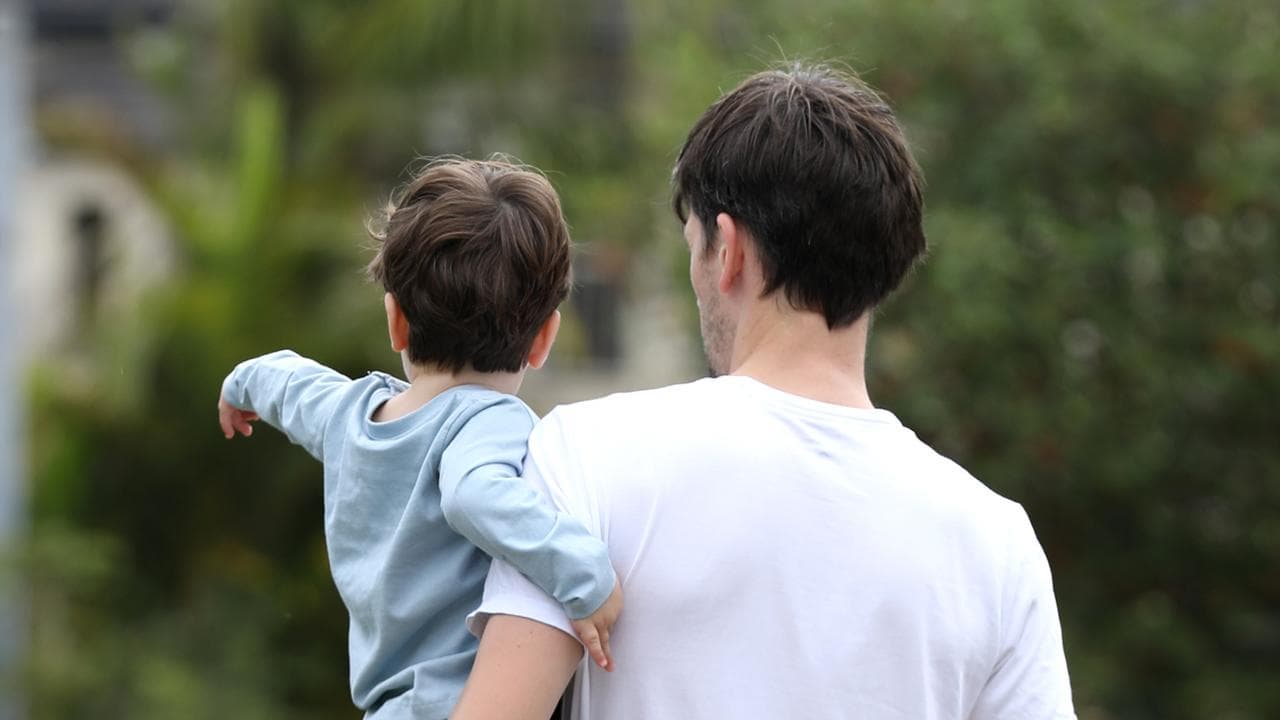
When Thomas Docking and his wife welcomed their first child, his new world of fatherhood came with a lot of uncertainties.
"I actually thought I was quite well supported and informed," he told AAP.
"My mother was a midwife, I came from a great family.
"Yet for me, when I got to actually being a parent, changing from dude to dad, it was like, I'm not ready for this."
Mr Docking felt there wasn't enough support or spaces for fathers to come together and speak about the challenges they faced.
What the new dad created from this has become a national movement.
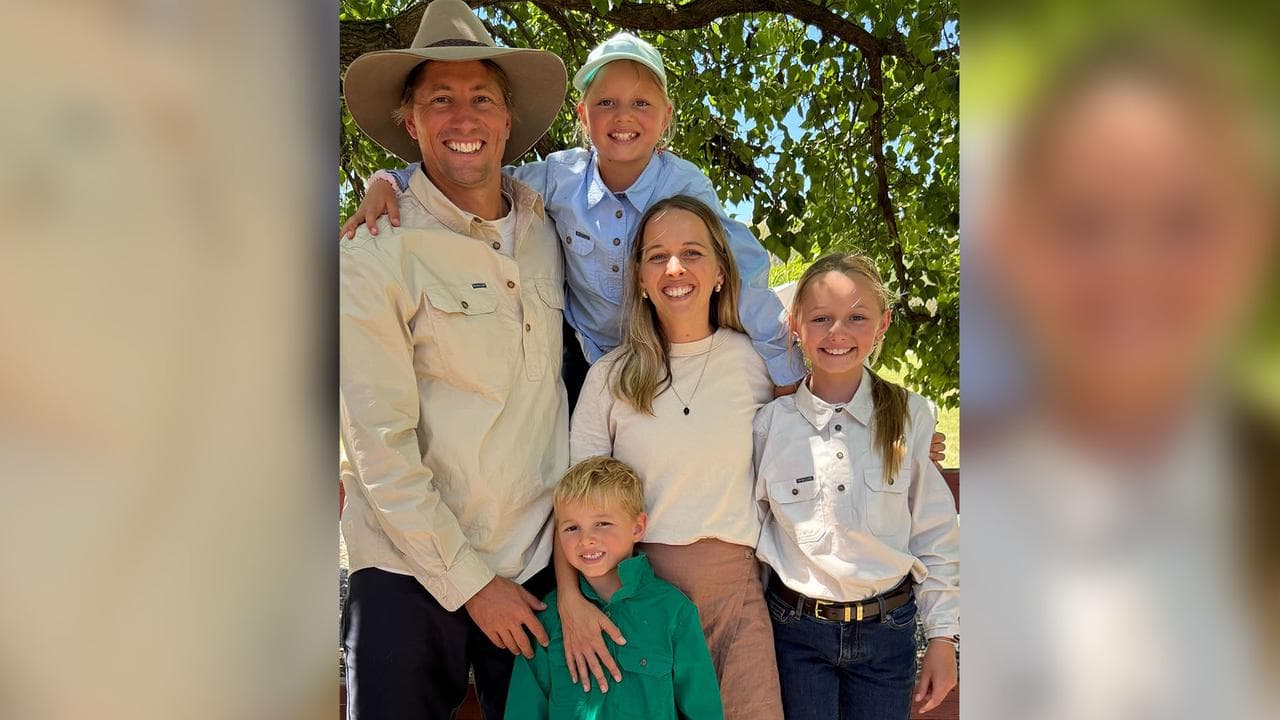
Ten years ago, he started the Man with a Pram walk, which has since spread across Australia into a national Father's Day movement.
"Fathers' involvement in parenting over generations has shifted," he said.
"So how do we celebrate that movement towards engaged fathering?
"And how do we do that in a strength-based way that doesn't actually create or cause judgment, but it invites everyone to walk together."
Mr Docking will visit Parliament House on Monday to discuss the challenges fathers are facing in 2026.
"There's a system problem and a culture problem," he said.
"The health system doesn't engage fathers, there's no record of - was the dad involved? What's the dad's details?
"And are we following up the dad to make sure he's supporting his partner and being supported himself, and knows how to support the baby?
"These are really simple fundamentals of becoming a parent."
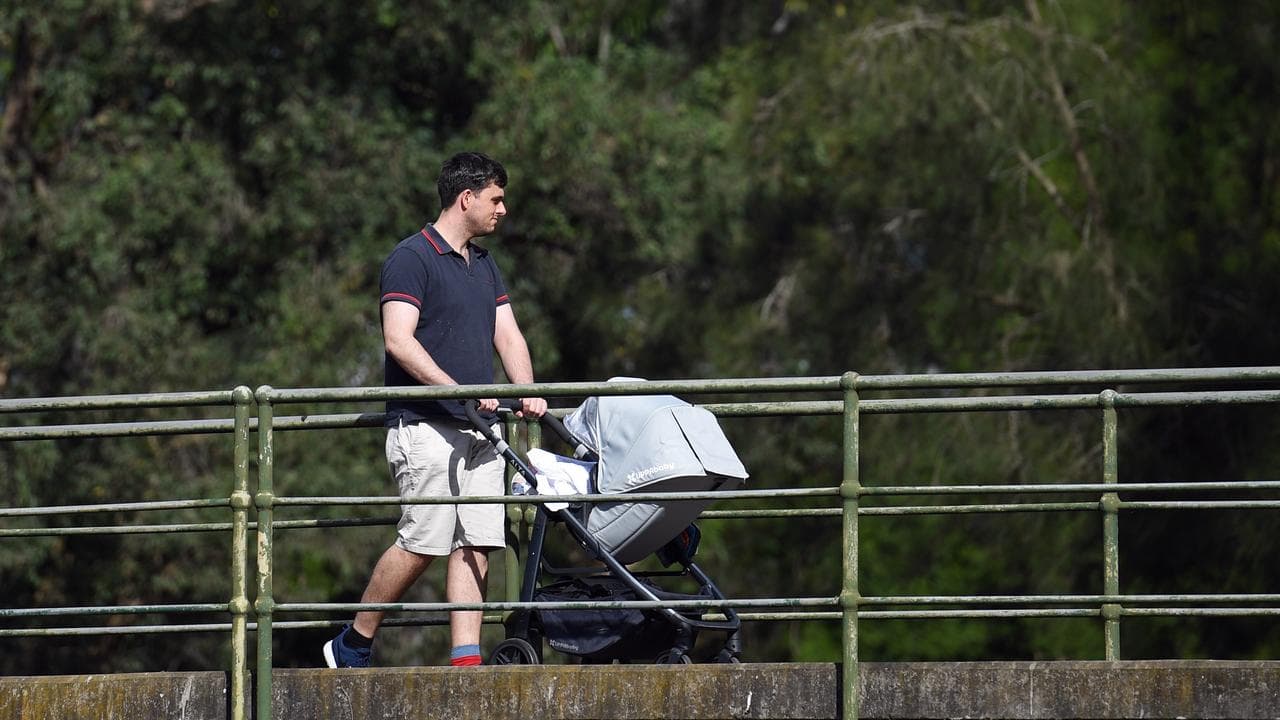
Man with a Pram is a catalyst to discuss needed changes to the health and social services system, he said.
"Having a dialogue around 'hey our system should be including fathers'," he said.
"If dads are encouraged to be doing active fathering - mums are going to be way better off."
Better perinatal care for fathers will improve gender equality, prevent domestic violence, suicide and other mental health challenges, he said.
"All these things have some crossover or correlation in the perinatal space to fathers and father figures," Mr Docking said.
He also pointed to increasing research in recent years that becoming a father changes men's brains, both hormonally and physiologically.
"That's exciting because it means for those of us who don't have it all together and haven't got the perfect fatherhood map in front of us before we start ... take a step towards doing this, and you'll start to learn," he said.
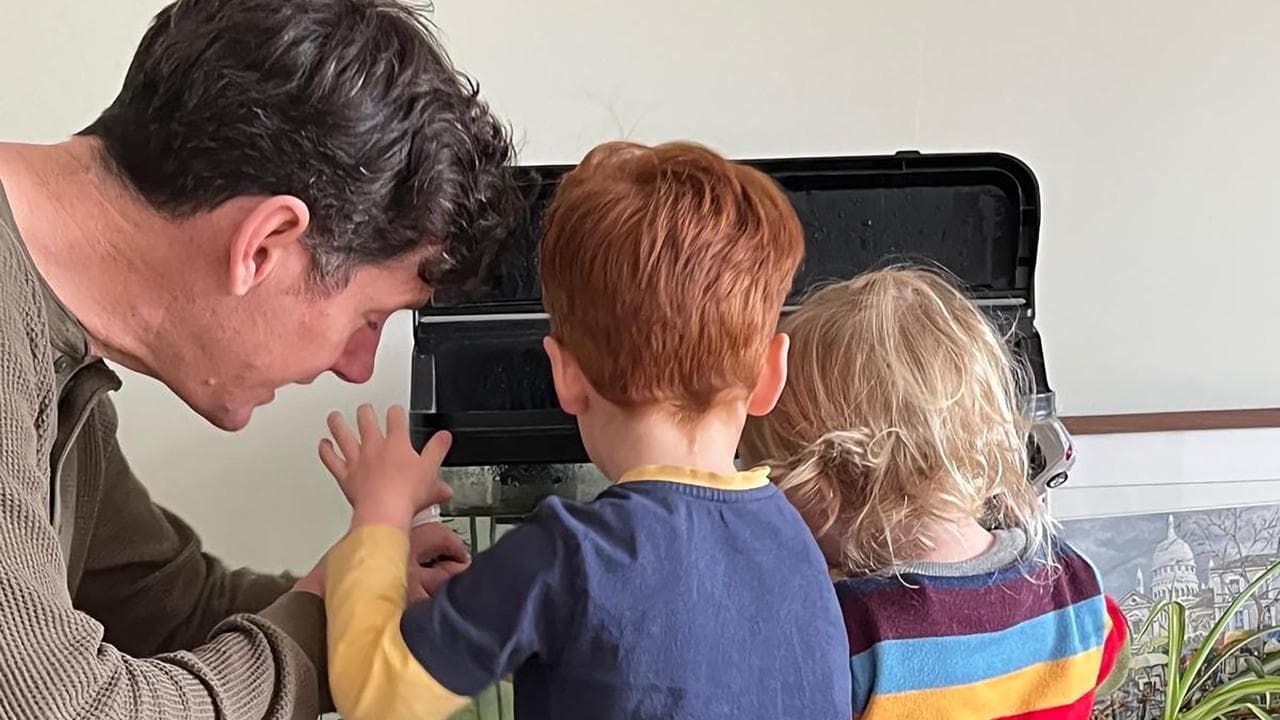
Campaign director at The Parenthood and self-proclaimed 'dadvocate' Sebastian Costello said part of the challenge was to increase parental leave.
Since July 1, the federal government's paid parental leave policy has increase from 24 to 26 weeks, paid at the national minimum wage.
Four weeks of the leave scheme are reserved for fathers and partners.
The Parenthood is advocating for 52 weeks of paid parental leave, which the Labor Party voted up as a policy position at its national conference in July.
But Mr Costello said the rate should be paid at a replacement wage - tied to working salaries - not minimum wage.
"The idea with 12 months' paid parental leave at replacement wage rate is it actually gives families time to learn the habits of caregiving," Mr Costello said.
"If you've got only a little bit of paid parental leave, the mother takes most of it and dad has to go back to work, and that just doesn't really get us anywhere.
"Mothers become the default carers, dads become the default workers."

Workplace Gender Equality Agency data showed 68 per cent of employers offered paid parental leave schemes in 2024 to 2025.
On average, employers offer 14 weeks to primary and 3.7 weeks to secondary carers.
Mr Costello said workplace parental leave policies, while they had improved substantially, were still behind for fathers.
"Stigma is still absolutely there, it is subtle and it is getting better," he said.
"A workplace might have parental leave policy on paper but men can still receive the message that 'serious employees return to work quickly'.
"Fathers worry about being seen as less committed, missing opportunities or putting their career progression at risk, just because they're there as parents."
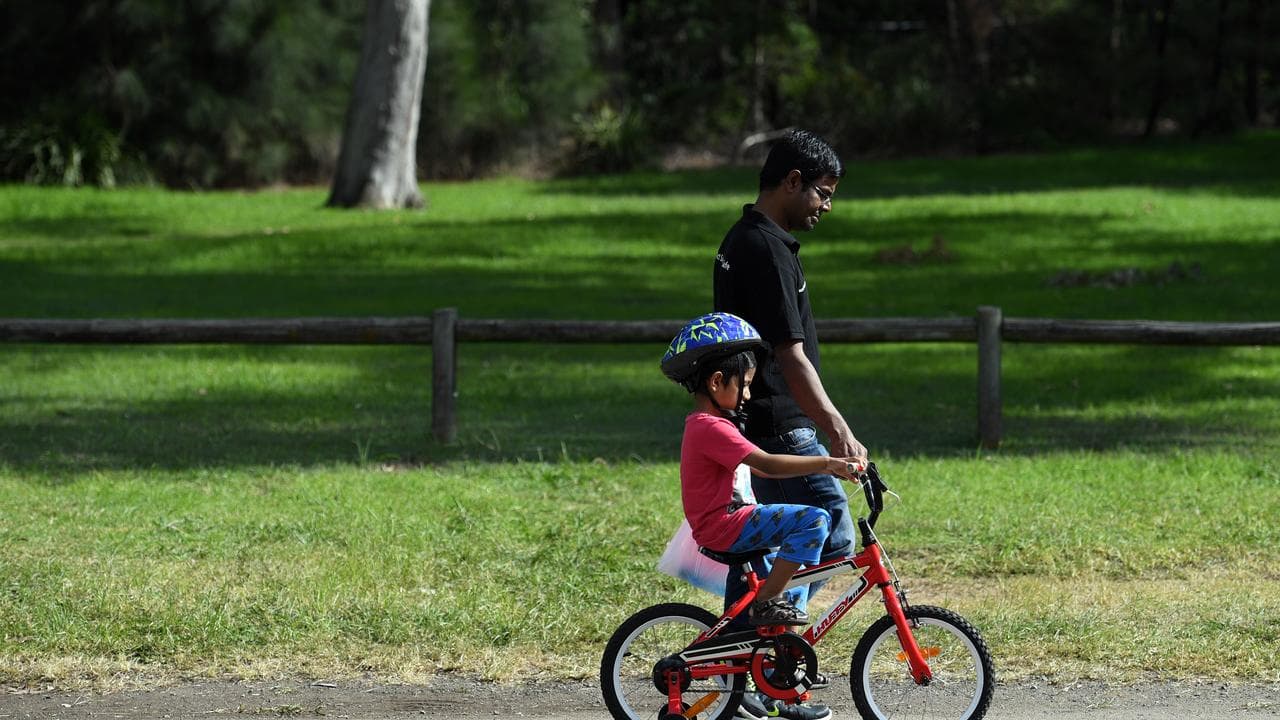
The Parenthood will take the issue to Canberra to encourage leaders to commit to extending parental leave for everyone.
"Change will not come through policy alone, leaders need to encourage men to take leave, they need to take it themselves when they can to make it clear it's a sharing, caring community," Mr Costello said.
"You've got two identities, you become a father as well as a worker, and they can definitely work alongside each other for better for an organisation."
Both Mr Costello and Mr Docking are part of Gender Equity Victoria's #EverydayDad campaign, to encourage dads to share their stories about fatherhood and normalise being involved in their children's lives.
"It's not about being a performative dad or making sure you get to the big things," said Mr Costello, a father-of-two.
"It's about how much joy you get out of those little things, that's where the magic is in caring."
Cultural change happens when dads see other dads doing it, Gender Equity Victoria chief executive Micaela Drieberg said.
"When fathers talk openly about caring for their kids, it gives other dads permission to do the same," she said.
"Every story helps make fatherhood more visible, more valued and, ultimately, helps build a more gender-equitable society."


