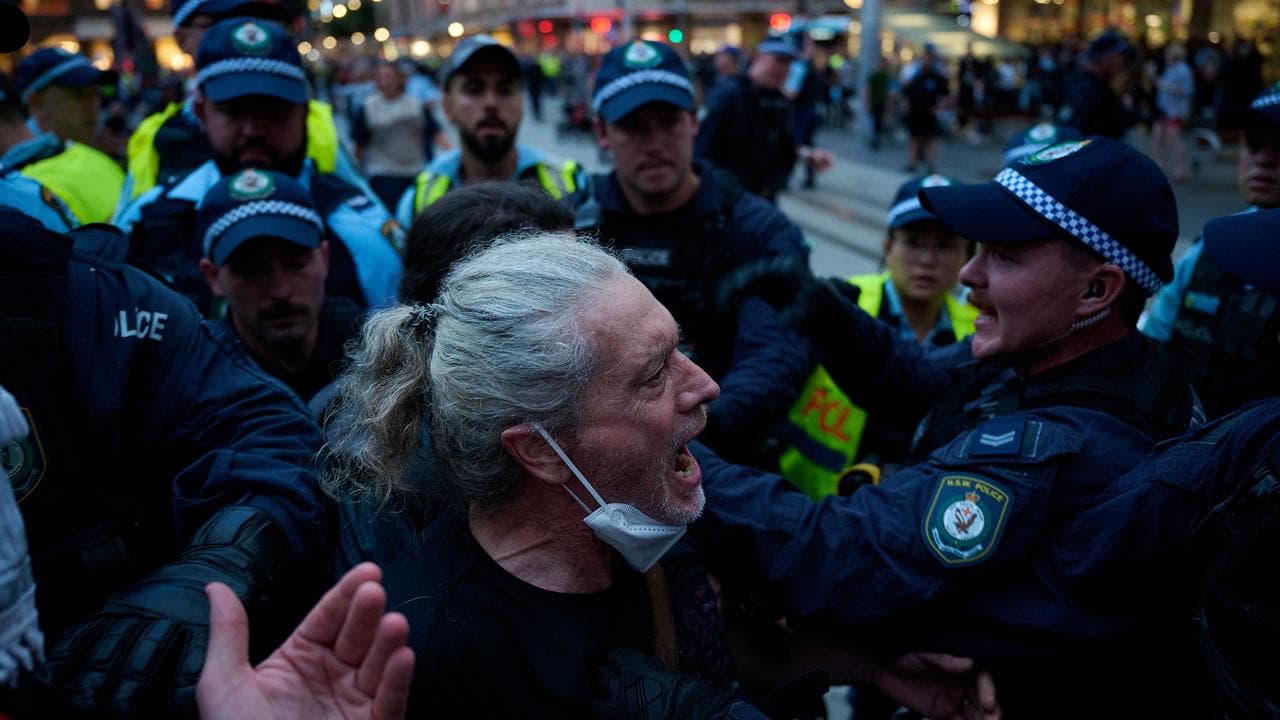
Police will review charges stemming from a controversial protest after snap powers brought in to curb dissent were deemed unconstitutional.
Dozens of people brutally arrested protesting against the Israeli president's Australian visit could have charges dropped after laws rushed in after December's Bondi massacre were struck down by the NSW Court of Appeal.
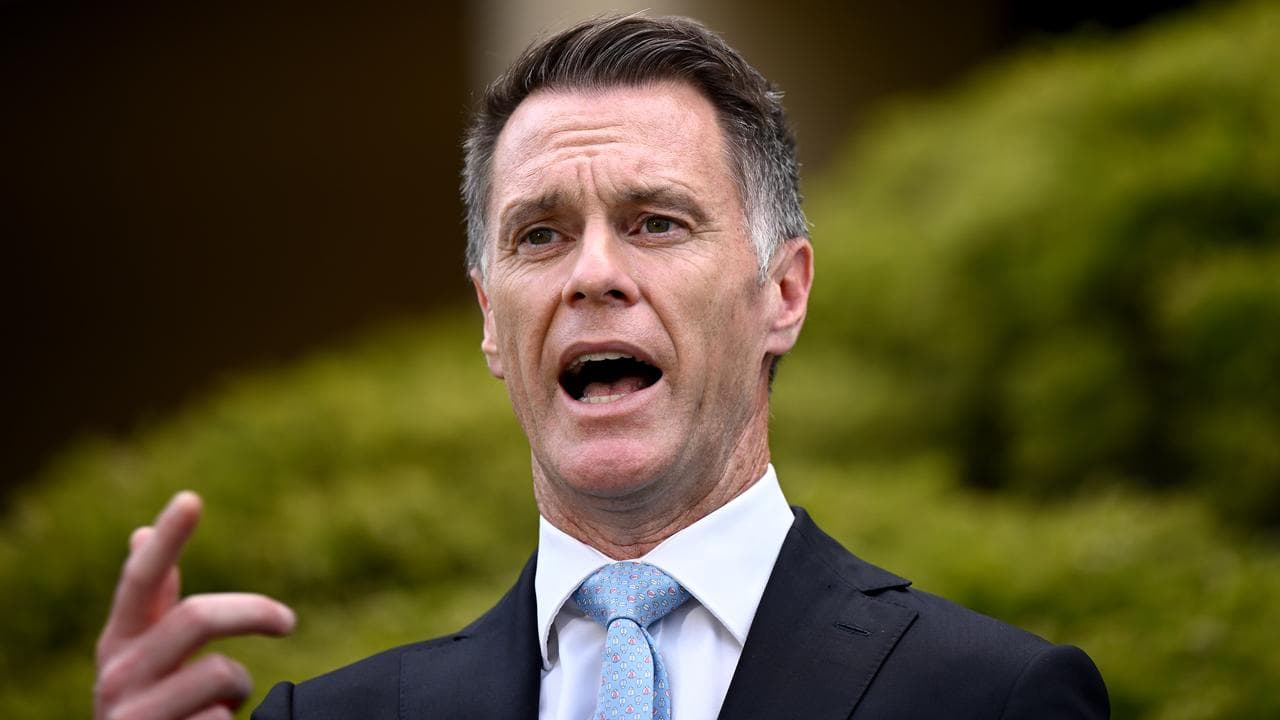
Premier Chris Minns has ramped up his defence of the controversial legislation that gave NSW Police extraordinary powers on February 9, when a protest opposing Isaac Herzog's visit descended into chaos.
Speaking to reporters on Monday, Mr Minns said protesters should “take some responsibility” for their actions after dozens were pepper sprayed and beaten by officers, with 27 arrested and 10 charged and before the courts.
The laws were found to be unconstitutional because they impermissibly burdened the right to political communication.
NSW's law enforcement watchdog is also investigating alleged police brutality at the protest.
Mr Minns defended the laws, arguing the "vast majority" of Australians would support them despite being ruled unconstitutional.
"It's easy for lawyers and the courts to say it's not the government's responsibility, but when things go wrong and you have major violent disruption on the streets of Sydney, I can guarantee you most people are desperate for NSW Police to be out there to keep us safe," he said.
Greens MP Sue Higginson called on the premier and police commissioner to stand down, accusing the government of violently subduing democratic rights.
“The premier has launched an extraordinary attack on our independent judiciary, showing complete contempt for the constitution and our right to political expression," she said.
"(He) is gaslighting our state by suggesting the community is to blame for the violence."
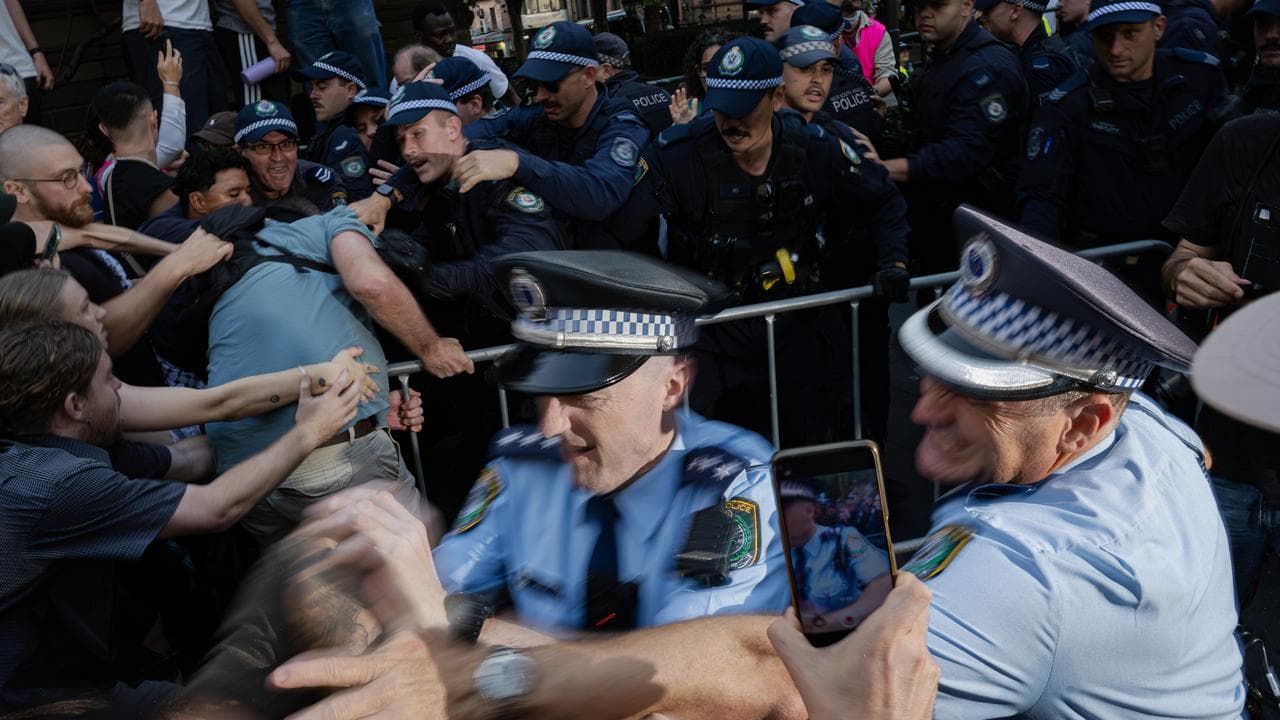
The event was also policed under a major events declaration that gave authorities powers to clear the area at their determination.
The controversial measures, rushed through NSW Parliament in December, allowed the police commissioner to make a declaration preventing residents from seeking authorisation for rallies in key areas of Sydney for up to three months after a terror attack.
This left protesters vulnerable to arrest for obstructing traffic or pedestrian movements if they marched through the streets.
NSW Police Commissioner Mal Lanyon said the force would review whether the court’s latest findings impacted any prosecutions.
“The judgment was handed down last week - while disappointing - as an organisation we will review all prosecutions,” he said.


