Property-owning pensioners across Australia could soon be eligible for less government money, as a crucial welfare payment indicator is changed.
The deeming rate, which the government uses to assess pensioners' social security payments, will be updated on September 20.
It will increase from 1.25 per cent to 1.75 per cent for financial assets up to $66,800 for singles and $110,600 for couples. Those with assets above the threshold will be subject to a rate of 3.75 per cent.
The deeming rate is the assumed rate of return on personal investments. It is set by the government and used to calculate how much money retirees should receive in pension payments, in line with the amount they could make from their assets.
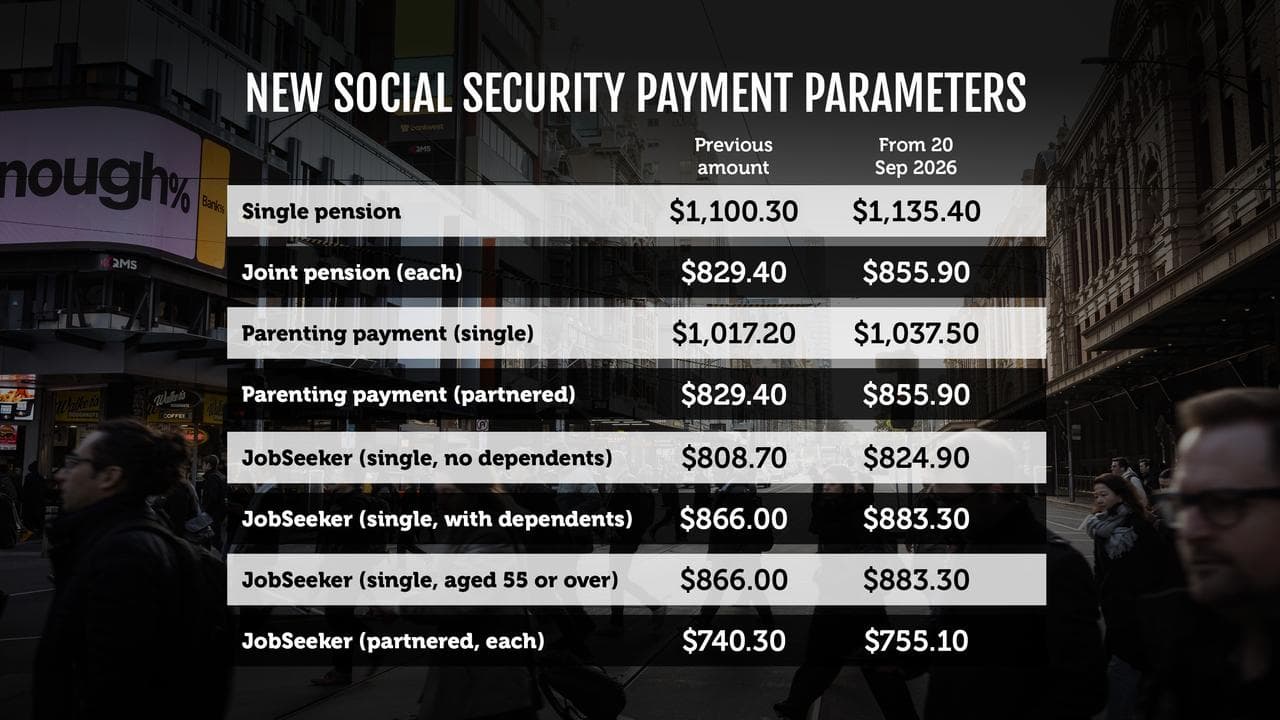
A rise in the rate reduces pension payments, because it assumes the return people receive on their financial assets has risen. Though the pension will go up by $35 a fortnight for singles from September 20, it will be trimmed if recipients own assets.
Deeming was very low during COVID-19, when the rate for assets below the threshold was held at 0.25 per cent for five years. September will mark the second time the rate has been raised this year.
On the same day, JobSeeker basic payments for a single person with no children will increase by $16 a fortnight to up to $824.
Single people on a parenting payment will get a maximum basic rate of $1037, up by $20. The youth allowance rate will also be raised by $20 a fortnight to a maximum of $1068.
JobSeeker and its predecessor, Newstart Allowance, have always been indexed in March and September to maintain the real value of payments.
Each form of social security payment is indexed broadly in line with inflation, but using different calculations according to the payment category.
Most are in line with the six-month growth in the consumer price index, which went up by two per cent in the six months to the June 2026 quarter.
But soaring cost-of-living standards meant the increases were no longer adequate, Australian Council of Social Service chief executive Cassandra Goldie said.
"JobSeeker remains stuck at 40 per cent of the minimum wage and is not enough to afford the things we all need, like food, housing and other essentials," Dr Goldie told AAP.
“While every extra dollar counts, routine indexation does not lift people out of poverty and deprivation."
"People receiving JobSeeker are struggling to afford three meals a day and keep a roof over their heads," she said.


