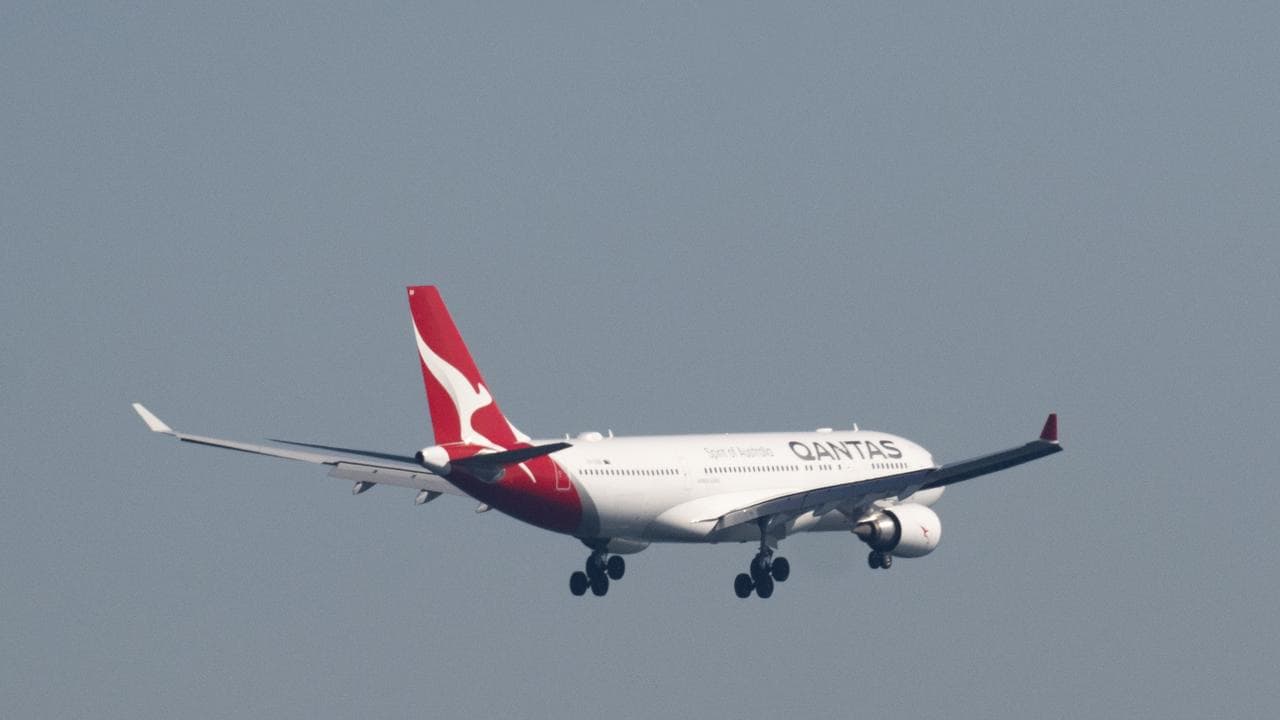
Qantas has announced London as the first destination for the world's longest non-stop commercial flight, a roughly 20-hour trip from Sydney eliminating the traditional stopover on the "Kangaroo Route".
The Australian carrier plans to start selling tickets in February and launch the flights in October 2027, CEO Vanessa Hudson told an event in Toulouse, France.
The flights are part of the airline's "Project Sunrise" initiative, which will also serve New York using modified Airbus A350-1000ULR jets capable of flying up to 22 hours with 238 passengers on board.
Each aircraft will be configured with 238 seats across four cabins - First Class, Business, Premium Economy and Economy - and will be fitted with an additional 20,000-litre fuel tank to the A350 that will enable it to fly over 16,000km for up to 22 hours non-stop.
The announcement is part of a fleet overhaul that began in 2017 when Qantas challenged Airbus and Boeing to develop planes capable of ultra-long-haul non-stop routes from Australia.
"Australia's distance from the rest of the world should never stand in the way," Hudson said, before unveiling one of the modified Airbus jets, fresh from the paint shop and yet to have its Rolls-Royce XWB-97 engines installed.
Qantas named Project Sunrise after the airline's double sunrise endurance flights during World War II, which remained airborne long enough to see two sunrises.
The aim is to cut what was once a five-day trek on the "Kangaroo Route" to London to a single hop of 19 to 21 hours, depending on routing and winds.
Qantas will use polar routes about a quarter of the time, especially during the northern hemisphere winter.
The trip now takes 24 to 25 hours via Singapore.
It is a major gamble for Qantas, involving billions of dollars in aircraft, cabin upgrades and research into passenger health on ultra-long flights.
To succeed it must convince travellers to pay more to avoid layovers, while minimising the discomfort from long flights.
Qantas has participated in academic research on jet lag, exercise, hydration, lighting and meal times, Hudson said.
"What they are selling is time, and they absolutely need to get a premium on all the cabins, particularly business and premium economy," aviation analyst John Strickland said.
Hudson said Qantas hopes to replicate the roughly 20 per cent premium it has achieved across all four cabins on Perth-London flights versus one-stop routes.
Qantas has temporarily rerouted the Perth-London service via Singapore because of disruption in Middle East airspace.
"We will return our network to where it was prior to the war when things settle down," Hudson said, without giving a timeframe.
Qantas has estimated Project Sunrise could add more than $A400 million a year to earnings.
Jefferies analysts have said they expect a positive market for Project Sunrise flights to London.
Gulf carriers such as Emirates, which redrew the aviation map around their hubs, are expected to defend their market share.
Australia on Wednesday lifted a months-long "do not travel" warning on Gulf hubs that had invalidated most travel insurance policies even for transit passengers.
Airbus won the Project Sunrise order in 2019 after an intense battle with Boeing's 777X.
Earlier this month, Airbus carried out the first test flight for one of 12 modified A350-1000ULR planes ordered by Qantas.
The 238-seat planes feature an extra rear-centre fuel tank helping to increase the range by 1852km.
Flights are so long that much of the fuel is used merely to carry the weight of the remaining fuel.
Half of the 12 new jets will serve the ultra-long-haul London and New York markets.
The rest may replace Boeing 787s on other long routes such as Perth-London or Auckland-New York, freeing those aircraft to open new routes, Hudson said.
The first aircraft is due for delivery in April 2027, about five years later than originally expected due to the COVID-19 pandemic and supply chain delays.
with PA


