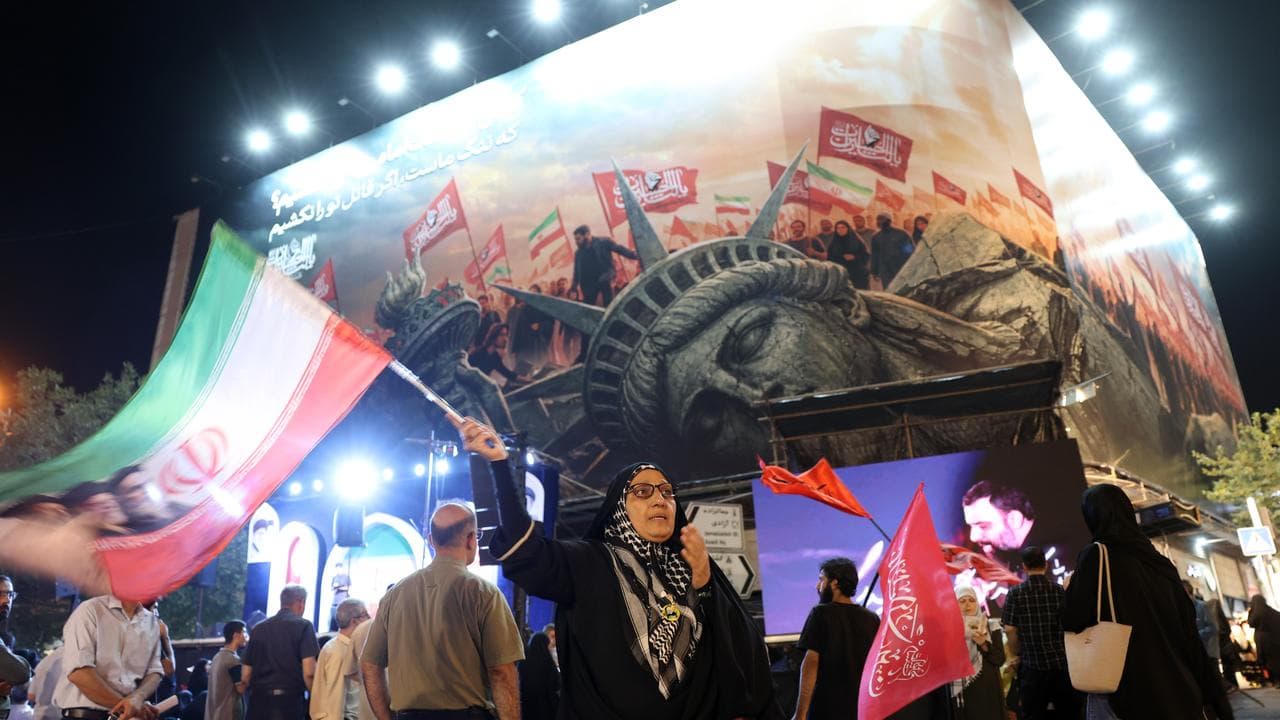
Qatar's prime minister will visit Tehran in a bid to relaunch diplomacy after the US and Iran traded recriminations over Washington's promise to increase economic pressure on Tehran by targeting its trade partners for sanctions.
A Gulf neighbour of Iran and a US ally, Qatar has served as a back-channel negotiator for the warring parties and played a direct role in securing the June ceasefire that briefly led to a cessation of hostilities.
The visit comes as the war nears its sixth month with fighting largely paused but no diplomatic breakthrough in sight.
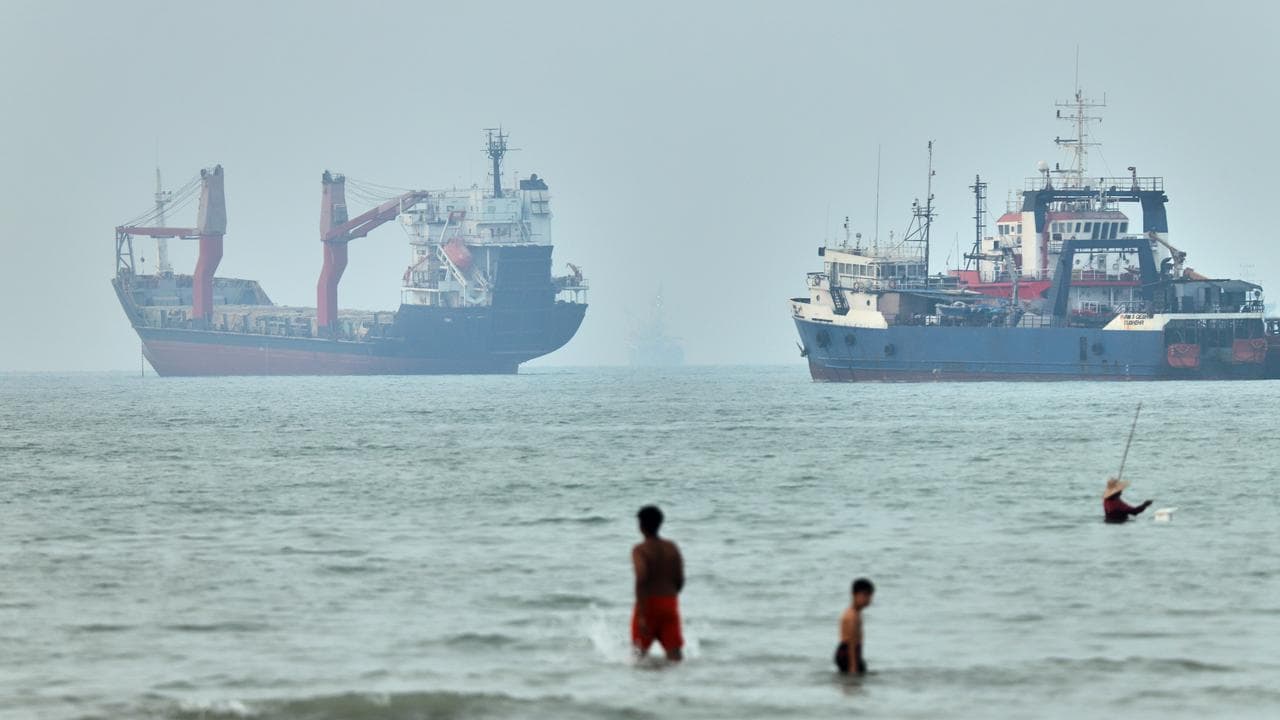
Both sides are at odds over control of the Strait of Hormuz, a choke point for global oil supplies that Tehran has used as leverage.
An unidentified projectile hit a tanker in the strait to set off a fire that was later doused, the United Kingdom Maritime Trade Operations agency said early on Thursday, but all crew were safe and accounted for.
The memorandum of understanding broke down in part because of differences over the narrow waterway between Iran and Oman where one-fifth of the world's oil supplies passed before the war began on February 28.
The guns have gone mostly silent - the US military's Central Command has not reported any attacks on Iran for nearly a month.
Washington appears to be leaning more on economic pressure by announcing plans to cut Iran off from its trading partners with increased sanctions.
Iran's Revolutionary Guards said on Wednesday that Iran and Oman had agreed how to share the waterway and its revenues, but a senior Iranian source later said the two countries were still working on the details of an agreement.
Despite an aerial bombardment earlier in the war that severely diminished Iran's conventional forces, Tehran has maintained enough missile and drone capability to attack Gulf neighbours that house US military bases and disrupt oil tankers in the strait.
The UN's International Maritime Organisation has reported 70 incidents in the Strait of Hormuz since February 28 that have killed 19 seafarers.
Thousands of others have died, mostly in Iran and Lebanon, since the US and Israel attacked Iran with the stated goals of denying Iran a nuclear weapon, helping Iranians topple their government, and destroying Iran's missile program.
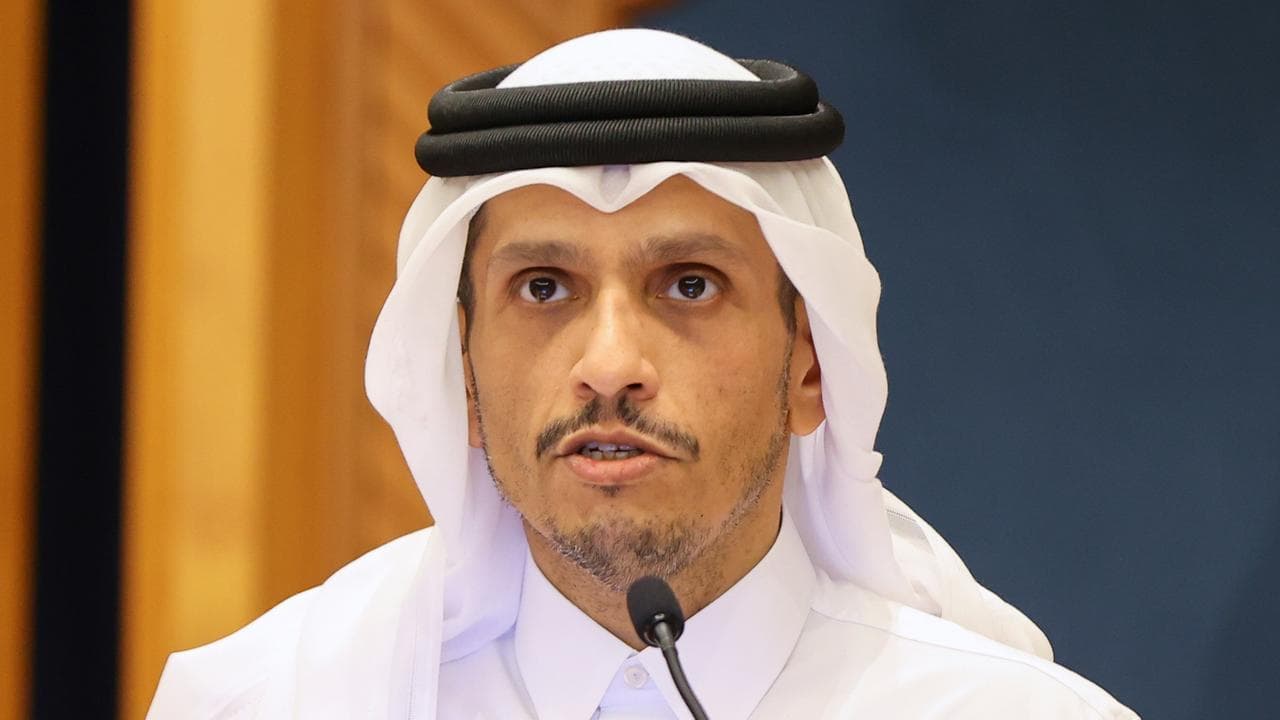
Qatari Prime Minister Sheikh Mohammed bin Abdulrahman al-Thani would discuss the continuation of Qatar's mediation efforts and other developments in the region during his visit to Tehran on Thursday, Iranian foreign ministry spokesperson Esmaeil Baghaei said.
Qatar's foreign ministry spokesperson said on X that Sheikh Mohammed would also address freedom of navigation in the Strait of Hormuz and the need to return to the status quo before February 28, while also discussing with Iranian officials ways to "de-escalate tensions and create the conditions conducive to dialogue".
The international waterway was open to free navigation before the war, but Iran has since clung to its control of the strait as leverage and a revenue source, seeking to charge ships a commission, which the US has opposed.
"An agreement with Oman over the Strait of Hormuz has not been finalised," the senior Iranian source told Reuters, adding that the talks were continuing on the details of an accord.
That seemed to contradict a statement by Brigadier General Hossein Mohebbi, a spokesperson for the Islamic Revolutionary Guard Corps, who said Iran and Oman had "reached results that are acceptable to both sides" on controlling the strait and its revenues.
Mohebbi said the strait would remain shut unless the US met Tehran's conditions under the interim ceasefire, or memorandum of understanding, that the two sides signed in June before it unravelled.
Those conditions include an end to the US blockade on Iranian ports, compensation and removal of sanctions.


