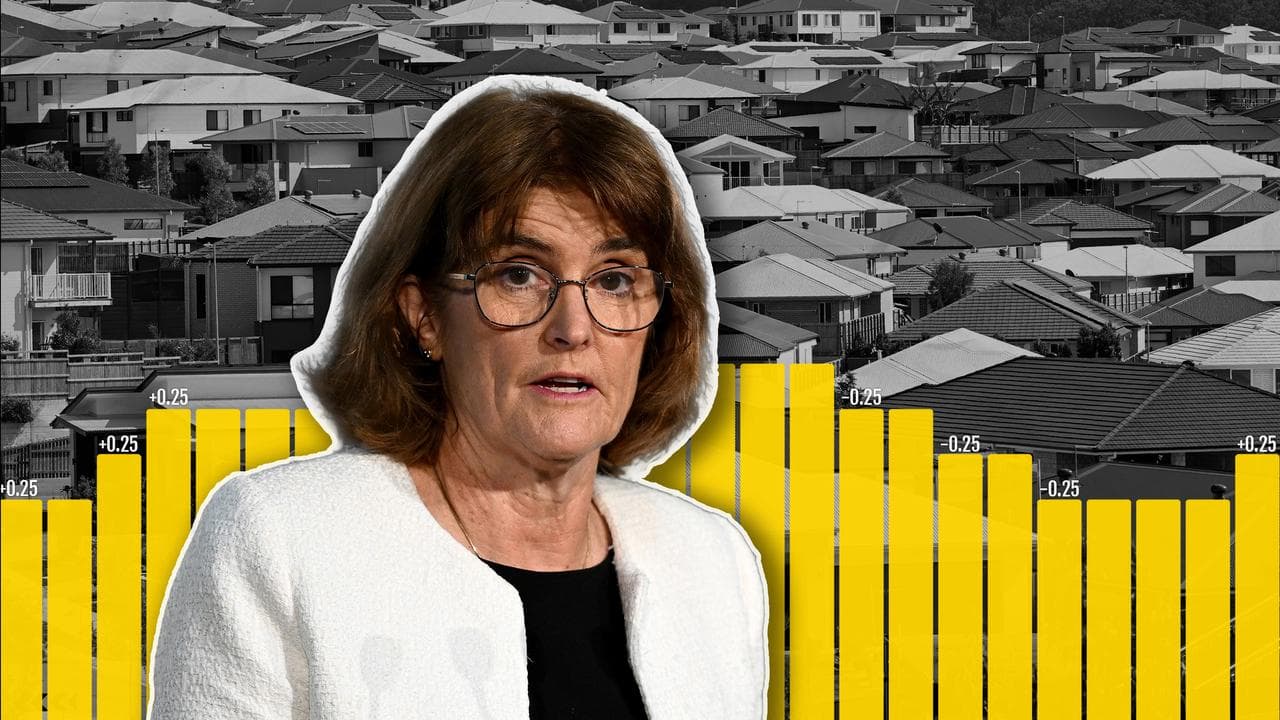
The Iran war could push up the "neutral" interest rate level, requiring even more rate rises to get inflation under control, a Reserve Bank official says.
As the conflict in the Middle East sent oil prices and economic uncertainty sky-high, the RBA must keep a lid on inflation expectations, assistant governor Christopher Kent said in an address on Thursday.
Inflation data released by the Australian Bureau of Statistics a day earlier confirmed the central bank's assessment that domestic conditions were already too tight, even before the outbreak of war.
Although headline inflation eased from 3.8 to 3.7 per cent in February, economists predict the consumer price index could surpass five per cent by June as the second-order effects of higher oil costs flow through the broader economy.
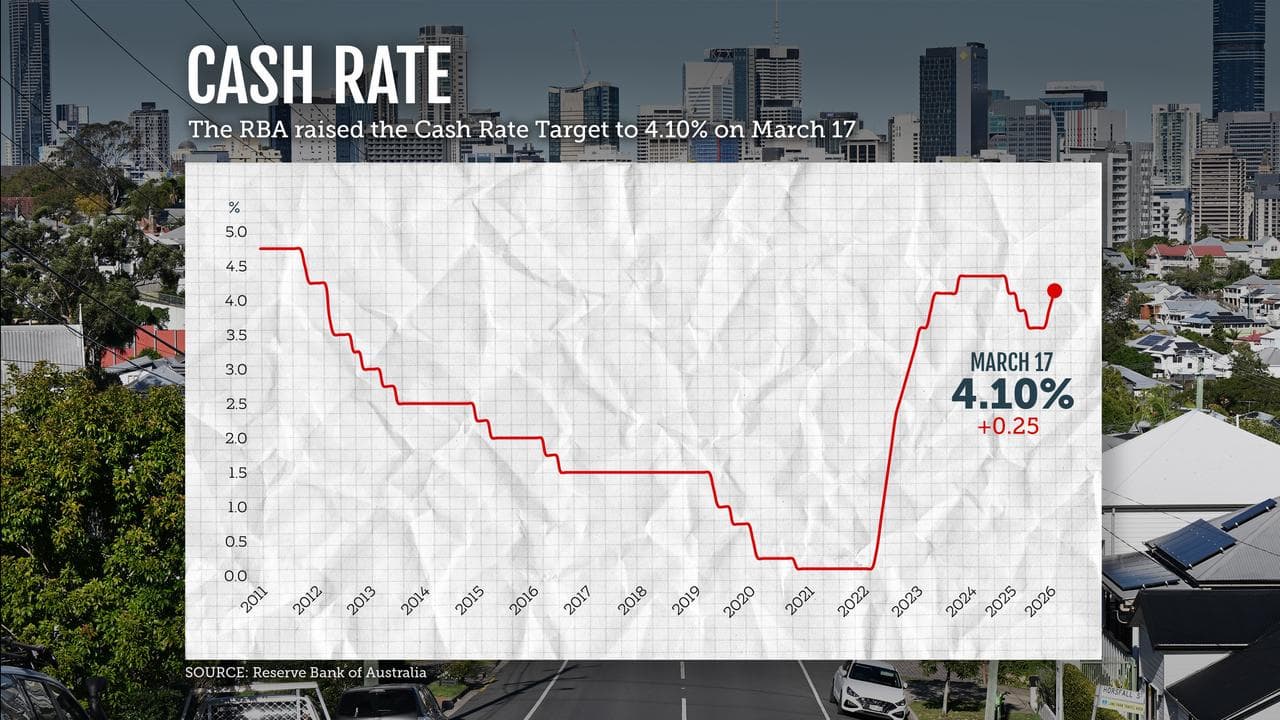
Markets expect the RBA to respond by lifting interest rates at least two more times, after hikes announced by governor Michele Bullock in February and March.
But how high the bank needs to lift the cash rate depends on the so-called neutral rate - the theoretical interest rate at which inflation will remain steady.
Dr Kent said the turmoil in commodity and other markets had led to tightening in financial conditions which, all else being equal, implied a decline in short-term neutral rates, meaning interest rates would not have to be raised as high to have the same effect.
"However, the supply shock also poses a risk to inflation and longer-term inflation expectations at a time when there are ongoing capacity pressures in Australia and several other advanced economies," he told the KangaNews Debt Capital Market Summit in Sydney.
"This could both push short-run neutral rates higher and necessitate a more restrictive stance of policy."

The longer the war dragged on, the larger the economic impact would be and the greater the risk of a market sell-off, he said.
Dr Kent reaffirmed the bank's commitment to getting inflation under control, even though the energy crisis risks tanking the economy and higher interest rates could further exacerbate a downturn.
"A negative supply shock pushes up prices and leads to weaker economic activity, making us all poorer," he said.
"Central banks cannot change that. But they can ensure that the initial rise in prices does not lead to a rise in longer-term inflationary expectations and extended inflationary pressures."
The government is also trying to grapple with the impact of a prolonged war on Australia's economy.
Treasurer Jim Chalmers on Wednesday said Treasury had modelled two scenarios for the economy, based on oil prices staying at $US100 a barrel for a short time or rising to $US120 a barrel for a longer time, both of which looked "pretty conservative now".
The benchmark Brent crude price was just under $US100 a barrel on Wednesday amid conflicting claims of peace talks between the US and Iran.
Treasury was working on "some more challenging circumstances", but modelling had yet to be completed, Dr Chalmers said.


