
Billions of dollars from the National Disability Insurance Scheme are lost each year to fraud or other "integrity leakage" issues that add up to about 8.3 per cent of its total cost, a parliamentary inquiry has heard.
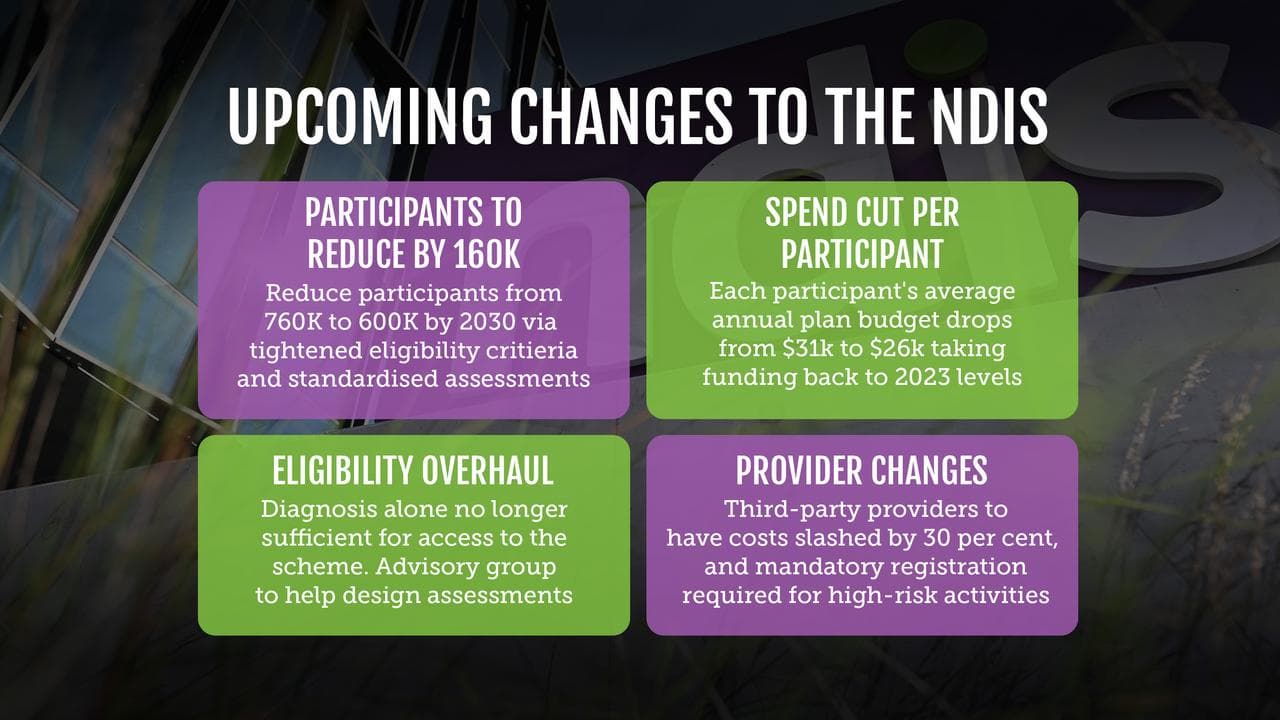
Losses to scams, errors or other non-compliance are a major threat to the government's efforts to reduce spending growth in the fast-expanding scheme from over 10 per cent per year to just two per cent per annum over the next four years.
Given the scheme is forecast to cost $52 billion this financial year, it would translate to roughly $3.7 billion worth of misused NDIS payments.
Senior National Disability Insurance Agency official John Dardo, who co-chairs the Fraud Fusion Taskforce set up to tackle misuse of the scheme, told the inquiry on Friday that there was no statistically valid way to measure how much leakage was due to fraud.

But even if fraud amounted for just a fraction of total leakage, it would still eclipse levels in other government programs.
Fraud across all government programs amounted to well under one per cent of total expenditure in 2022/23, the NDIA said in its submission to the inquiry.
According to the Australian Criminal Intelligence Commission's Adam Meyer, much of the fraud in the NDIS was being perpetrated by a "significant number of high-end organised crime groups" based in regions including Southeast Asia, the Middle East and South America.
Mr Dardo said the government's changes requiring NDIS providers to be registered and mandating digital payments will help clamp down on fraud.
"Digital payments ... is a no-brainer," he said.
The NDIS was deployed in a rush and entry standards were quite low for the market, he added.
"The incentives are misaligned in the market," he said.
"There's complexity in the design. The claims were largely being paid in an unverified setting, the resourcing associated with the integrity side of the work was probably not commensurate with the level of funding being paid. The response mechanisms were largely reactive.
"We see those mistakes been repeated as new government programs are set up, and we probably need a better way of ensuring that those learnings are built into government programs as they're set up from day one."
Independent think tank e61 Institute agreed that the NDIS market was not working as intended.

Competition among providers is almost non-existent and participants rarely switch support services, meaning there is little incentive for providers to lower prices or improve quality, said researchers Pelin Akyol and Adit Maitra.
"The NDIS currently sits between two models: not a functioning market, and not an actively managed insurance scheme. As a consequence, it has the disciplines of neither," the duo said in a research note published on Friday.
Changing the model of the scheme, beyond the reforms already announced, was needed to rein in costs, they said.


