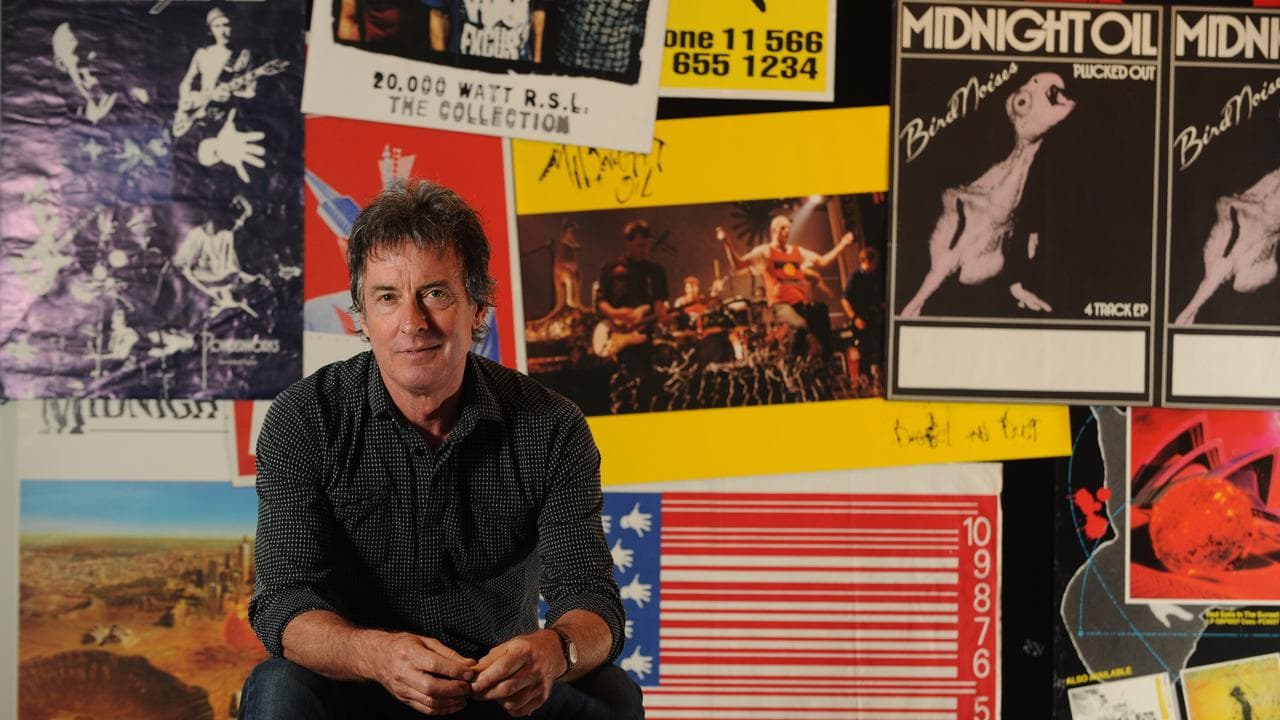
For the last two years in the life of one of Australia's most storied and celebrated bands, acclaimed singer-songwriter Liz Stringer had the best seat in the house.
Recruited alongside Leah Flanagan as a backing vocalist for Midnight Oil in 2021, Stringer and Flanagan were positioned a few metres to the right of drummer Rob Hirst, who died this week aged 70.
"It felt like I was in the engine room with him and he was relentlessly energetic," she tells AAP.
"There was never a show where he phoned it in.
"By the end, the sweat and steam would be flying off him and I'm standing there going, this guy's nearly 70 years old! It was really extraordinary."

Stringer, born in 1980, had grown up listening to Midnight Oil after her older sister introduced her to the band's seventh album Blue Sky Mining, released in 1990.
"Those songs were part were part of my musical DNA as an Australian kid," she says.
"It was surreal, being on stage with them and becoming friends with them. They just seemed like musical gods to me."
But in person, she says, Hirst was the antithesis of a rock star.
"He had this indefatigable interest in other people," she says.
"His whole life was centred around connection and learning things from other people and looking outwards."
It was a theme repeated throughout the week across social media, with the outpouring for Hirst spanning generations of musicians - particularly young First Nations artists - and rippling outwards far beyond the industry.
Hirst was known first and foremost as an explosive drummer.
Graham Bidstrup, drummer for the Angels, said Hirst had "the class and feel of (the Rolling Stones') Charlie Watts and the energy of Keith Moon (the Who) and (Blondie's) Clem Burke."
But while Hirst was an animal behind the kit, he was no Muppet.
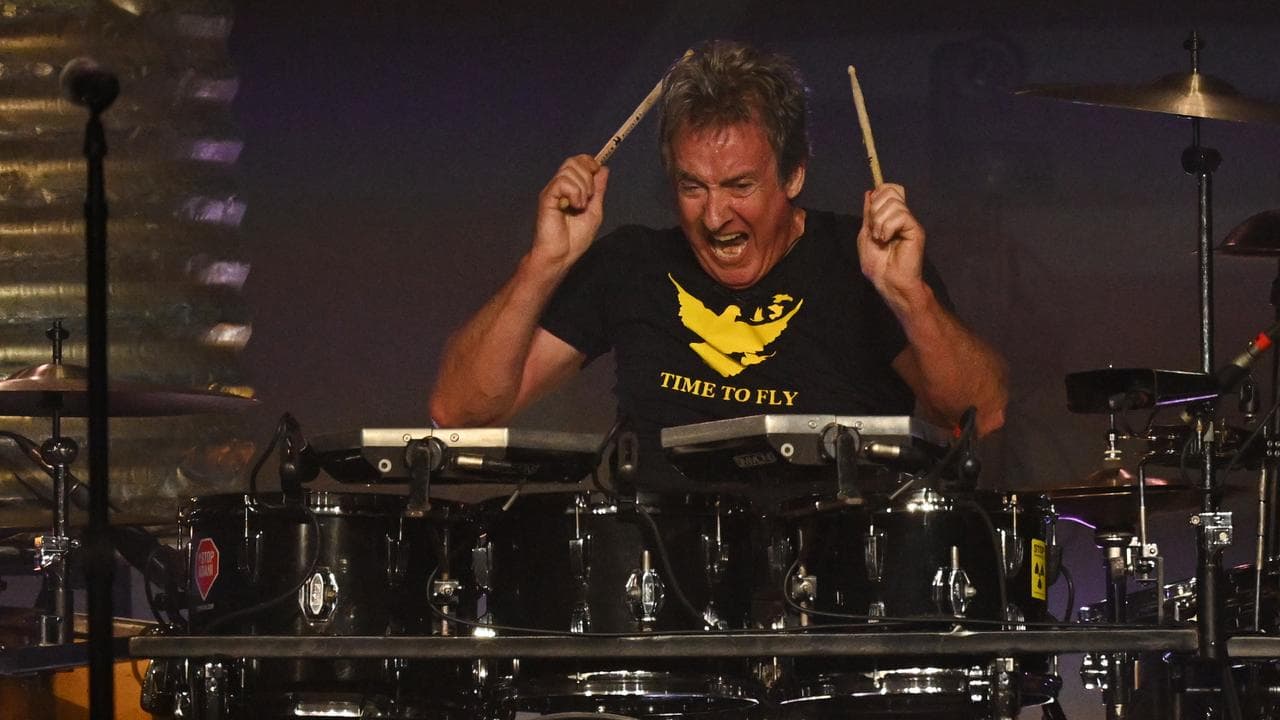
He was the driving force behind the band and the principal songwriter of many of their biggest hits, including Power and the Passion, The Dead Heart and Beds Are Burning.
Jon Coghill, drummer for Australian rock titans Powderfinger, says Hirst was a songwriter first, using Hirst's famous solo in Power and the Passion as an example.
"It was supposed to replace a guitar solo, so it had to have melody and excitement," he tells AAP.
"It had to have a story behind it, it had to develop."
Later, The Dead Heart and Beds Are Burning succeeded in breaking the band internationally, while starting ongoing conversations at home about white Australia's relationship with the country's traditional owners.
When asked about Hirst's biggest legacy, Paul Clarke (who directed the band-authorised 2024 documentary The Hardest Line) replies instantly: "his songwriting."
"I think his perspective of what Australia could and should be is his prevailing legacy and that is captured in his songs so brilliantly.
"When you hear songs like The Dead Heart and Beds Are Burning, you cannot listen to that without feeling the emotion of it.
"Beds Are Burning would bring a tear to a glass eye."
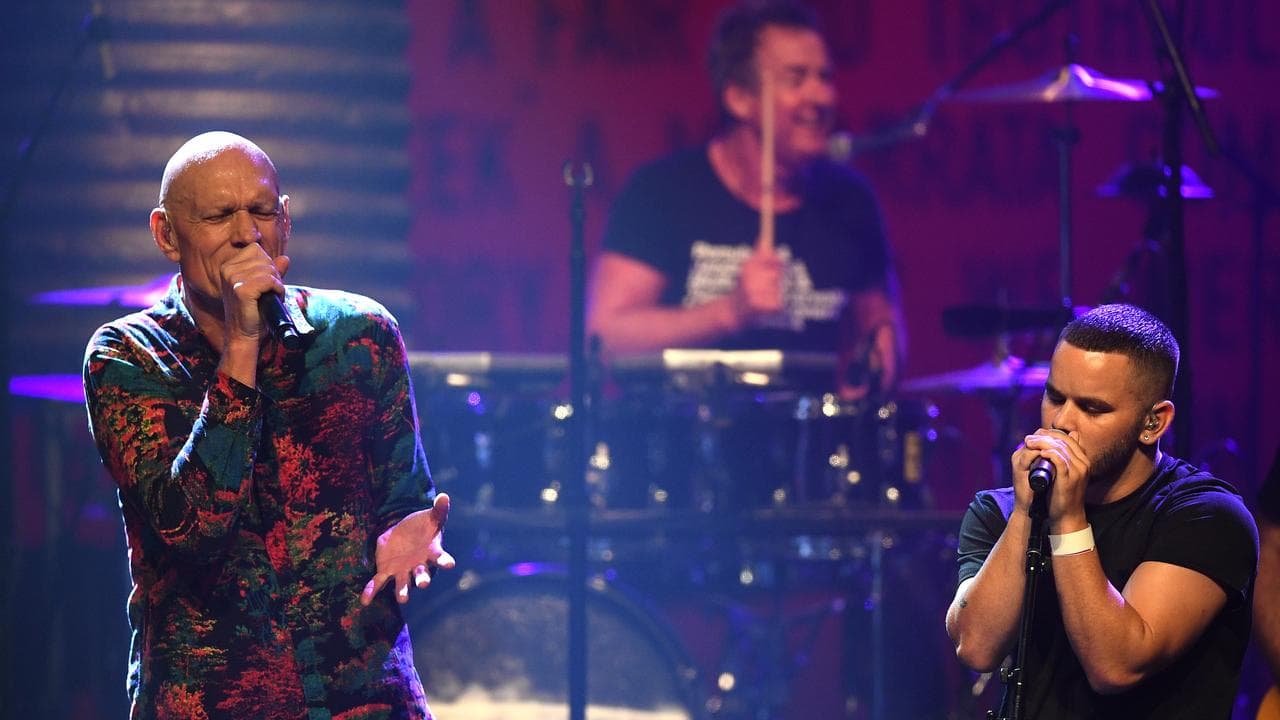
When Midnight Oil began writing for their 2020 album The Makarrata Project (their first since 2002), Hirst contributed the songs First Nation and Gadigal Land, picking up where their 1987 album Diesel and Dust left off.
But the band went a step further, inviting various First Nations artists to collaborate with them, including rapper and songwriter Tasman Keith, a Gumbaynggirr man from Bowraville in NSW.
After Hirst's death, Keith posted on Facebook about the drummer's faith in what he might contribute to the song First Nation, on which he was featured alongside Jessica Mauboy.
"Any hesitation I had disappeared the moment I felt the trust he showed in me as a young songwriter," Keith says.
"His openness to collaboration with any artist at any level meant the world to me."
Paul Daley, an author and columnist for the Guardian who specialises in Indigenous and postcolonial history, believes Hirst's genius lay in the direct, plain-spoken nature of his lyrics.
"They spoke to a really mainstream crowd," he says.
"That they could get those messages out to an audience that probably wasn't conversant with that part of Australian history was pretty remarkable.
"The songs of theirs that talked about sovereignty and dispossession moved countless Australians who might not have thought about those things at all."
For Stringer, Hirst's legacy is more personal.
"Rob really is proof that music and performing is ultimately about connection," she says.
"You can be a very famous, very successful musician be such a good human being and encourage so many generations of other musicians.
"Connect, learn, share, listen. I think that's one of his biggest legacies. He was an incredibly kind, interested, interesting man."


