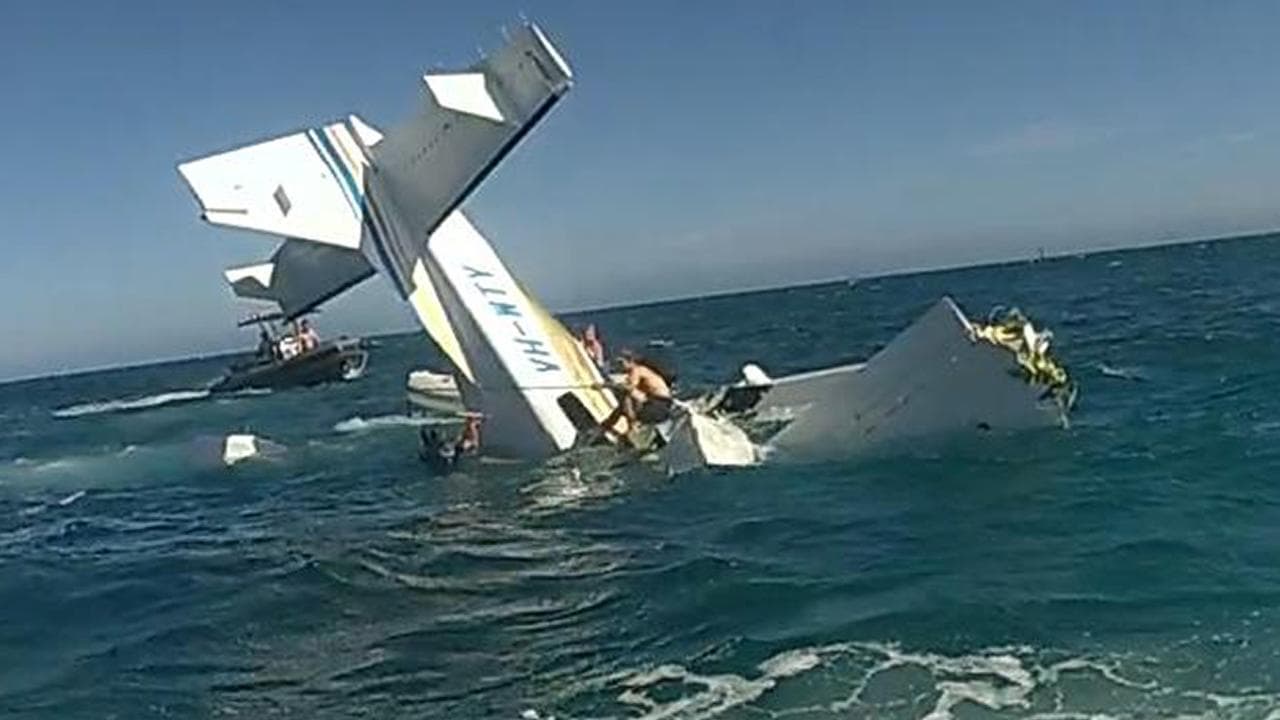
A seaplane that crashed off a popular tourist island, killing three people, hadn't been flown for years before it was put back into service a month before the deadly incident.
The Cessna 208 Caravan 675 was carrying seven people when it slammed into the water soon after take-off and sank at Rottnest Island, off the coast of Perth, on January 7.
Pilot James Wong, 34, a Swiss woman and a Danish man died, while four other passengers survived.
An interim report into the crash released by the Australian Transport Safety Bureau on Friday provided further details about the incident, but no findings on its cause.
Maintenance documentation for the aircraft showed it was not flown for extended periods from June 2021 until it was leased and operated by Swan River Seaplanes in late December 2024, the report said.
All told, the seaplane was inactive for all but 12 of the 1277 days during this period.
Investigators could not find any evidence the engine was maintained according to the manufacturer's specifications during this time, except in the final months.
For periods of inactivity over 90 days, the plane's manual states the engine oil should be drained, along with other preservation actions, but this can be substituted by running it once a week.

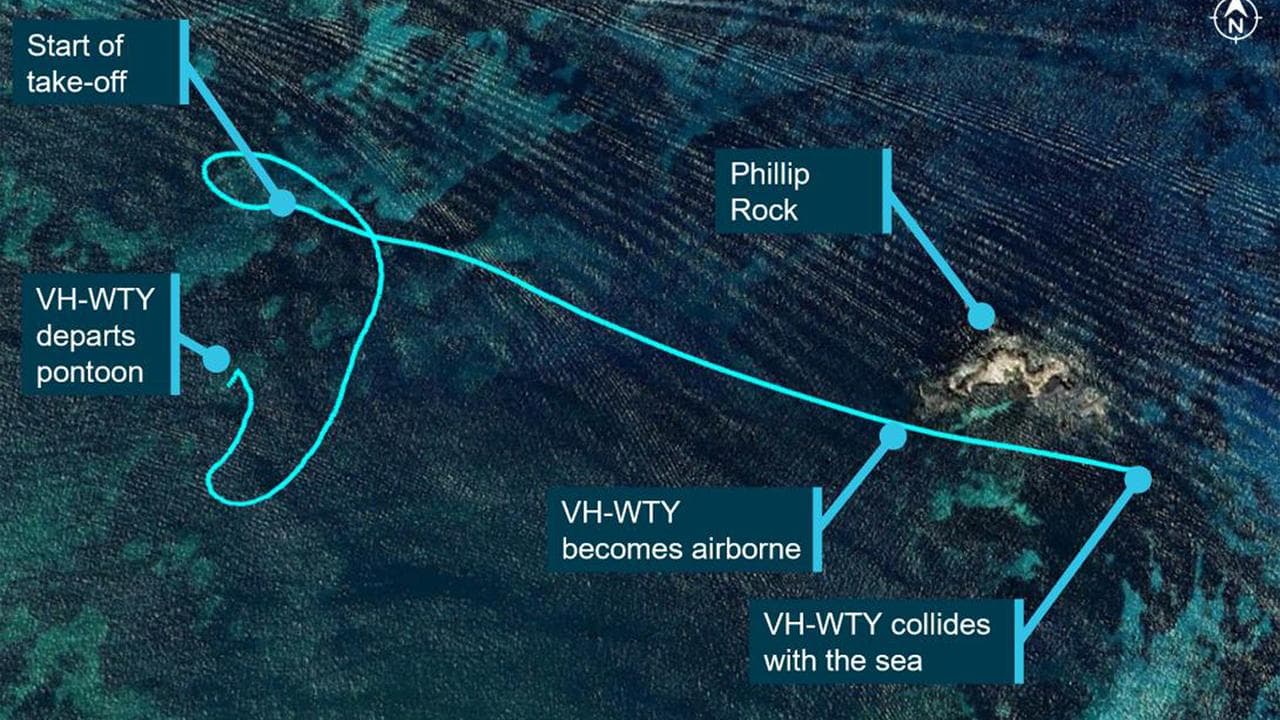
The report also provides further details about the failed take-off, including that the plane hit waves before becoming airborne and seconds later colliding with the water.
“The aircraft accelerated along the water in a strong crosswind and a light tailwind, and as it passed Phillip Rock, it encountered sea swell and chop,” ATSB Chief Commissioner Angus Mitchell said.
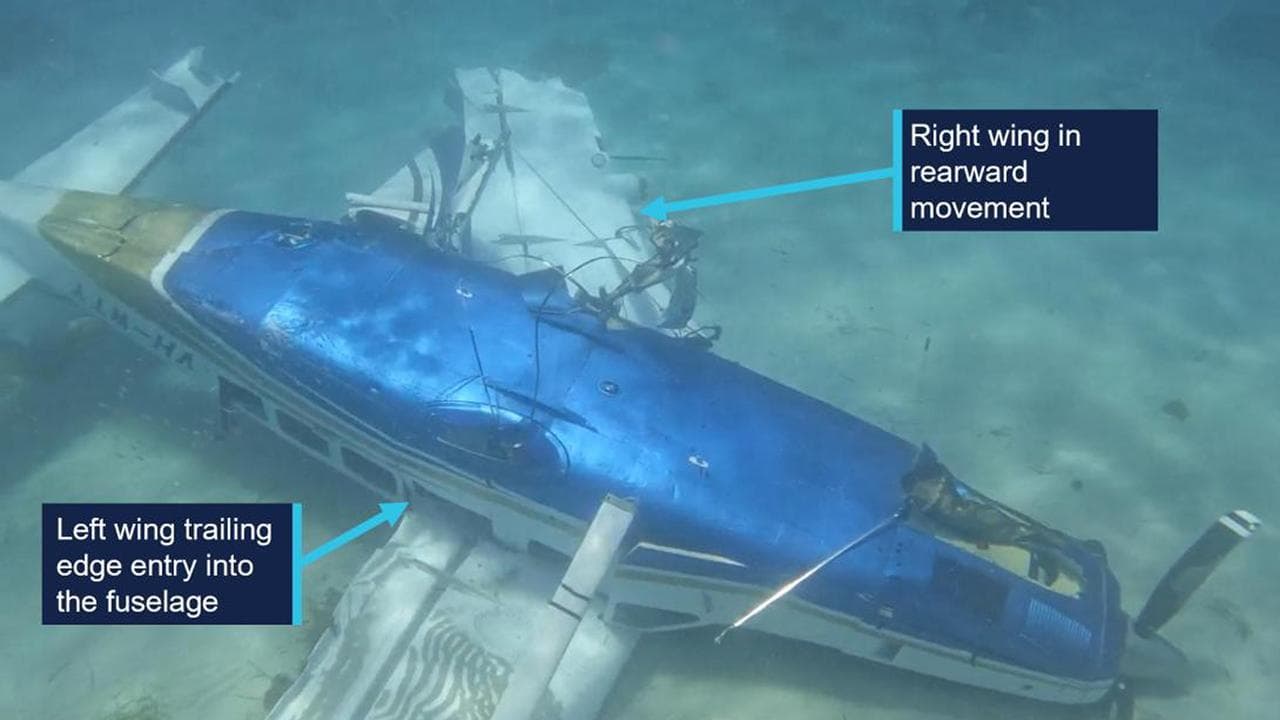
The seaplane rolled to the left when it was 16 feet above sea level.
The left wing impacted the water, followed by the fuselage and the rest of the aircraft.
The wreckage came to rest on its nose on the seafloor, partially submerged.
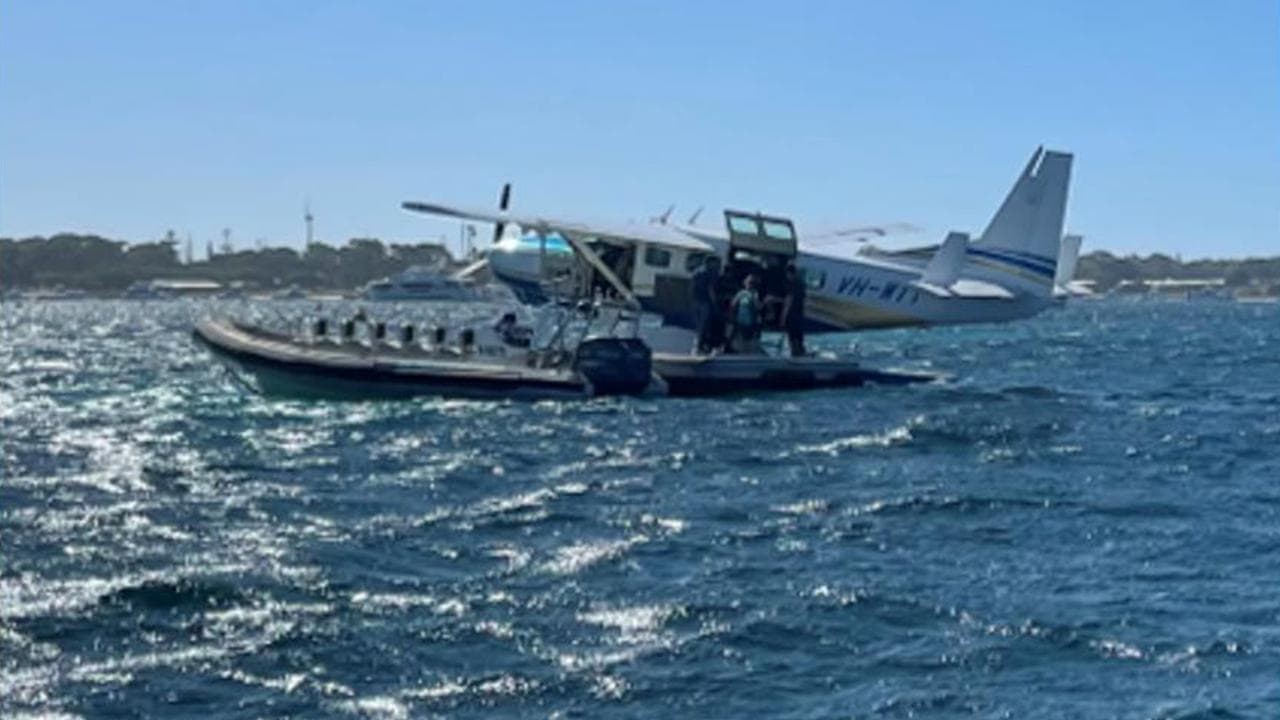
The four surviving passengers escaped the wreckage - two with serious injuries - after the coxswain of a tender boat smashed a window.
A coroner found the pilot, Mr Wong, and one of the passengers who died in the incident drowned, and the other passenger drowned with a head injury.
The ongoing investigation will review Mr Wong's assessment of conditions on the day, including the decision to take off in an unusual direction.
Investigators will also consider whether Mr Wong may have disconnected the aircraft's stall warning system circuit breaker before take-off.
Passenger video did not capture any stall warning sounds during the take-off run, and the stall warning circuit breaker was found in the disconnected position after the accident.
The Cessna handbook instructs pilots to have all circuit breakers in before a flight, but pilots have reported false alarms during water take-offs, leading to it being disconnected by some.
Investigators are also examining the crashworthiness of the Cessna Caravan aircraft and the suitability of the manufacturer and operator’s emergency equipment and procedures for accidents involving water.


