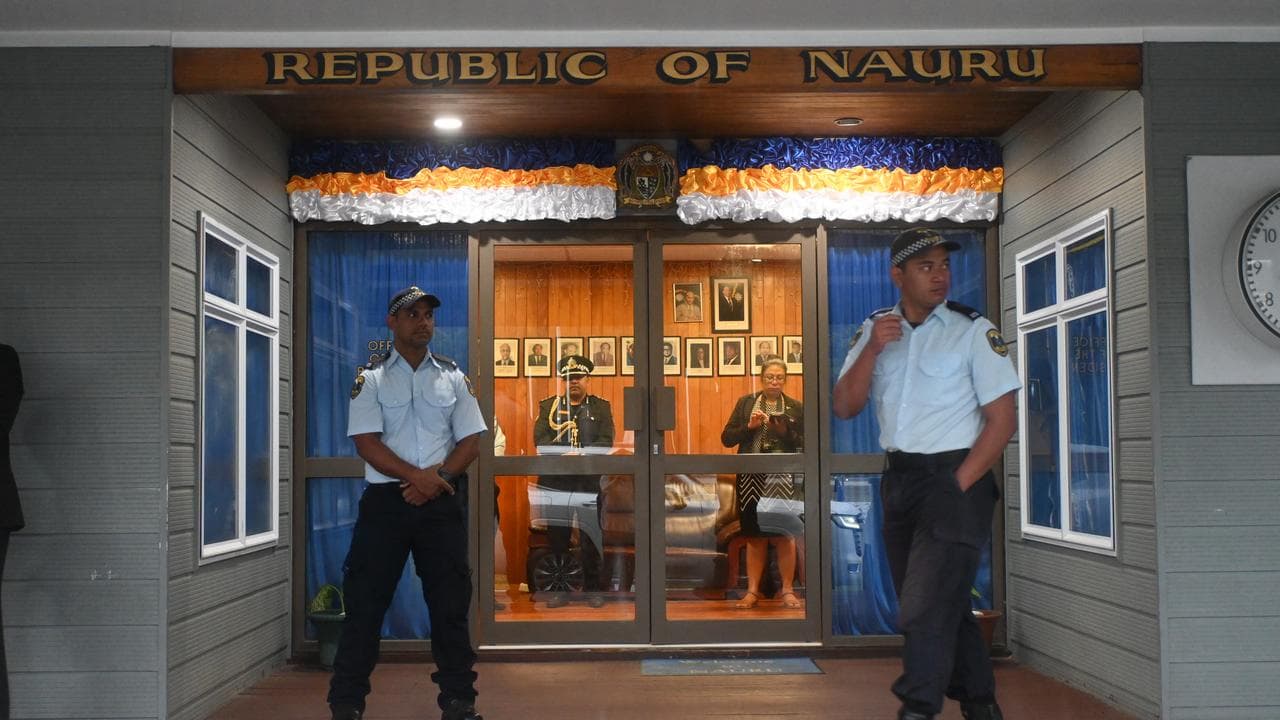
Nauru's president David Adeang has justified a fresh resettlement pact with Australia to his citizens by telling them new arrivees will not commit crimes, and they could even be returned early.
In February, Australia struck a fresh deal to send former detainees to the tiny Micronesian nation worth $408 million upfront, and $70 million annually over the 30-year agreement.
At the time, Anthony Albanese's government was under political pressure to resettle the "NZYQ" cohort of a few hundred non-citizens.
The High Court ruled they could not be sent back to their home countries due to fear of persecution, but nor could they be held in indefinite detention in Australia.
After the ruling Mr Adeang gave an interview in Nauruan to state-run media, which was uploaded to Facebook.
Both the Australian and Nauruan government refused to provide an official translation from the little-spoken language, leaving English speakers in the dark over Mr Adeang's message.
On Monday, Senators David Pocock and David Shoebridge read a transcript sourced by the Asylum Seeker Resource Centre in the Senate, capturing Mr Adeang's words into hansard.
Nauru is a remote and intensely secretive nation of around 12,000 people without private media, and without reciprocal travel rights in and out of Australia.
It has accepted unwanted refugees from Australia for more than a decade, housing them in detention or the community under various agreements.
In that time, several have died via suicide, as report after report details shocking conditions and human rights breaches.
Mr Adeang devotes much of the interview to assuring Nauruans they will not be threatened by arrivees with criminal histories.
"We have to remember that this is not the first time we have let foreigners come to our home," he said.
"Some have taken lives, some have abused people and when they have come here, they have not interfered with anything.
"We hold that we will be fine."
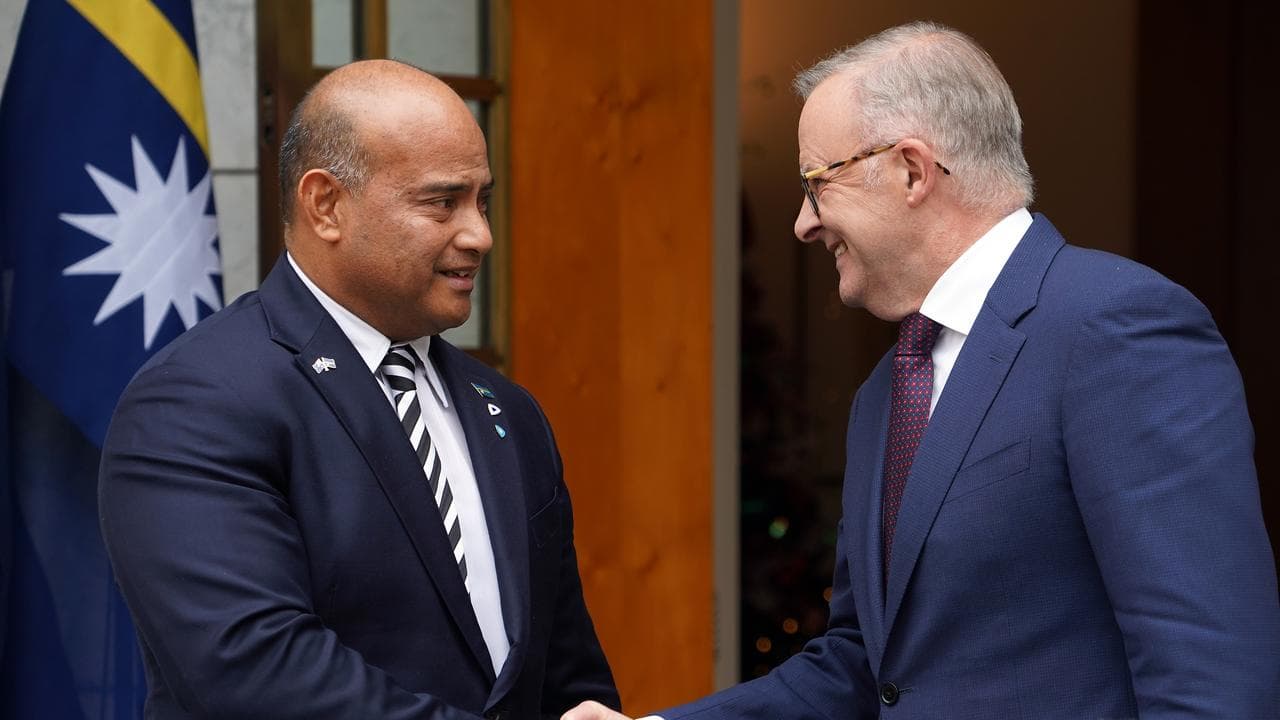
Mr Adeang also suggests individuals could leave Nauru and return to their home countries before the expiration of their 30-year visa, which may break international law.
"Thirty years is what they are given, unless of course, we, your government, find a way for them to move around, for example, they get to go home," he says.
"The problem now is, Australia cannot return them home, these people are what you would refer to as stateless.
"Their homelands do not want them and they do not have a way to go home."
Documents tabled in the Senate last week, as reported by The Guardian, showed the Australian Home Affairs department advised against releasing a transcript.
Foreign Minister Penny Wong said Australia's translation was done by a non-accredited translator and may not be totally accurate.
"It would not be appropriate to release them and doing so would damage our bilateral relationship," she said.
The Asylum Seeker Resource Centre said the secrecy over the pact was "part of a wider pattern of corruption and cover-ups that have plagued offshore processing for more than a decade", calling on the government to end the practice.


