
A senior staff member at one of the world's biggest live-streaming platforms has been unable to conclusively say whether describing Jews as "evil rats and subhumans" would breach the platform's guidelines.
The representative from Melbourne-headquartered Kick, which boasts more than 100 million users, says identifying hate speech in streams is "more art than science".
The service bills itself as an alternative to Amazon-owned Twitch with higher pay rates for streamers and looser content moderation.
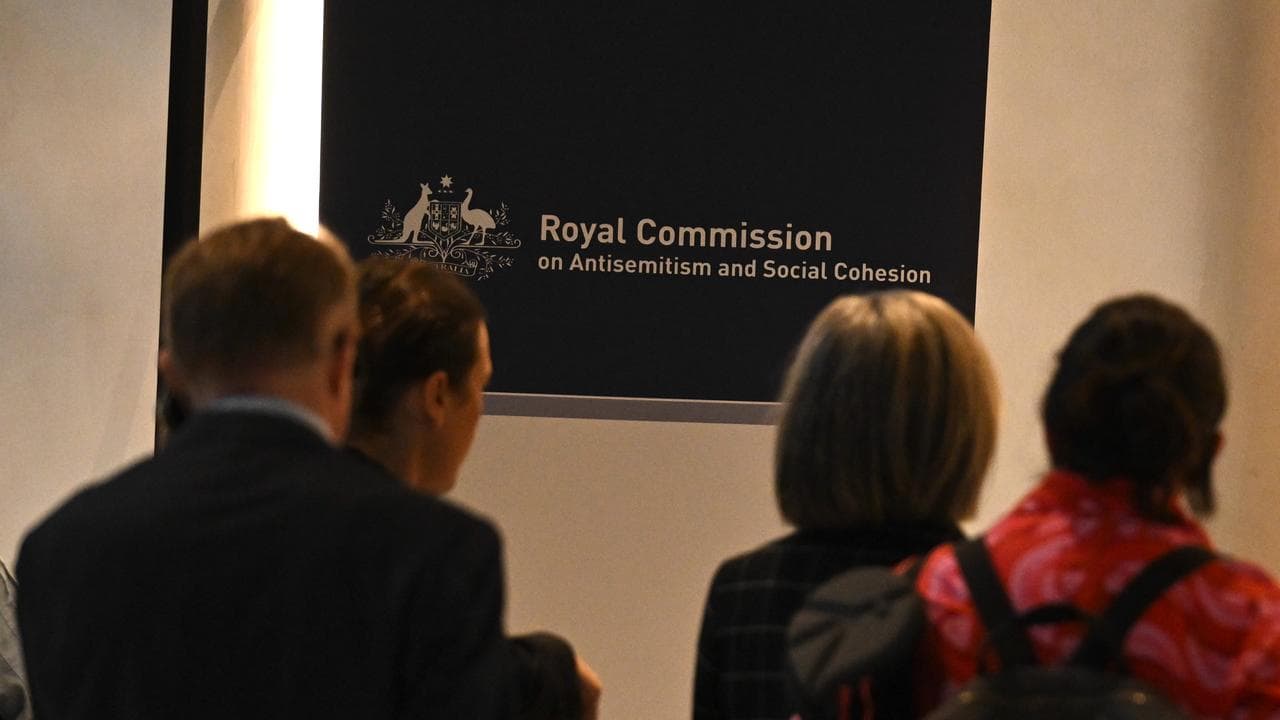
Kick's general counsel Tiat Oon Ooi told a royal commission into anti-Semitism he thought describing Jews as "evil rats and subhumans" during a live-stream would breach the platform's guidelines, but he could not be definitive.
"I believe so, but I think that's a difficult one for me to answer," he said when asked by Nicholas Bender SC, the counsel for several Jewish community groups.
"I'm not specifically well-acquainted with the details of the moderation guidelines."
Pressed on how the company identifies hate speech, Mr Ooi said the most egregious examples - like a call to violence - would be obvious but other cases might be more nuanced.
"It's more of an art than a science. It's not really a formula where I can say A plus B definitely equals hate speech," he told the inquiry.
A significant proportion of Kick's content moderation was outsourced to a team in Serbia, Mr Ooi added.
Questioned why the proportion of reported posts removed was far lower on Kick than other platforms, he said the streaming service dealt with a larger number of false reports.
"If (viewers) see someone they do not like, they can click on it and immediately generate a report ... a significant number of those are false alarms," he said.
Earlier, social media giant Meta told the inquiry it treats hate speech including anti-Semitism differently to "truly heinous" content such as glorification of terrorism.
The parent company of Facebook, Instagram and Threads faced a grilling over controversial changes to its content moderation policy, which is allowing more hate speech to slip through the cracks.

The previous moderation system was over-policing political speech and had shut down Jewish communities trying to speak out against anti-Semitism, Meta's global director of core policy Benjamin Good said.
"They were trying to engage in counter-speech and unfortunately our systems were affecting them," he said.
Under the January 2025 changes, Meta shifted to "reactive" moderation for most kinds of content in a bid to allow less constrained debate about issues such as migration and gender.
The move allowed potentially hateful posts to stay up until they were reported by users.
More egregious posts including child sexual abuse and promotion of terrorism were proactively removed using artificial intelligence, Mr Good said.
"In proactive enforcement, it is the gold standard to remove violating content before it is viewed," he said.
"However, it carries risks when we remove content proactively. If we are wrong, if the content does not violate, then there is a significant risk of over-enforcement."

Mr Good, who dialled in from the US via video link, said the social media giant found users would often use Zionist as a "coded term" for Jews, complicating efforts to crack down on anti-Semitism.
Roughly 0.02 per cent of content on the social media network was classified as hateful conduct, he added.
Confronted with figures showing a 79 per cent reduction in the amount of hateful conduct on which Meta has taken action since the January 2025 changes, Mr Good agreed the number was in the ballpark.
However, he said he didn't know why and didn't want to speculate because of the complexity of the content moderation system.


