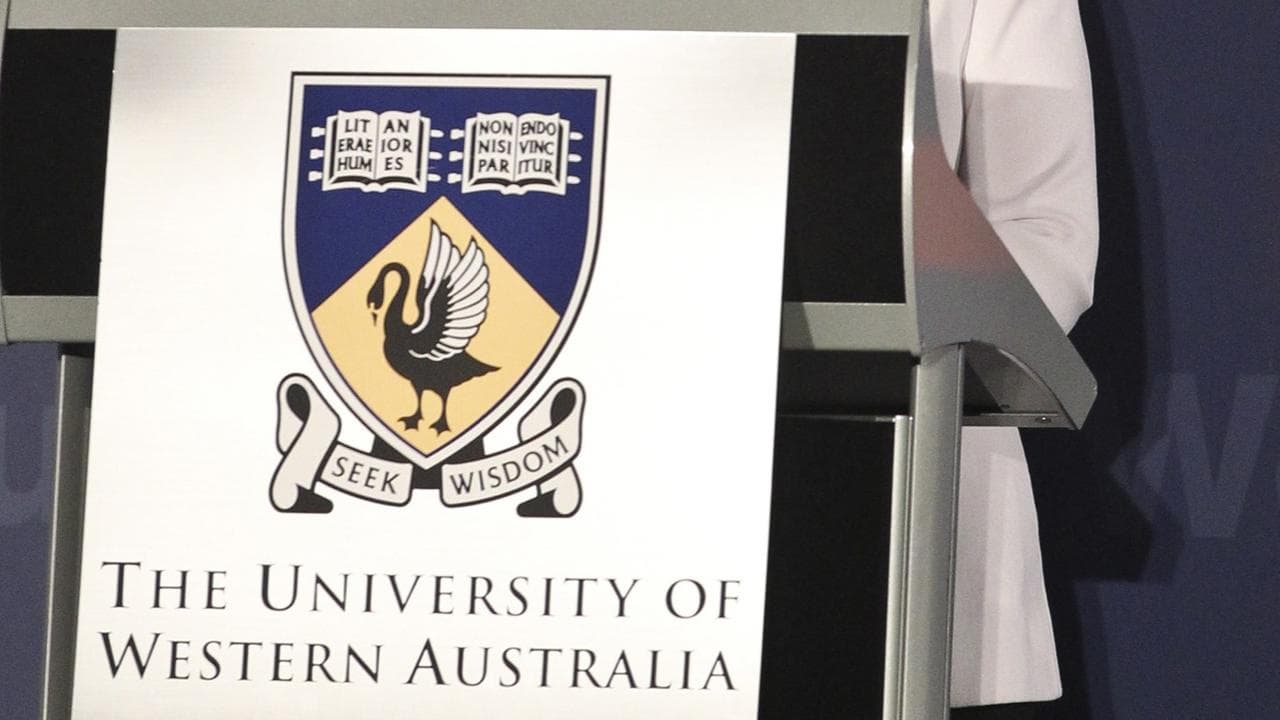
Academics will fight a controversial plan to merge three state public universities into a single gigantic educational facility.
The WA government is developing a case for the potential merger of The University of Western Australia, Curtin University, and Murdoch University.
The National Tertiary Education Union says a survey of WA university staff found more than two-thirds opposed the move.
"Staff across WA have told us clearly that they oppose this merger, with opposition outweighing support by nearly six to one," WA Division Secretary Scott Fitzgerald said on Monday.
"We'll be using everything at our disposal to fight hard against a merger."
Curtin vice-chancellor Harlene Hayne attacked the proposal, saying WA was facing "a cost-of-living crisis, housing pressures, critical shortages of healthcare workers and growing pressure on hospital beds".

"I can’t see how spending more than a billion dollars in this way will benefit Western Australians," she said on Sunday.
The university would "vigorously oppose" a forced merger on behalf of its more than 67,000 students, 10,000 staff and 300,000 graduates, she said.
Professor Hayne said the government had failed to articulate the benefits of a potential merger, which would create a rarely seen mega-university of almost 120,000 students.
Cost, waste, and the loss of choice, jobs and legacy would be the outcomes if it went ahead.
Backing the plan, Premier Roger Cook said universities needed to scale up to be competitive and attract research dollars and students.
"What we see in Western Australia is a situation where our universities are dropping down the rankings, where they are not getting the research dollars that they need," he told reporters on Monday.
Mr Cook said that if the case for a merger did stack up, it was the universities that should foot the bill, not taxpayers.

"The universities have got resources and significant parcels of land which could be used as part of this process," he said.
A steering committee will oversee a business case, which will examine the costs and benefits of a merger.
The business case will also look at student outcomes, including improved course quality, completion rates, and education outcomes.
Once completed, the business case will be considered by the government before a final decision is made.
Professor Fitzgerald said it was a highly concerning plan and public universities existed to serve students, staff and the wider community.
Decisions about the future of the universities should not put profits over people, he said.
The NTEU WA Division survey of 936 university staff between July and September found 68.7 per cent oppose a merger, with just 11.9 per cent in support and 19.4 per cent undecided.


