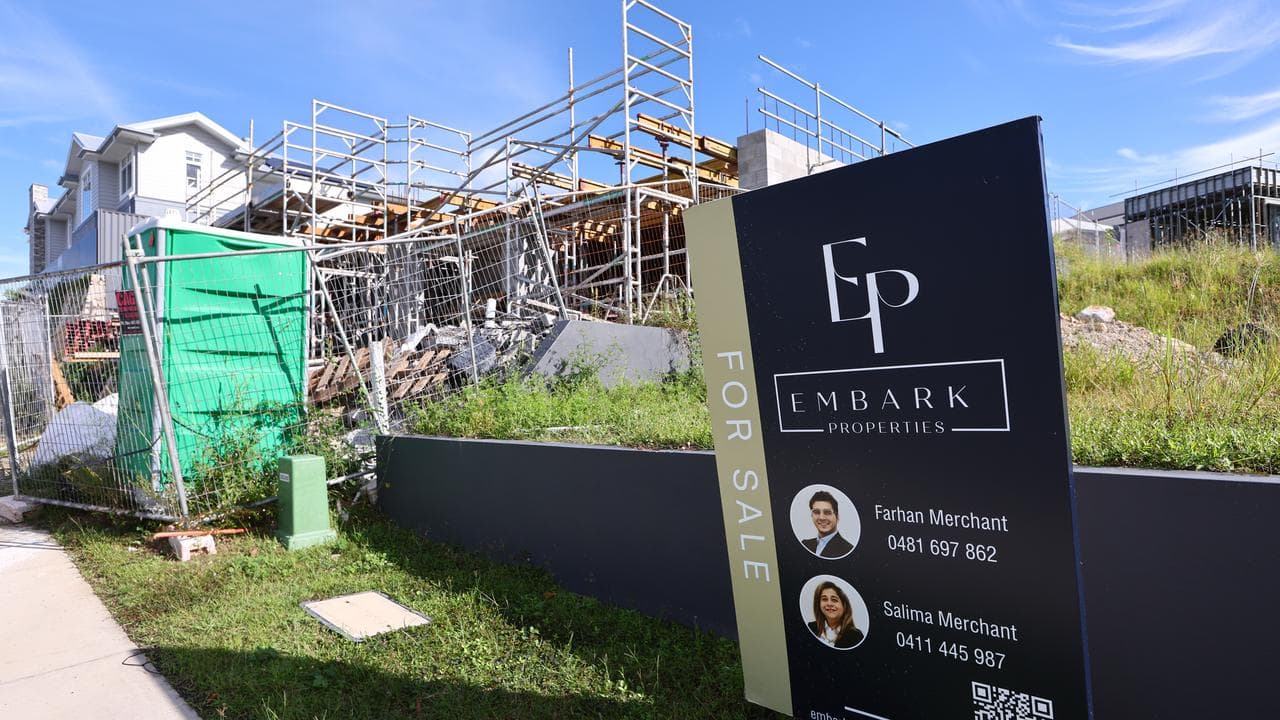
Allowing three-storey townhouses to be built on most residential land is one of the key recommendations of a major report outlining what Australia needs to do to fix its housing crisis.
Governments have gotten in the way of new housing supply by imposing layer upon layer of regulation over the years, the report released by the Productivity Commission found.
The findings confirm what the building industry and housing economists have been saying for years.
All that is lacking is the political will to stand up to NIMBYs and the planning establishment, the construction sector said in response to the report.

Height restrictions, maximum floor-space ratios, parking space mandates, broad heritage protections, minimum lot sizes and setback requirements were just a few of the hurdles developers had to clear to build new homes, the commission found.
As a result of the widening housing shortage, the amount of time it takes an average household to save up a 20 per cent deposit on a typical home had blown out to 11 years from eight years in 2005, Productivity Commission chair Danielle Wood said.
"Regulation is important, but too much or poorly designed regulation can stop new homes being built, make projects slower and more expensive, and reduce the types of housing available to us," she said.
"The rules should allow us to build enough housing in the right places, while still protecting the things Australians value."
Simon Croft, chief executive of industry and policy at the Housing Industry Association, said the commission's proposed reforms would be controversial and face pushback from the planning establishment.
But the report made clear that incremental change would not be enough, he said.

The industry has long advocated for the wholesale changes identified by the commission and did not need another review to confirm that housing had become slower, harder and more expensive to deliver, Mr Croft said.
The report found easing zoning laws to allow up to three-storey developments across most residential land, similar to successful reforms in New Zealand, would be one of the most meaningful measures available to governments.
It also recommended enabling mid- or high-rise apartments near existing public transport, reducing minimum lot size requirements and allowing homes to be built in commercial zones.
Controls that limit the range of dwelling types that can be built - such as maximum floor-space ratios, minimum dwelling sizes, storage requirements for apartments, setback requirements and height restrictions - should also be removed or reduced.
Most of these levers are at the hands of state, territory or local governments.
Some have already been pulled.

NSW's low- and mid-rise housing policy encouraging denser residential development within walking distance of activity hubs will increase the potential capacity of new homes by 650,000, the report found.
But of these, only 240,000 will be commercially feasible, underscoring the need to remove design restrictions that make developments unviable, the commission said.
Australia is already running a year behind its target to build 1.2 million new homes in the five years to mid-2029.
But $2 billion pledged by the federal government in the May budget for enabling infrastructure will go some way to addressing another of the commission's findings.
Developers are often left waiting for new roads or sewers to be connected before they can build, particularly in greenfield areas, the report found.
Builders also reported battling to navigate overlapping approvals and different levels of government, referral agencies and infrastructure providers, who often did not talk to each other.
The commission will deliver a final report into the inquiry into housing regulation in March.


