One of Australia's top economic soothsayers has a grim prediction if the war in the Middle East is not resolved soon.
HSBC chief economist Paul Bloxham forecasts Australia's economy will contract in the June and September quarters if oil prices spike to $US140 a barrel and stay above $US100 a barrel through 2026.
That would mean the nation's first recession, excluding the COVID-19 pandemic, since the early 1990s and Paul Keating's "recession we had to have".
In the "ugly scenario" envisaged by Mr Bloxham, higher-for-longer inflation as a result of elevated oil prices and higher interest rates eat away at household income and dampen consumption.

Unemployment jumps to 5.5 per cent, as the Reserve Bank, fearful of rising inflation expectations, hikes interest rates a further two times.
"Clearly, we see tougher times ahead," said Mr Bloxham, who was previously crowned Australia's top economic forecaster by the Australian Financial Review.
"How tough is uncertain."
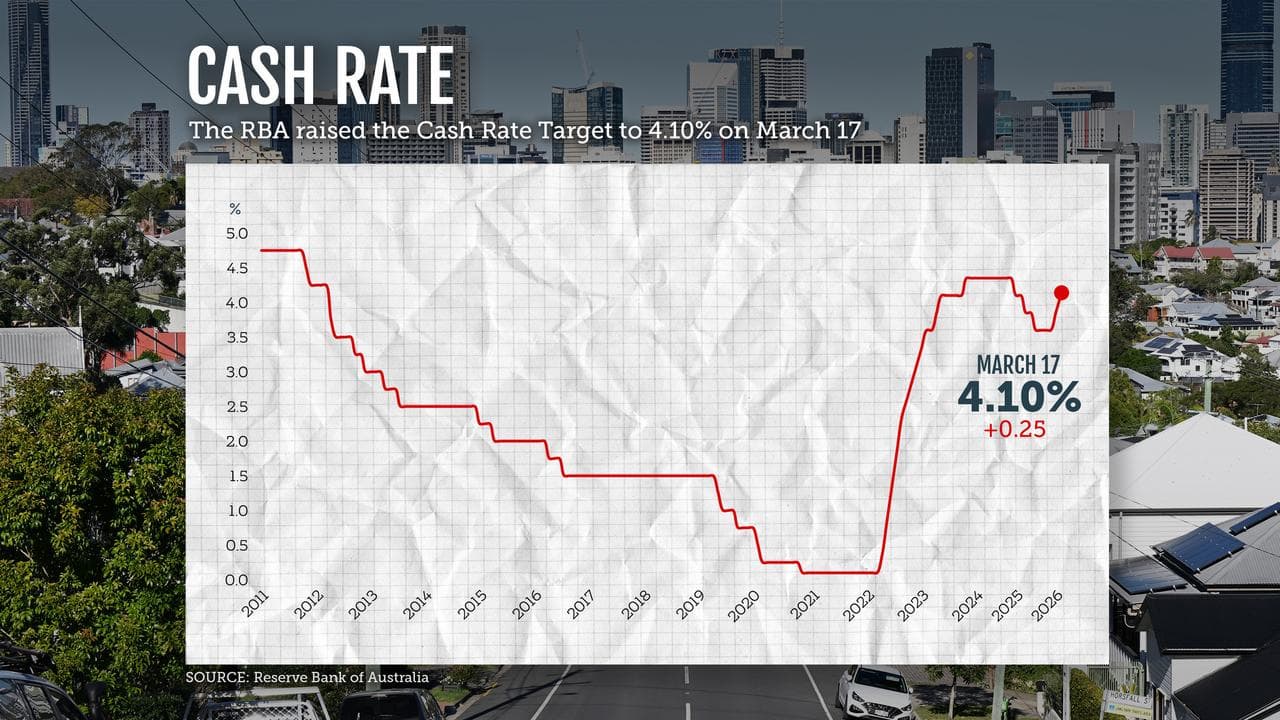
Reserve Bank governor Michele Bullock recently warned a recession was possible if inflation proved too hard to get under control.
HSBC's base case is less dire than its worst-case scenario with unemployment peaking at five per cent from its current 4.3 per cent.
But that outcome depends on the Middle East conflict being resolved at some point and oil prices declining.
In that case, Australia's economy was predicted to contract for only one quarter and the RBA to hike interest rates once more.
Other forecasters also see some relief in oil prices within the next few months but are starting to countenance similar doomsday scenarios if the war drags on.
Economists at Commonwealth Bank have produced a downside scenario in which the benchmark oil price hits $US150 a barrel and inflation rises as high as 6.4 per cent by June.
Brent crude oil futures climbed 4.8 per cent to more than $US112 a barrel over the weekend as the Iran-backed Houthis threatened to close shipping in the Red Sea and the market braced for a more protracted conflict.
Given expectations of a longer conflict and early signs of strong pass-through of oil costs to consumer prices across the economy, Westpac upped its interest rate forecast from one to three more hikes.
"This shift reflects the longer disruption to and slower recovery in fuel supply (previously) ... with the Strait of Hormuz essentially closed for eight weeks and traffic recovering only slowly after that," the bank's chief economist Luci Ellis said.
"It also reflects the surprisingly rapid pass-through of higher fuel and other oil-derived product prices into other prices in Australia."

The government's decision on Monday to halve the fuel excise reduced the headline inflation forecast in the near-term, but only pushed the peak of 5.4 per cent out to later in the June quarter, Dr Ellis said.
For firms already struggling with rising inflation before the war, the energy shock has kicked off a damaging new business cycle, Deloitte Access Economics partner David Rumbens said.
"The Australian economy is running on empty," he said in a business outlook report on Monday.
"Higher fuel prices and a domestic economy that struggles to contain inflation at modest rates of economic growth are different dimensions of a supply crisis story."
Dr Ellis noted there was a possibility the forecasts were overly pessimistic and fuel supplies recovered faster than current assumptions.


