Thousands of transport workers have walked off the job nationwide for 24 hours, escalating their demands for better pay and conditions.
Transport Worker Union members joined protests in major cities across Australia on Thursday following months of negotiations with logistics firms.
Described as the biggest road worker strike in the union's history, workers are demanding pay in line with industry standards, heightened job security and a better say in the industry's future.
The action involved workers at eight companies, including FedEx, Qube and Goldstar, which cart goods for major brands including Aldi, BHP and Coca-Cola.
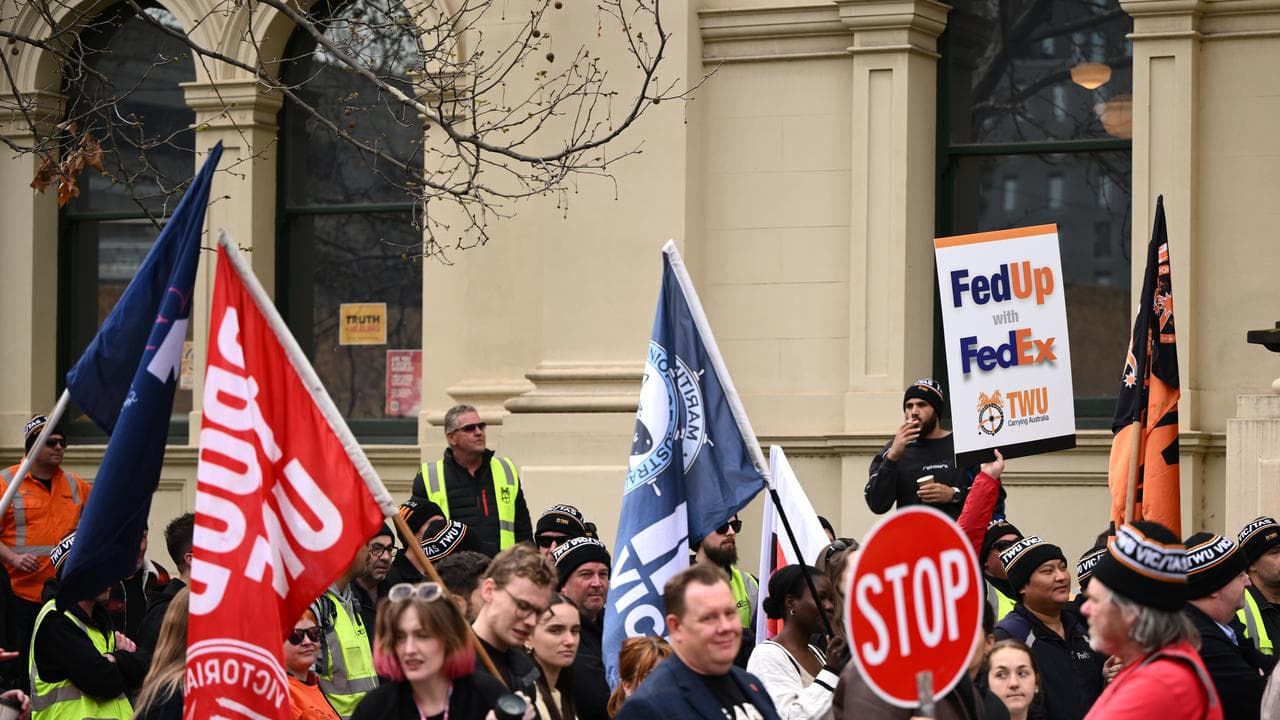
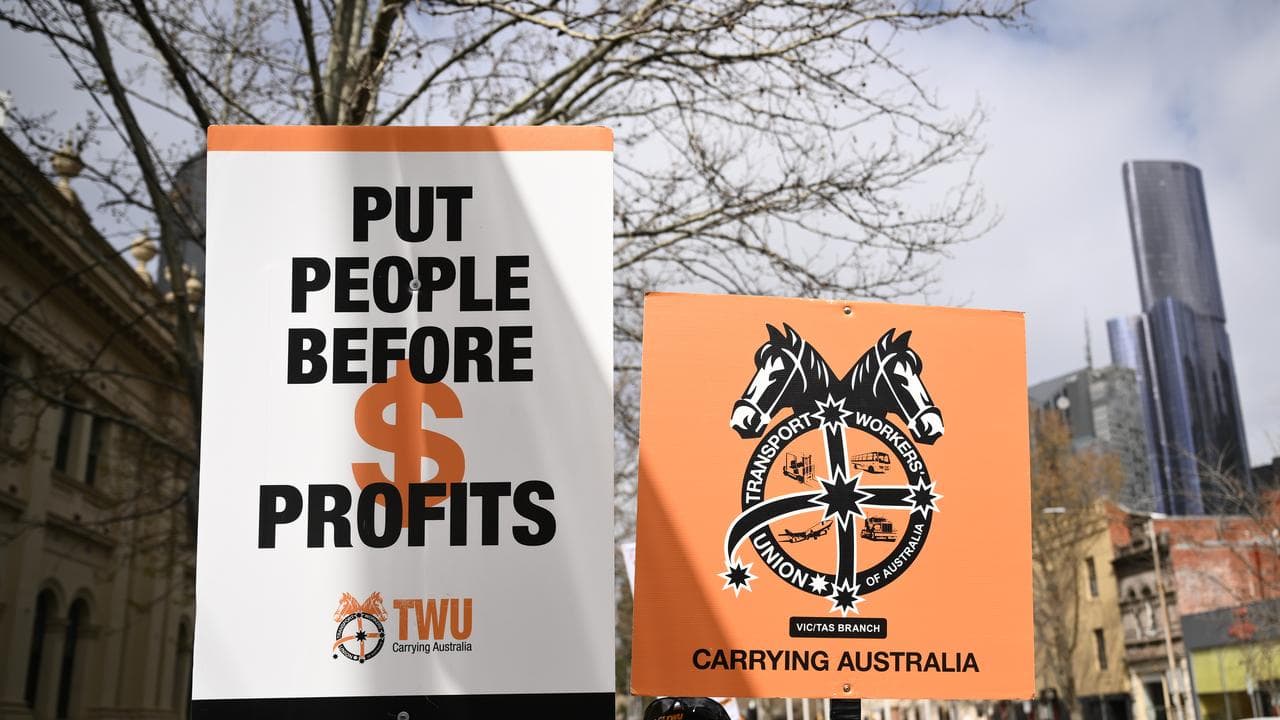
Truck driver, forklift operators and warehouse workers turned out dressed in the union's orange under placards reading "put people before profits" and "fed up with FedEx".
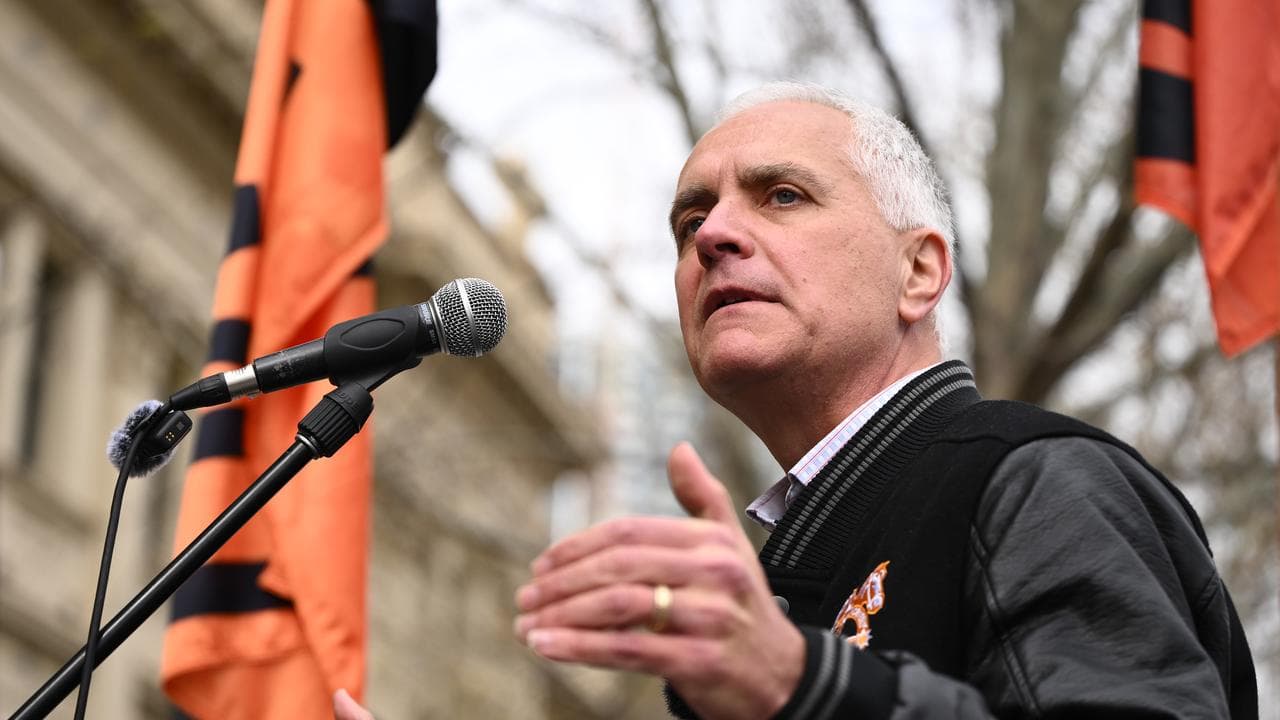
National secretary of the Transport Workers Union Michael Kaine joined a rally outside the Victorian Trades Hall in the inner-Melbourne suburb of Carlton.
In a statement, he said workers had been pushed to breaking point, left no choice but to walk off the job.
“Today is the largest road transport strike in this union’s history because corporate greed has driven this industry to breaking point," he said.
“These workers are simply asking for enough pay to provide for their families, a secure job, and a say in their industry’s future."
The strike follows months of negotiations, during which the union has reached agreements with transport firms including Toll, Linfox and Team Global Express.
But union leadership has warned even firms with new agreements risk losing work should companies at the top of the supply chain offer work to the lowest bidder.
Some workers are earning 10 to 30 per cent below those employed elsewhere, forcing them to work longer hours just to keep afloat, the union said.
The union is also pushing for workers to be more closely consulted on industry developments, including the use of automation and artificial intelligence.
It also criticises what it has described as a push by some employers to shift workers to a gig model, with less secure hours and pay.
“Workers have had enough of foreign-owned companies making billions while their jobs become more insecure, more deadly, and lower-paid," Mr Kaine said.
“If they don’t take this action now, their jobs will become scraps of work dictated by an algorithm - that is not a future we can accept for the workers getting critical supplies to our supermarkets, hospitals and front doors."


