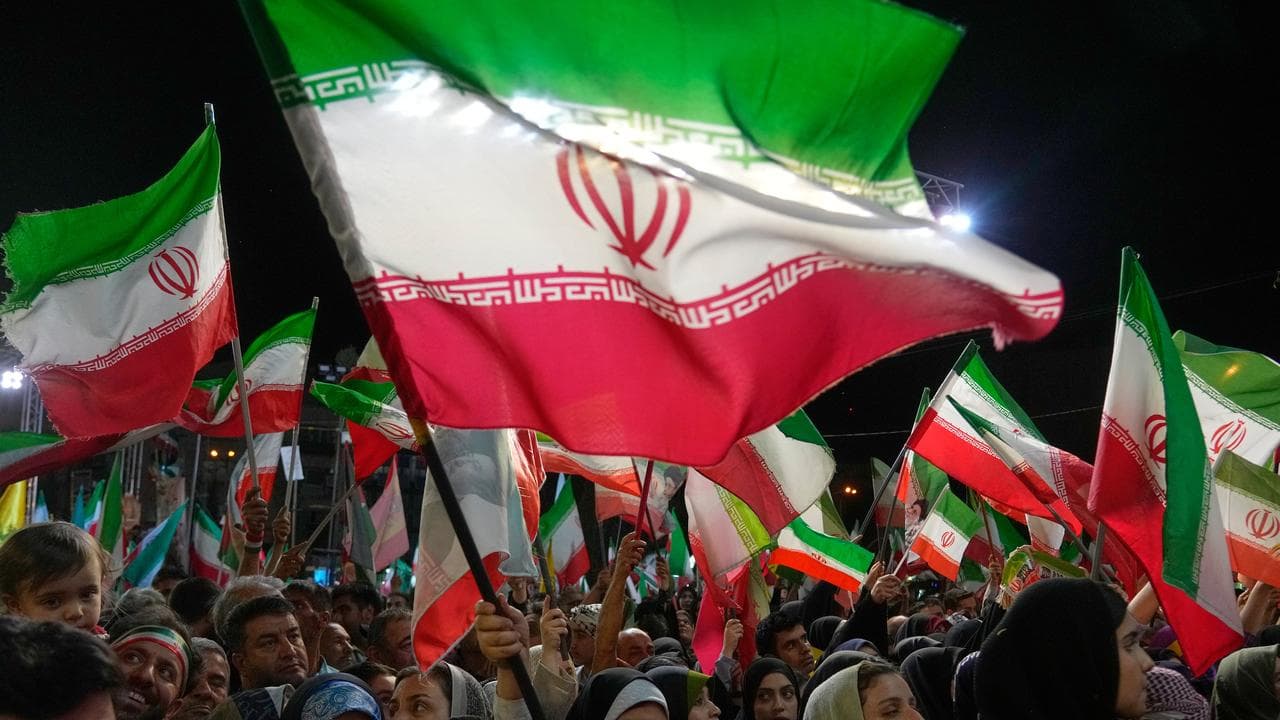
The United States and Iran have stuck to directly opposing stances over the Middle East country's uranium stockpile and controls on the Strait of Hormuz, although Secretary of State Marco Rubio says there have been "some good signs" in talks.
Speaking before departing for a NATO meeting, Rubio said there were "some good signs" in Pakistan-mediated negotiations. However, he added that he did not want to be "overly optimistic."
Rubio also repeated the US assessment that Iran's leadership system was "itself is a little fractured" and stressed that US President Donald Trump preferred a negotiated settlement.
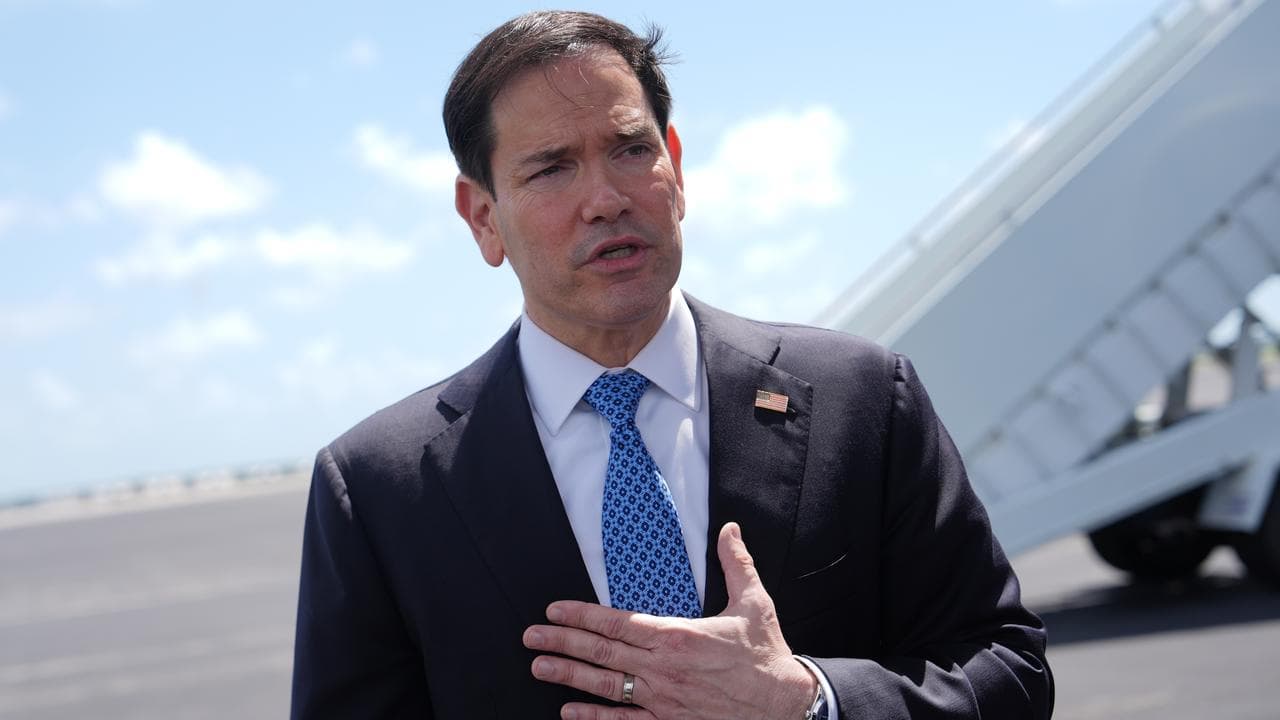
"But if we can't get a good deal, the president's been clear, he has other options," Rubio said.
A senior Iranian source told Reuters while no deal has been reached, the gaps have narrowed.
Earlier Trump said the US will eventually recover Iran's stockpile of highly enriched uranium - which it believes is destined for a nuclear weapon although Iran says is intended purely for peaceful purposes.
"We will get it. We don't need it, we don't want it. We'll probably destroy it after we get it but we're not going to let them have it," Trump told reporters at the White House.
Supreme Leader Ayatollah Mojtaba Khamenei issued a directive that the uranium should not be sent abroad, two senior Iranian sources told Reuters before Trump's comments.
Trump also railed against Iran's intentions to charge fees for use of the Strait of Hormuz off its coast, where a fifth of the world's oil and natural gas passed through before the war.
"We want it open, we want it free. We don't want tolls," he said.
"It's an international waterway."
Six weeks since a fragile ceasefire took effect, talks to end the war have made little progress although a main mediator, Pakistan's Army Chief Asim Munir, was possibly heading to Tehran for more talks on Thursday, three sources told Reuters.
"We're speaking to all the various groups in Iran to streamline communication and so things pick up pace," said one of the sources familiar with negotiations.
"Trump's patience running thin is a concern but we're working on the pace at which messages are relayed from each side."
The impasse is wreaking havoc on the global economy, chiefly due to the inflationary effect of soaring oil prices.
Oil prices were higher on Thursday: US crude rose 3.22 per cent to $US101.42 a barrel and Brent rose to $US107.71 per barrel, up 2.54 per cent on the day.
Trump has said he is ready to resume strikes on Iran, which the US and ally Israel first launched in late February, if he does not get the "right answers" from Iran's leadership.
Iran's Revolutionary Guards have warned that that will trigger retaliation beyond its region.
Iran submitted its latest offer to the US this week.
Iran's descriptions suggest it largely repeats terms Trump previously rejected, including demands for control of the Strait of Hormuz, compensation for war damage, lifting of sanctions, release of frozen assets and the withdrawal of US troops from the region.
The International Energy Agency says the conflict has produced the world's worst energy shock.
It warned on Thursday that the peak of summer fuel demand coupled with a lack of new Middle East supply means the market could enter the "red zone" in July and August.
Some ships are managing to transit the strait but only a trickle compared with the 125-140 daily passages before the war.
Iran's IRNA news agency said 31 ships had passed in the last 24 hours in co-ordination with the Iranian navy.


