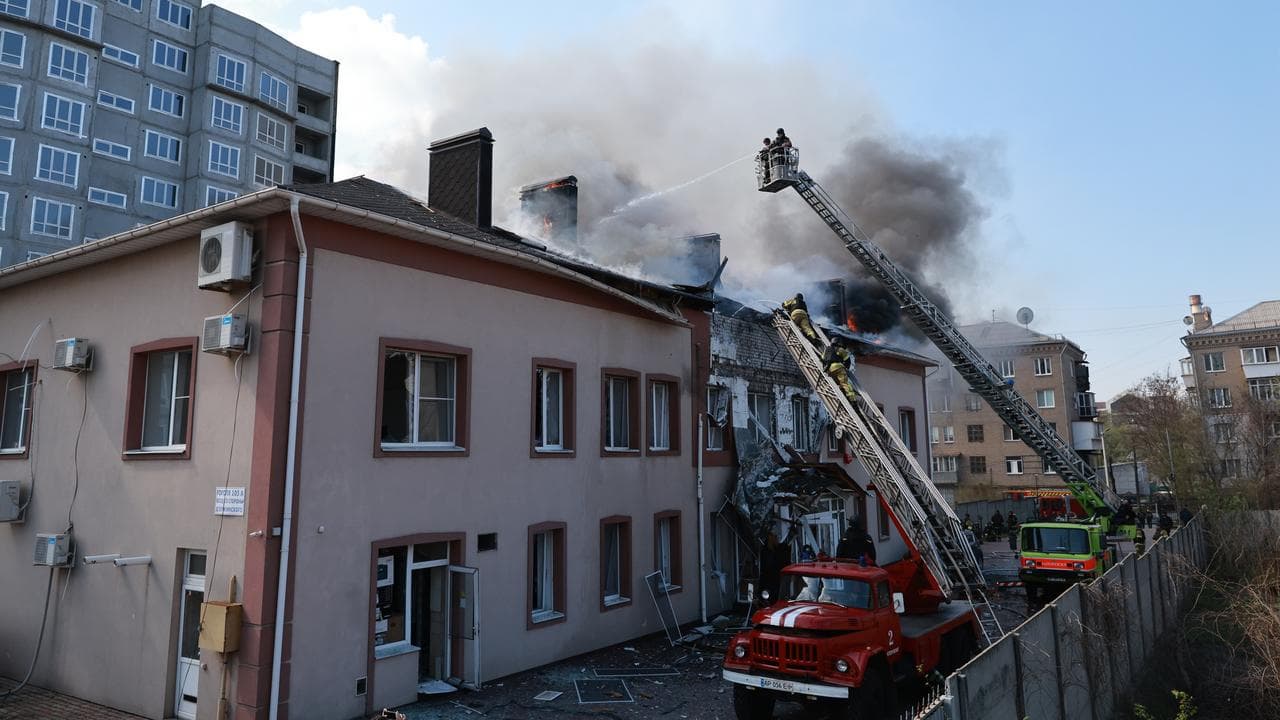
Ukrainian forces have targeted a chemical plant in northern Russia with long-range drones following the end of a 32-hour Orthodox Easter ceasefire.
The target was an ammonia facility in Cherepovets, about 400km north of Moscow, according to Robert Brovdi, commander of Ukraine's drone forces, writing on Telegram on Monday.
The plant produces hundreds of thousands of tons of ammonia, ammonium nitrate and nitric acid annually. The materials can be used in the production of explosives.
On the Russian side, Cherepovets Mayor Andrei Nakroshyayev confirmed an attack on an industrial site, but said there was no danger to the city itself, the TASS news agency reported.
The city lies about 900km from the Ukrainian border, highlighting Kyiv's ability to strike deep into Russian territory.
On Monday, on Ukraine's Arms Makers' Day, President Volodymyr Zelenskiy hailed the long-range weapons that allow Kyiv to do this.
He said Ukraine has also expanded its drone defences, the deployment of remote-controlled combat robots and naval drones.
"For the first time in the history of this war, an enemy position was taken exclusively by unmanned platforms - ground systems and drones," he said.
"The occupiers surrendered, and the operation was carried out without infantry and without losses on our side," Zelenskiy said, without providing further details.
Russia and Ukraine largely adhered to a ceasefire over Orthodox Easter, from Saturday afternoon to Sunday evening.
While Ukraine reported thousands of violations - mostly along the front line, including drone activity and shelling - there were no major strikes involving missiles or glide bombs.
But Kyiv said Russian forces resumed long-range drone attacks far into Ukrainian territory shortly after the truce expired at midnight.
The Ukrainian army on Monday said it had withdrawn from a village near the border in the Sumy region following pressure from Russian attacks.
The 14th Army Corps wrote on Facebook that its troops had pulled back from the village of Myropilske to prepared positions to avoid casualties.
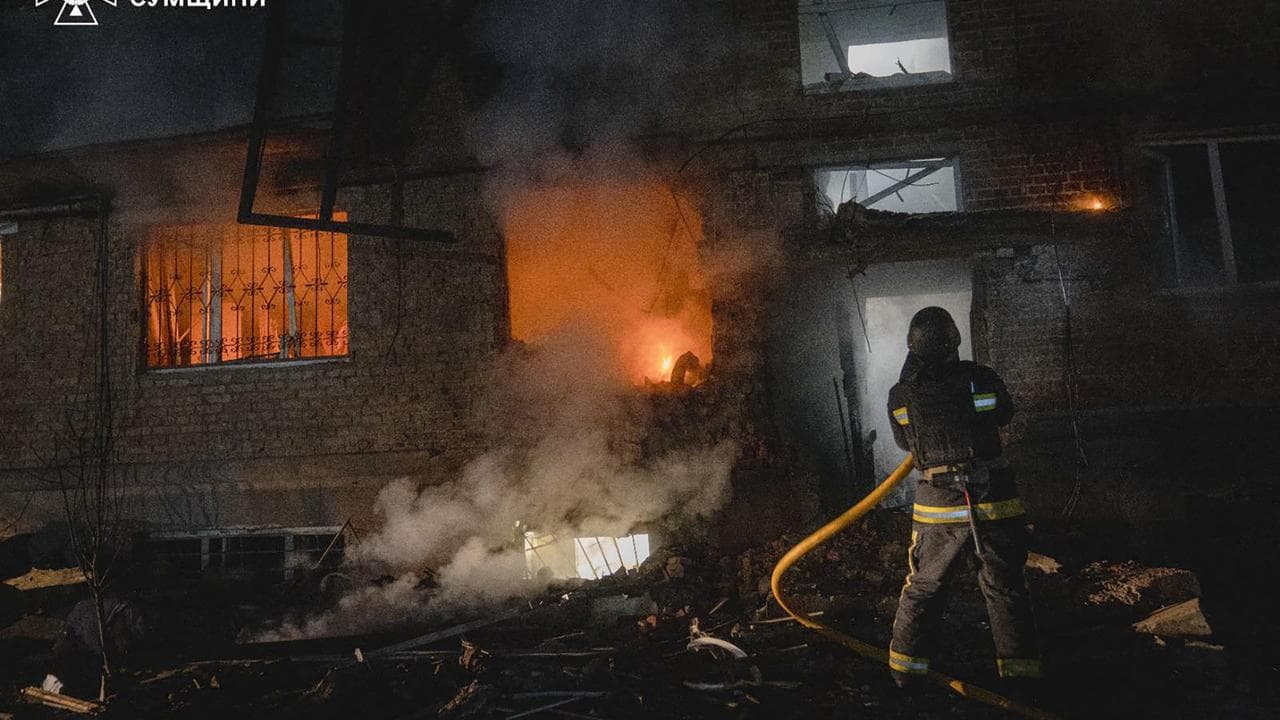
Russian forces have broken through the border into the northern Ukrainian region of Sumy at several points. The largest Russian-held area is near the village of Yunakivka, which is where Ukrainian troops launched their counteroffensive into the Russian region of Kursk from in 2024.
The advance near Myropilske is small-scale but marks a further Russian incursion into Ukrainian territory.
Russia has been waging a full-scale invasion of Ukraine for more than four years.
On the ground, Russian troops have been advancing continuously since late 2023, but their territorial gains have been small and have cost them many casualties. Ukraine is relying primarily on battlefield drones to defend itself.


