Israeli tank shelling and air strikes have killed 18 people, including four children, in Gaza, and Israel halted the passage of patients through the Rafah border crossing, Palestinian officials say.
The Israeli military said tanks had fired on Gaza and air strikes had been launched after a gunman shot at Israeli soldiers and seriously injured a reservist.
The strikes targeted Gaza City and the southern city of Khan Younis.
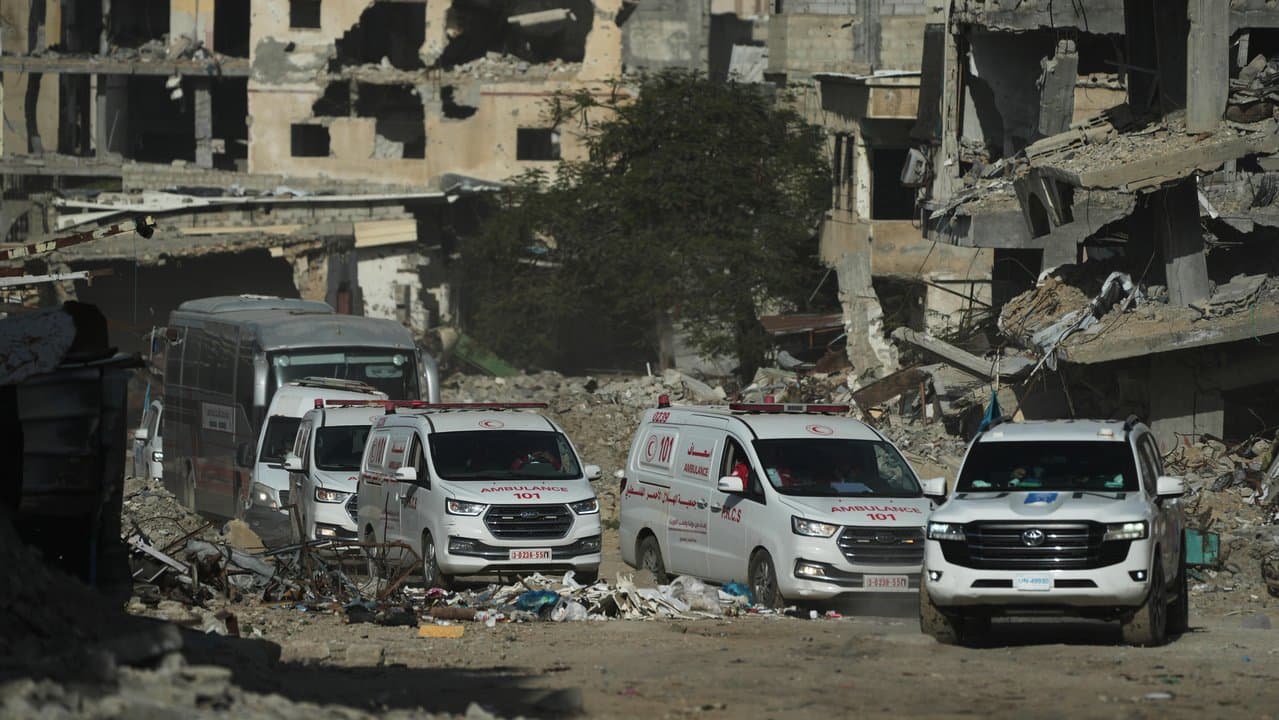
A Gazan health official told Reuters that Israel had also halted the passage of patients through the Rafah border crossing to Egypt, two days after it had reopened, allowing a trickle of Palestinians to cross for the first time in months.
A spokesperson for the Red Crescent said patients had arrived at a hospital in Khan Younis in preparation for crossing Rafah for treatment, only to be informed that Israel had postponed the evacuations.
"They called the patients and said today there is no travel at all, the crossing is closed," Raja'a Abu Teir, a Palestinian patient who was set to be evacuated, told Reuters at the hospital, where several patients were waiting in ambulances.
The Israeli agency that controls access to Gaza, COGAT, said in a statement on Wednesday that Rafah crossing remained open, but they had not received the necessary co-ordination details from the World Health Organization to facilitate the crossing.
The WHO did not immediately respond to a Reuters request for comment.
Reopening the crossing was one of the requirements under the October ceasefire that set out the first phase of US President Donald Trump's plan to stop fighting between Israel and Palestinian Hamas militants.
Sixteen patients from Gaza and 40 of their escorts crossed into Egypt on Tuesday, Gazan medics told Reuters.
A Hamas police source told Reuters that at least 40 people crossed from Egypt to Gaza late on Tuesday.
In January, Trump declared the start of the second phase of the ceasefire where the sides would negotiate the shattered enclave's future governance and reconstruction.
Key issues like the withdrawal of Israeli forces from the over 50 per cent of Gaza they currently occupy and the disarmament of Hamas remain unresolved, while the fragile ceasefire has been marked by near-daily violence.
Since the start of the ceasefire, Israeli fire has killed at least 530 people, most of them civilians, according to Gaza health officials. Palestinian militants have killed four Israeli soldiers in the same period, according to Israeli authorities.
Israel's two-year offensive on the Gaza Strip killed more than 71,000 Palestinians, according to Gazan health authorities, displaced most of its population, and left much of the strip in ruins.
The October 7, 2023, Hamas attack that triggered the war killed around 1200 people in Israel, according to Israeli tallies.
Two years of fighting has destroyed much of Gaza's medical infrastructure and left hospitals struggling to treat trauma injuries, amputations and chronic conditions like cancer.


