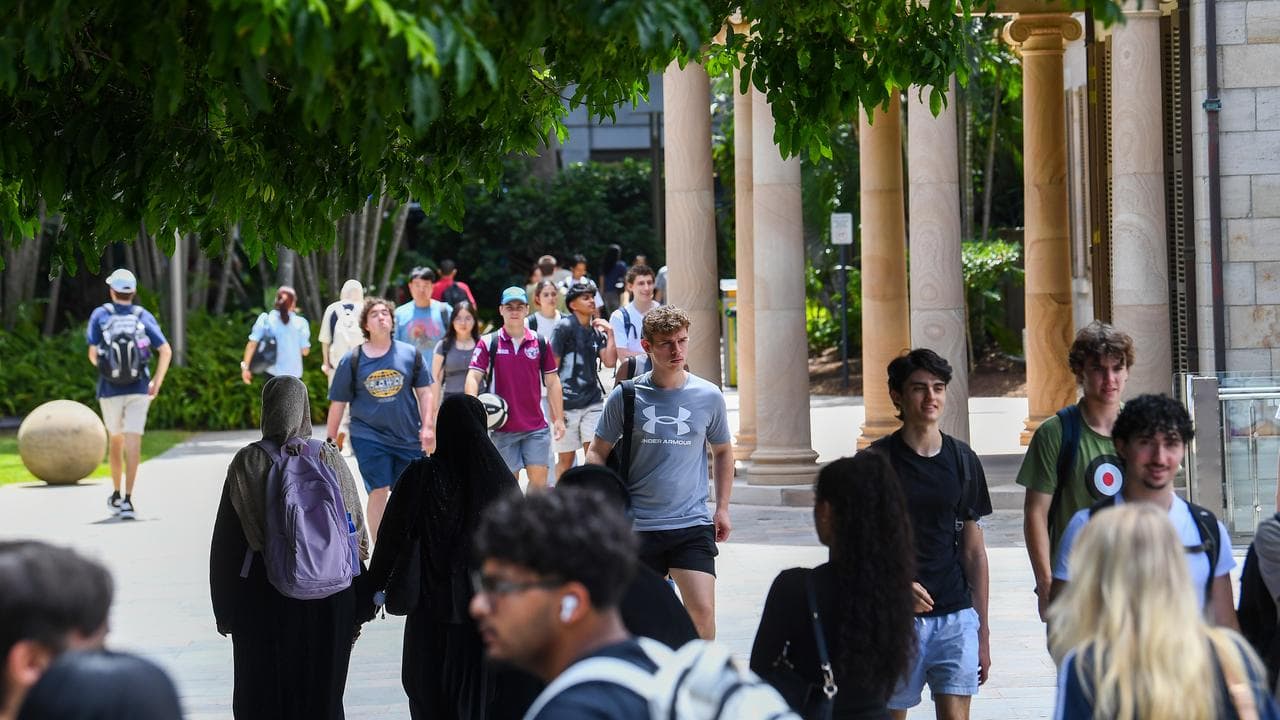
At least one-in-five students at every public university in Australia don't feel free to express their views on campus, according to a new analysis of government survey data.
The findings come from a report by the Liberal-aligned Menzies Research Centre, based on responses to the federal government’s annual Student Experiences Survey.
The survey has asked higher education students about freedom of expression since 2021 but university-level results have not previously been released.
The report says the trend has worsened in recent years and universities should be held accountable for how free students feel in expressing themselves.
“Universities exist to test ideas,” Menzies Research Centre executive director David Hughes said.
“If students at every publicly funded university are telling government they do not feel free to speak, the sector has a serious problem.”
In 2024, 28.3 per cent of domestic undergraduate students did not agree that they were free to express their views at university.
Among postgraduates, 32.5 per cent reported the same.
This is up from 24 per cent among undergraduates and 28 per cent among postgraduates in 2021.
While results varied across institutions, at least one in five undergraduates and a quarter of postgraduates at every university gave responses indicating they did not feel free to express themselves.
The concern was particularly strong in the society and culture field, which includes humanities, social sciences and law.
At one university, 44.3 per cent of students in this area said they did not feel free to express their views.
The report’s author, University of Sydney associate professor Salvatore Babones, said the findings raised questions about whether universities were meeting expectations for open inquiry.
“University teaching is a public trust,” he said.
“If universities cannot provide an environment where students can test ideas openly, reform has to be on the table.”
The report calls for the annual publication of freedom-of-expression results at the university level, alongside stronger accountability measures.
It suggests federal funding could be partly tied to improvements in student perceptions of free expression.
“Publication is the first step. The next step is accountability,” Mr Hughes said.
“Universities that claim to teach critical thinking should show students are free to think and speak.”
The authors note several potential limitations, including that students were not asked why they felt restricted in expressing their views.
The headline figures also include those who selected “neither agree nor disagree” when asked whether they felt free to express their views, alongside those who actively disagreed.


